
Decoding December 2025 ISM Non-Manufacturing Prices: Divergent Opportunities in Consumer Finance and Chemical Products
 Aime Summary
The December 2025 U.S. ISM Non-Manufacturing Prices Index, expected to hover around 65.4%, underscores a critical inflection point in the post-inflation moderation landscape. While this reading marks a 4.6-point decline from October's 70.0, it remains entrenched above 60—a threshold signaling sustained inflationary pressure. This divergence from pre-pandemic norms creates a bifurcated investment environment, where sectors like Consumer Finance and Chemical Products face starkly different trajectories.
Consumer Finance: Navigating Rate Hikes and Policy Uncertainty
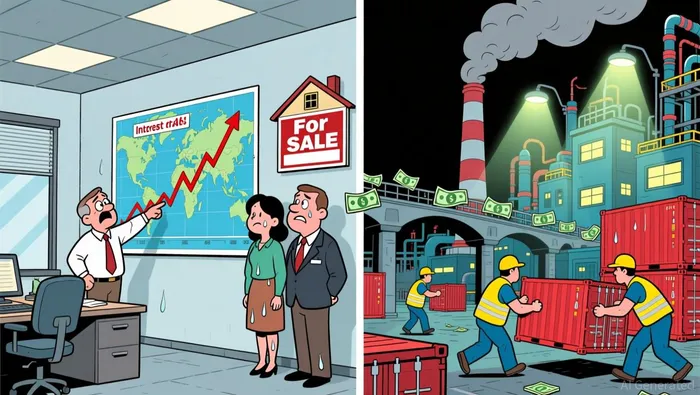
The Consumer Finance sector is acutely sensitive to interest rate dynamics. With the Federal Reserve's 2% inflation target still out of reach, the December 2025 ISM data suggests a delayed or limited rate-cutting cycle. For instance, the Prices Index's persistence in the high 60s—driven by tariffs, labor costs, and supply chain bottlenecks—could force the Fed to maintain restrictive monetary policy. This environment directly impacts borrowing costs for consumers and financial institutions.
Consider the ripple effects:
- Higher Interest Rates: A prolonged high-rate environment could suppress demand for credit cards, auto loans, and mortgages, squeezing margins for lenders.
- Policy Volatility: The Trump administration's proposed $2,000 tax rebate to offset inflationary shocks introduces a wildcard. While it may temporarily boost consumer spending, it could also reignite inflation, prompting the Fed to reverse its dovish stance.
Actionable Strategy: Investors should prioritize financial institutions with robust risk management frameworks and diversified revenue streams. Short-term hedges, such as Treasury Inflation-Protected Securities (TIPS), can mitigate rate volatility. Conversely, avoid overexposure to high-leverage consumer finance firms vulnerable to credit defaults.
Chemical Products: Supply Chain Woes and Tariff-Driven Pressures
The Chemical Products industry faces a different challenge: input cost inflation and demand contraction. The November 2025 ISM Manufacturing PMI revealed a 58.5% Prices Index for manufacturing, with Chemical Products among the hardest-hit sectors. Tariffs on steel, aluminum, and imported raw materials have driven up production costs, while global economic uncertainty has dampened demand for adhesives, sealants, and construction-related chemicals.
Key vulnerabilities include:
- Tariff Pass-Through: Escalating tariffs under the Trump administration are inflating logistics and material costs. For example, transportation bottlenecks and customs delays (evidenced by the Services Sector's 54.1 Supplier Deliveries Index) are compounding expenses.
- Supply Chain Fragility: The sector's reliance on international suppliers makes it susceptible to geopolitical risks and currency fluctuations.
Actionable Strategy: Investors should focus on chemical firms with vertical integration or diversified sourcing strategies. Companies leveraging AI-driven supply chain optimization (e.g., predictive logistics tools) may outperform. Additionally, consider long positions in inflation-linked commodities like aluminum, which are critical inputs for the sector.
Divergent Opportunities in a Polarized Market
The December 2025 ISM data highlights a K-shaped recovery: while Consumer Finance grapples with rate-driven headwinds, Chemical Products contends with cost-driven pressures. This divergence creates asymmetric opportunities:
- Consumer Finance: Position for a “wait-and-see” approach. If the Fed delays rate cuts, high-yield bonds and short-duration fixed-income assets could outperform.
- Chemical Products: Seek undervalued players with strong balance sheets and exposure to resilient subsectors like industrial coatings or specialty chemicals.
Conclusion: Strategic Adaptation in a Shifting Landscape
The December 2025 ISM Non-Manufacturing Prices Index is not just a data point—it's a signal to recalibrate investment strategies. For Consumer Finance, the priority is managing rate risk and capitalizing on fiscal stimulus. For Chemical Products, the focus should be on supply chain resilience and cost pass-through capabilities. Investors who align their portfolios with these sector-specific dynamics will be better positioned to navigate the complexities of a post-inflation moderation environment.


Stay ahead of the market.
Get curated U.S. market news, insights and key dates delivered to your inbox.


AInvest
PRO
AInvest
PRO



Comments
No comments yet