
Decoding Behavioral Biases in FBTC: How the Reflection Effect Shapes Crypto Market Volatility


 Aime Summary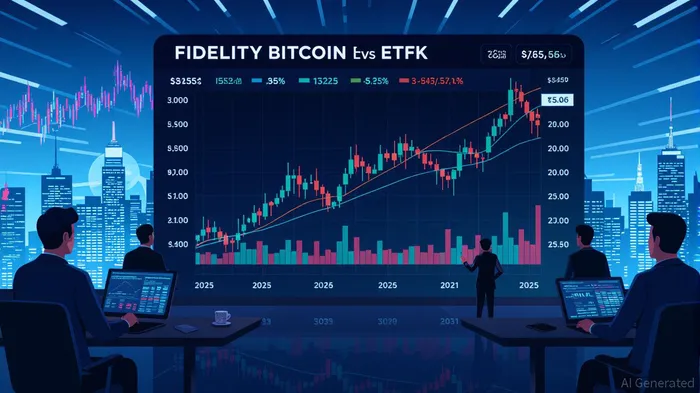
The Fidelity BitcoinBTC-- ETF (FBTC) has become a cornerstone of the digital asset market, offering investors a regulated, accessible way to gain Bitcoin exposure. Yet, its volatility is not solely driven by Bitcoin's price movements or macroeconomic factors—it is deeply intertwined with the behavioral biases of its investor base. Among these, the reflection effect—a psychological phenomenon where investors shift from risk-averse to risk-seeking behavior depending on perceived gains or losses—has emerged as a critical driver of FBTC's price dynamics. Understanding this bias is essential for investors seeking to navigate the crypto market's emotional turbulence.
The Reflection Effect in Action: Panic and Contrarianism
The reflection effect, first identified by behavioral economists Daniel Kahneman and Amos Tversky, explains how individuals make irrational decisions under risk. In the context of FBTC, this bias manifests in two distinct ways:
1. Risk-Seeking in Losses: When investors perceive a decline in FBTC's value (e.g., during a market downturn), they often double down on risky trades to recover losses, exacerbating volatility.
2. Risk-Averse in Gains: Conversely, during upward trends, investors tend to lock in profits prematurely, limiting FBTC's potential for sustained growth.
A case in point is the March 2025 selloff, triggered by U.S. trade policy uncertainty. Retail investors, perceiving a loss, sold off FBTC shares in panic, while institutional buyers viewed the dip as a buying opportunity. This divergence created a sharp price correction, followed by a rebound as contrarian investors entered the market.
Behavioral Biases and FBTC's Volatility Profile
From 2023 to 2025, FBTC's volatility has mirrored Bitcoin's, but with added layers of behavioral influence. For instance:
- 2023–2024: As Bitcoin's realized volatility dropped below 50 (a level seen in only 5% of its history), FBTC's price movements became more stable, reflecting growing institutional adoption and reduced retail panic.
- 2025: Political and macroeconomic events, such as the February Bybit security breach and March trade policy shifts, amplified emotional responses. Retail investors overreacted to perceived threats, while institutions capitalized on discounted prices.
The reflection effect also explains the asymmetry in trading behavior. During Bitcoin's rally to $80,000 in early 2025, many investors sold FBTC shares to secure gains, despite the fund's long-term growth potential. Conversely, during the Bybit incident, panic selling drove FBTC's price below its net asset value (NAV), creating arbitrage opportunities for savvy investors.
Implications for Investors: Navigating Sentiment-Driven Markets
For investors, the key to managing FBTC's volatility lies in recognizing and mitigating behavioral biases. Here's how:
1. Use Technical Indicators as Contrarian Signals: Tools like RSI and moving averages can help identify overbought or oversold conditions. For example, FBTC's RSI hitting 30 during the March 2025 selloff signaled a potential bottom, offering a disciplined entry point.
2. Leverage Institutional Insights: Institutions often act as stabilizers during retail-driven volatility. Monitoring large-cap investor activity in FBTC can provide early signals of market sentiment shifts.
3. Adopt a Long-Term Perspective: FBTC's 0.25% expense ratio (post-2024) makes it a cost-effective vehicle for long-term Bitcoin exposure. Avoiding emotional reactions to short-term swings can enhance returns.
Conclusion: Balancing Psychology and Strategy
FBTC's journey from a novel product to a market leader underscores the interplay between behavioral biases and digital asset investing. While the reflection effect amplifies volatility, it also creates opportunities for disciplined investors who can separate sentiment from fundamentals. As the crypto market matures, those who understand these psychological dynamics will be better positioned to anticipate shifts and capitalize on FBTC's potential.
For investors, the takeaway is clear: emotional discipline is as critical as technical analysis. By recognizing the reflection effect and other biases, investors can transform volatility from a liability into an asset.

Combina la sabiduría tradicional en el comercio con los conocimientos más avanzados sobre criptomonedas.
Latest Articles
Stay ahead of the market.
Get curated U.S. market news, insights and key dates delivered to your inbox.






Comments
No comments yet