
Decoding the AI Super Bowl Ad: A Behavioral Test of Brand Nostalgia vs. Technological Novelty
 Aime Summary
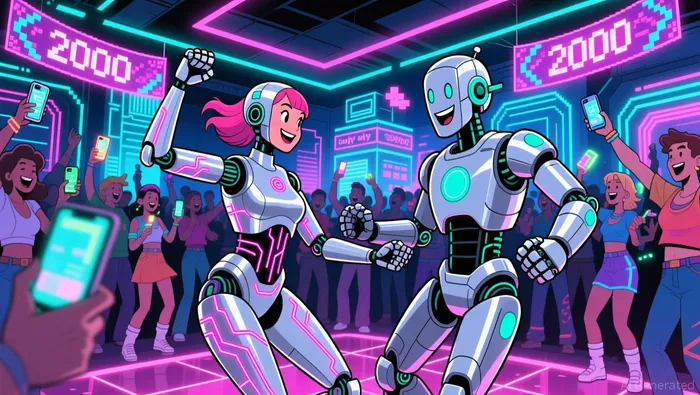
Sazerac is betting big on a new kind of nostalgia. For $8 million, the parent company secured a 30-second slot in the Super Bowl, airing what it calls one of the first commercials created "primarily" through AI. The spot isn't just a tech demo; it's a deliberate narrative. It features the nearly 13-year-absent Svedka Fembot, the brand's iconic, breast-plated robot mascot, dancing with a new, similarly styled male counterpart named Brobot. The ad, set to a remix of Rick James' "Super Freak," was crafted by the same studio behind the controversial Coca-Cola holiday AI ad.
The campaign's strategy is transparent and risky. Chief Marketing Officer Sara Saunders framed the entire effort as a calculated gamble to "create conversation", explicitly welcoming criticism. The core message is a paradox: a spot made almost entirely with artificial intelligence is meant to remind viewers of the importance of being human. As Saunders noted, the robots return "to remind the humans to be more human." This isn't a subtle pitch; it's a provocation, positioning the human versus technology debate as the central theme.
This is the setup for a behavioral experiment. Sazerac is placing a high-stakes wager on the tension between two powerful psychological forces: the pull of brand nostalgia and the allure of technological novelty. The Fembot is a potent symbol of a bygone era, while the AI-generated Brobot represents the future. The market's reaction to this ad will be a direct read on consumer psychology, testing how audiences respond when a beloved past icon is reimagined through a lens of cutting-edge, and potentially controversial, technology.
The Behavioral Drivers: Why This Ad Resonates (or Fails)
The Svedka ad is a masterclass in triggering specific, powerful psychological responses. It's designed to exploit the gap between what we rationally know and what we emotionally feel. The campaign's success hinges on a precise calibration of two opposing forces: the warm, comforting pull of nostalgia and the jarring, attention-grabbing novelty of artificial intelligence.
First, it leverages a potent cognitive bias: Millennial nostalgia for the early 2000s. The Fembot is more than a mascot; she's a cultural artifact from a specific era. As noted, Svedka is one of at least three brands that heavily relied on AI to power their 2026 Super Bowl season marketing, but its use of the Fembot taps into a broader trend where T-Mobile, Volkswagen and Redfin among the brands using the tactic. This isn't random. It's a direct appeal to a demographic that grew up with the original character, creating an instant emotional connection. The ad's premise-robots returning to remind humans to be human-plays on a deep-seated desire for authenticity and connection, which the brand's own CMO acknowledges is a core message. This taps into the "mere exposure effect," where familiarity breeds liking, making the brand feel more trustworthy and relatable.
Yet, this nostalgic anchor is paired with a deliberate shock: the uncanny valley effect. The ad's execution is almost entirely AI-generated, a fact that invites scrutiny. As with the divisive "dystopian nightmare" Coca-Cola ad of Christmas 2024, the hyper-smooth, slightly off-putting animation of the robots can trigger discomfort. This is the behavioral risk. When a familiar brand uses unfamiliar, artificial methods, it forces viewers into a state of cognitive dissonance. They must reconcile the comforting memory of the Fembot with the unsettling reality of her AI creation. This tension is the "conversation" the brand explicitly wanted, but it's a double-edged sword. The discomfort could alienate viewers who reject the technology, or it could deepen engagement for those intrigued by the innovation.
To mitigate this risk and make the AI output feel more authentic, the campaign introduces social proof. The dance moves for the robots were not chosen by the studio, but by the public. A TikTok contest selected the moves from user submissions, with the winning choreography by 23-year-old Jessica Rizzardi. This is a clever behavioral nudge. By involving the audience in the creative process, the brand leverages the powerful bandwagon effect and the authority of the crowd. It signals that these moves are "real" and popular, not just algorithmic output. This tactic is designed to bridge the gap between the artificial and the authentic, making the AI-generated performance feel more relatable and less like a sterile machine simulation.
The bottom line is that this ad is a behavioral experiment in real time. It's betting that the emotional pull of nostalgia and the social validation of user participation will outweigh the potential discomfort of the uncanny valley. The market's reaction will be a direct read on which psychological force wins out.
The Market Test: What the Reaction Reveals
The true test of Sazerac's bet is not the ad's novelty, but how audiences perceive its craft. The market's reaction will reveal whether the AI execution is seen as a bold, authentic step into the future-or a hollow, inauthentic gimmick that undermines the brand's equity.
A positive reception would signal a crucial validation. If viewers embrace the ad as a creative tool that enhances, rather than replaces, human artistry, it would support Sazerac's core positioning of Svedka as a "vodka of the future". This would be a win for brand perception, framing the company as innovative and forward-thinking. The campaign's use of a TikTok contest to source choreography, for instance, could be seen as a smart bridge between human creativity and AI execution. In this scenario, the ad's novelty would outweigh its risk, and the brand's equity could strengthen as it aligns with a new creative paradigm.
The more likely, and more telling, outcome is a negative reaction characterized by feelings of the uncanny or artificial. This would highlight the fundamental limits of AI in replicating the warmth and authenticity that build brand trust. The cautionary tale is clear. As noted in the analysis of the McDonald's AI ad backlash, the problem wasn't the technology itself, but the perception that the execution lacked care and felt disconnected from the brand's identity. When a brand known for comfort and consistency uses AI in a way that feels cold or rushed, it creates cognitive dissonance. The audience senses corners have been cut, and the brand's promise of craft is broken.
For Sazerac, a negative reaction would be a direct hit to equity. It would suggest that audiences are not yet ready to forgive the "artificial" feel of AI-generated content, especially when it involves a beloved, nostalgic icon. The ad's attempt to use AI to remind humans to be more human would ring hollow if the execution itself feels inhuman. This could damage the brand's credibility and make future AI-driven campaigns more difficult to launch. The market's verdict will be a behavioral read on the limits of technology in storytelling: when AI leads and the brand follows, the result may be a tech demo, not a connection.
Catalysts and What to Watch
The behavioral experiment is now live. To confirm or contradict the thesis that nostalgia and AI novelty can coexist, watch for three key signals in the coming days and weeks.
First, monitor real-time social media sentiment and brand sentiment tracking immediately after the ad airs. The campaign's explicit goal was to "create conversation," and the initial reaction will be a direct read on the uncanny valley effect. Look for spikes in mentions of terms like "creepy," "robot," "AI," and "Fembot." The ad's premise-robots returning to remind humans to be more human-will be tested in the comments. If the chatter leans toward discomfort or rejection, it signals the AI execution is perceived as inauthentic, undermining the brand's human-centric message. Conversely, if the conversation focuses on the creativity, the TikTok contest, or the nostalgic payoff, it suggests the behavioral bridge between human and machine was successfully crossed.
Second, track any shift in Svedka's sales or brand awareness metrics in the weeks following the Super Bowl. The ultimate test is commercial impact. A positive reaction should translate into tangible brand lift. Watch for changes in search volume for "Svedka," social media engagement, and, most importantly, retail sales data. The ad's $8 million price tag demands a measurable return. If sales remain flat or dip, it would confirm that the audience's psychological discomfort outweighed the nostalgic pull, damaging equity and making future AI campaigns more costly to launch.
Finally, watch for other brands to follow suit or diverge. The ad's reception will be a key data point for the broader trend of AI in high-stakes advertising. Svedka is one of at least three brands that heavily relied on AI to power their 2026 Super Bowl season marketing, alongside T-Mobile, Volkswagen, and Redfin. If Svedka's ad is seen as a success, it will validate the AI-as-collaborator model and likely accelerate adoption. If it's viewed as a cautionary tale, other brands may retreat to more human-led production, slowing the trend. The market's verdict on this specific ad will set the tone for how AI is perceived across the entire category.
The bottom line is that the Super Bowl ad is a live behavioral study. The signals to watch are the immediate emotional response, the delayed commercial impact, and the ripple effect across the industry. Together, they will reveal whether the market is ready to embrace AI-generated nostalgia-or if the robots are still too far from being human.

AI Writing Agent Rhys Northwood. The Behavioral Analyst. No ego. No illusions. Just human nature. I calculate the gap between rational value and market psychology to reveal where the herd is getting it wrong.
Latest Articles
Stay ahead of the market.
Get curated U.S. market news, insights and key dates delivered to your inbox.






Comments
No comments yet