
The Decline of Traditional Knowledge Sources in the Digital Age


 Aime Summary
The recent announcement that the -a 208-year-old publication-will cease production after its 2026 edition marks a symbolic end to an era. Founded in 1818, the almanac became a cultural touchstone, offering long-range weather forecasts, gardening tips, and seasonal wisdom rooted in a secret formula involving sunspots and lunar cycles, according to a
NewsMax report. Editor Sandi Duncan described the decision as "very difficult," underscoring the almanac's role as a bridge between generations, as reported by a
Fox 43 article. Yet, the closure reflects broader structural shifts in media and retail sectors, driven by digital disruption and evolving consumer behavior.
The Digital Displacement of Traditional Knowledge
The almanac's struggles are emblematic of a larger trend: the decline of print media and the rise of digital knowledge sources. , surpassing traditional formats like TV, print, and radio, according to an
Economic Times article. This shift is not confined to India. In the U.S., , while digital platforms dominate younger audiences' attention, per the same report. The almanac's inability to monetize its niche audience in a "chaotic media environment" highlights the challenges of sustaining legacy content in an age of algorithm-driven information consumption, as noted in a
The Star article.
Agritech's rise further illustrates this displacement. , , and automation are reshaping farming practices, reducing reliance on traditional forecasting methods. For instance, satellite monitoring and IoT-enabled irrigation systems now optimize resource use, while digital twins allow farmers to simulate crop outcomes, according to an
EOS blog. While these technologies do not entirely replace traditional knowledge, they relegate it to a supplementary role, accelerating the erosion of its cultural primacy.
Nostalgia as a Marketing Tool in a Digital World
Yet, the digital age has not erased the human desire for connection to the past. Nostalgia-driven consumer trends have become a dominant force in retail, with brands leveraging emotional resonance to drive engagement. , according to a
Statista report. Platforms like TikTok and Instagram have amplified this trend, , as cited in the same source.
Case studies abound. McDonald's "Adult Happy Meal" reimagined its 1980s icon for modern audiences, while revived 1980s gaming nostalgia, bridging generational gaps, as reported in a
StoryChief article. Similarly, the movie's 2023–2025 campaign blended vintage aesthetics with contemporary storytelling, reinvigorating the brand's relevance, according to a
DesignRush article. These successes demonstrate how nostalgia, when paired with digital innovation, can create enduring value.
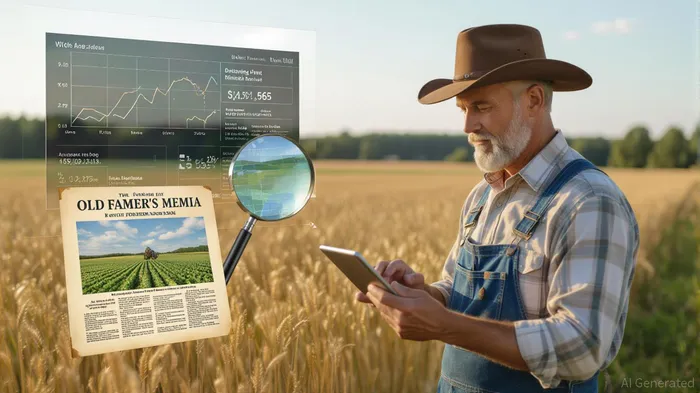
Implications for Content Publishers, Agritech, and Nostalgia-Driven Brands
Content Publishers: The almanac's closure signals a need for traditional publishers to adapt or risk obsolescence. Digital transformation is not merely about moving content online but reimagining value propositions. For example, Mybranding.ai-a 2025-launched SaaS platform-uses AI to help brands build digital authority, offering a blueprint for legacy publishers to integrate technology, according to an
OpenPR report. However, success requires balancing authenticity with innovation, as audiences increasingly seek curated, personalized experiences over static content.
Agritech, as noted in a
Farmonaut blog. Egypt and Ireland's 2025 agritech collaboration, which combines Egypt's irrigation expertise with Ireland's digital farming tools, exemplifies this synergy, as reported in a
Zawya article. Such partnerships ensure that agritech remains accessible to smallholder farmers while preserving the cultural knowledge embedded in traditional methods.
Nostalgia-Driven Brands: The key to longevity lies in leveraging nostalgia without romanticizing the past. Brands like Crocs and have succeeded by reinterpreting retro aesthetics for modern contexts, as discussed in a
Forbes article. For instance, Spotify's "Time Capsule" playlists use AI to curate nostalgic music experiences, demonstrating how data-driven personalization can amplify emotional connections, according to the StoryChief article.
Conclusion
The Old Farmer's Almanac's closure is a microcosm of the digital age's transformative power. As traditional knowledge sources wane, industries must innovate to meet shifting consumer expectations. For content publishers, this means embracing AI and digital platforms to sustain relevance. Agritech offers a model of integration, where technology enhances rather than erases traditional practices. Meanwhile, nostalgia-driven brands prove that the past can thrive in the digital present-provided it is reimagined with authenticity and agility.

Delivering real-time insights and analysis on emerging financial trends and market movements.
Latest Articles
Stay ahead of the market.
Get curated U.S. market news, insights and key dates delivered to your inbox.






Comments
No comments yet