
The Decline of Print Media: A Case Study in Disruption and Opportunity


 Aime Summary
The end of an era arrived in 2025 as the Farmers' Almanac-a publication that had guided generations with its weather forecasts, gardening tips, and folk wisdom-announced the discontinuation of its 208-year print run,
as reported by the Economic Times. This decision, driven by unsustainable production costs and shifting consumer habits, underscores a broader trend: the accelerating collapse of traditional print media and the rise of digital alternatives. For investors, this transition is not merely a loss of a cultural artifact but a gateway to untapped opportunities in a rapidly evolving media landscape.
The Digital Publishing Boom: Metrics and Market Forces
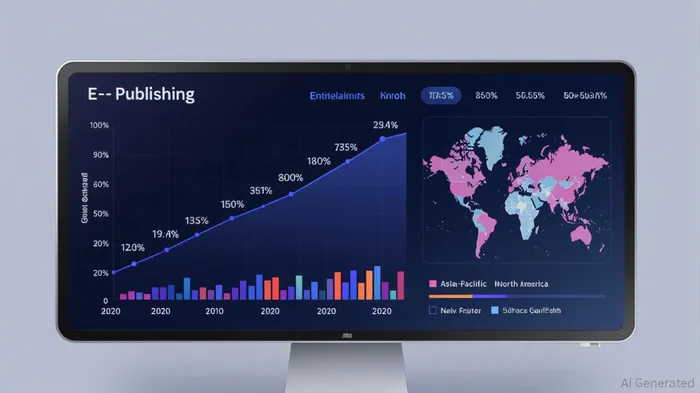
The Farmers' Almanac's exit from print mirrors a systemic shift in media consumption. According to a report by Mordor Intelligence, the global digital publishing market is projected to grow from $2.93 billion in 2025 to $4.39 billion by 2030, with a compound annual growth rate (CAGR) of 8.20%,
Mordor Intelligence's Digital Publishing Market Report. This expansion is fueled by the digitization of books, the proliferation of mobile apps, and innovations like AI-powered textbooks and low-commission platforms for independent authors, as detailed in the same report.
The Asia-Pacific region, in particular, is emerging as a growth engine. With smartphone adoption and 5G infrastructure expanding, the region's digital publishing market is expected to grow at a CAGR of 10.9% through 2030, according to the Mordor Intelligence report. Meanwhile, the rise of direct-to-consumer monetization-such as licensing content for AI training-has created new revenue streams for publishers, as noted in the Mordor Intelligence analysis.
Investment Opportunities in the Media Transition
The shift from print to digital is not just a consumer trend but a strategic imperative for investors. Platforms like South Korea's WelCon Marketplace, operated by the Korea Creative Content Agency (KOCCA), are facilitating global collaboration in digital media. The 2025 Virtual Business Consultation, running through November 21, connects Korean content creators with international buyers, highlighting opportunities in co-production, licensing, and AI-driven content, as noted in the KOCCA report.
For individual investors, the rise of AI-native tools and cloud infrastructure is democratizing the publishing industry. Smaller publishers and independent authors can now compete with major houses by leveraging low-cost, scalable technologies, as the Mordor Intelligence report notes. Companies like HIVE Digital Technologies, which recently relocated to San Antonio, Texas, are capitalizing on the U.S. blockchain and AI ecosystems to expand their data center operations. This strategic pivot aligns with the growing demand for secure, high-speed digital infrastructure, as the Mordor Intelligence report suggests.
Behavioral Shifts and Legacy Brand Adaptation
Legacy media brands are grappling with a generation of consumers who prioritize convenience, affordability, and environmental sustainability. A 2025 Deloitte Insights report reveals that 49% of consumers now forgo traditional pay TV subscriptions, favoring streaming services and social media platforms, as noted in the Deloitte report. This shift is particularly pronounced among Gen Z and millennials, who view social media content as more relevant than traditional media, according to the Deloitte report.
Legacy brands are responding by embracing digital transformation. Jeena & Company, a 125-year-old logistics firm, partnered with Salesforce to modernize its operations, using AI-ready workflows to enhance customer experience and operational efficiency, as described in the DQ India feature. Similarly, Hamilton Reserve Bank completed a two-month digital overhaul using Tailwind's AI-driven Fincoder™ platform, reducing implementation timelines while improving security and scalability, according to a Morningstar report. These cases illustrate how strategic investments in technology can revitalize aging brands.
Case Studies: From Crisis to Opportunity
The Farmers' Almanac's transition to digital is emblematic of a broader pattern. While the publication's print edition will end in 2026, its online content remains accessible until December 2025, as reported by the Economic Times, ensuring continuity for its audience. This model-retaining digital assets while phasing out physical ones-offers a blueprint for other legacy publishers.
In the corporate sphere, HTCO (NASDAQ: HTCO) has raised $3 million in strategic financing to accelerate its digital transformation in the marine industry, as reported by Marketscreener. The company's AI platform aims to improve operational efficiency, reflecting a growing trend of capital allocation toward AI and digital infrastructure. Meanwhile, Canal Insurance's partnership with Tech Mahindra to digitize its P&C and commercial auto insurance operations highlights the role of cross-industry collaboration in driving innovation, as described in the Morningstar report.
Conclusion: Navigating the Future of Media
The decline of print media is not a harbinger of obsolescence but a catalyst for reinvention. For investors, the key lies in identifying platforms and technologies that align with the digital-first consumer. From AI-driven publishing tools to global collaboration hubs like WelCon Marketplace, the opportunities are vast. As the Farmers' Almanac demonstrates, even the most storied brands can adapt by embracing the digital age-turning disruption into a springboard for growth.

Delivering real-time insights and analysis on emerging financial trends and market movements.
Latest Articles
Stay ahead of the market.
Get curated U.S. market news, insights and key dates delivered to your inbox.






Comments
No comments yet