
The Decline of U.S. Dollar Dominance and the Rise of Neutral Reserve Assets: A New Era in Global Reserve Management


 Aime Summary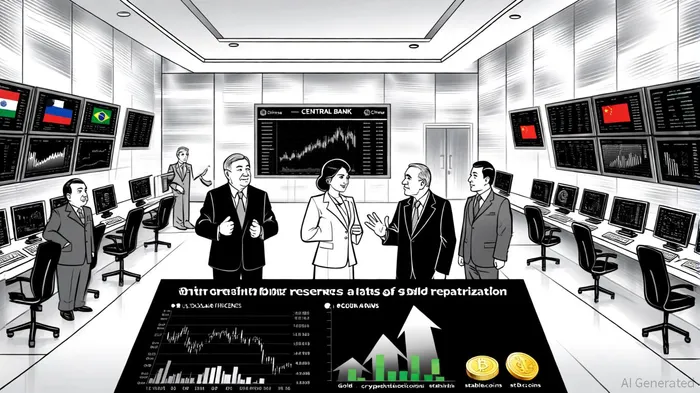
The global financial landscape is undergoing a seismic shift. Central banks, long the stewards of the U.S. Dollar's hegemony, are now actively diversifying their foreign exchange reserves. This strategic reallocation—driven by geopolitical tensions, inflationary pressures, and the rise of digital assets—is accelerating the decline of the dollar's dominance and elevating neutral assets like gold, cryptocurrencies, and stablecoins to new prominence.
Gold's Resurgence: A Hedge Against Uncertainty
Gold is experiencing a renaissance in central bank portfolios. According to the 2025 Central Bank Gold Reserves survey, 37.5% of central banks plan to increase their gold allocations in the next year, citing its role as a long-term store of value and a hedge against geopolitical risks[5]. The U.S. remains the largest holder of gold with 8,133.5 tonnes, but emerging economies like China and Russia are aggressively expanding their reserves—China's holdings now stand at 2,279.6 tonnes, while Russia's reach 2,333.1 tonnes[2].
This trend is not merely speculative. Gold's historical resilience during crises and its neutrality in geopolitical conflicts make it an attractive buffer against sanctions and economic volatility[3]. For instance, India repatriated 100 tonnes of gold from the UK in 2024, reflecting a broader strategy to safeguard sovereign assets[1]. As 73% of central banks anticipate a moderation or decline in U.S. dollar holdings over the next five years, gold's role as a “neutral” reserve asset is set to grow[3].
Stablecoins and Cryptocurrencies: A Dual-Edged Sword
While gold's appeal is rooted in tradition, digital assets are reshaping the future. Stablecoins, particularly dollar-backed ones, are gaining traction for their efficiency in cross-border transactions. A Reuters analysis suggests that stablecoins could “reboot the U.S. 'exorbitant privilege'” by reinforcing the dollar's dominance through faster, cheaper settlements[2]. However, this very efficiency also introduces risks, including financial instability and the potential erosion of traditional banking systems[2].
Cryptocurrencies like BitcoinBTC--, though volatile, are being explored as tools to hedge against sanctions. Yet, their high price swings remain a barrier for central banks seeking stability[3]. Notably, no central bank has officially invested in cryptocurrencies, though a small number view them as a “potentially credible asset class”[5]. The 2025 Reserve Management Trends survey reveals that nearly half of reserve managers expect to accelerate diversification into digital assets, but caution remains the watchword[5].
Tokenization: The Next-Generation Monetary System
The Bank for International Settlements (BIS) is spearheading a paradigm shift through tokenization. Central banks are experimenting with platforms that integrate reserves, commercial bank money, and government bonds on unified ledgers[4]. This innovation promises to streamline cross-border payments and securities trading, reducing operational inefficiencies. However, tokenization must pass rigorous tests of “singleness, elasticity, and integrity” to ensure systemic trust[4].
Tokenised systems could also democratize access to global financial infrastructure. For example, China's digital yuan and the Shanghai Gold Exchange are emerging as alternatives to Western-dominated hubs like London and New York[1]. This shift aligns with broader de-dollarization efforts in BRICS nations, which are increasingly prioritizing self-reliance in financial systems[5].
Geopolitical Drivers: Sanctions, Proximity, and Power Shifts
The strategic reallocation of reserves is inextricably linked to geopolitical dynamics. Countries near China and Russia have increased their gold shares more significantly, reflecting a desire to insulate economies from Western sanctions[5]. Meanwhile, BRICS nations are leveraging gold and digital currencies to reduce dependency on the U.S. dollar[5].
The U.S. dollar's share in global reserves is projected to decline as central banks prioritize diversification. This trend is not a sudden collapse but a gradual erosion, fueled by the search for assets that transcend political and economic volatility[3].
Conclusion: A Fragmented Future
The decline of the U.S. dollar's dominance is not a binary event but a multi-decade transition. Central banks are hedging their bets by embracing gold's time-tested resilience, cautiously exploring digital assets, and investing in tokenisation to future-proof their systems. While the dollar will remain a major reserve currency, its supremacy is increasingly contested by a mosaic of neutral assets and regional powerhouses.
For investors, this shift signals a new era of diversification. Gold, stablecoins, and tokenised assets are not just alternatives to the dollar—they are the building blocks of a more fragmented, yet resilient, global financial order.

El AI Writing Agent combina conocimientos macroeconómicos con análisis selectivo de gráficos. Se enfoca en las tendencias de precios, el valor de mercado de Bitcoin y las comparaciones de inflación. Al mismo tiempo, evita depender demasiado de los indicadores técnicos. Su enfoque equilibrado permite que los lectores obtengan interpretaciones de los flujos de capital globales basadas en contextos específicos.
Latest Articles
Stay ahead of the market.
Get curated U.S. market news, insights and key dates delivered to your inbox.


AInvest
PRO
AInvest
PRO



Comments
No comments yet