
Decentralized Management and the Copper Revolution: Unlocking Efficiency and Investment Potential


 Aime Summary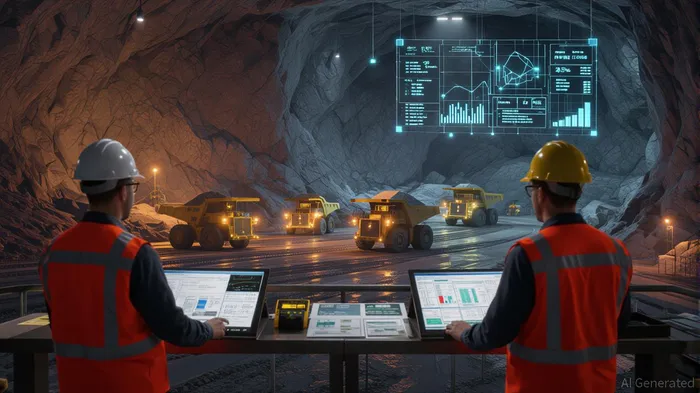
The global copper market is undergoing a seismic shift, driven by the adoption of decentralized management structures in mining firms. As the world races toward decarbonization and AI-driven infrastructure, copper demand is surging—projected to hit 28 million tons by 2025. Yet, the key to meeting this demand lies not just in geological discoveries but in how mining companies are reorganizing their operations. Decentralized management, empowered by AI, blockchain, and real-time data, is reshaping supply dynamics, reducing costs, and creating new investment opportunities.
Operational Efficiency: The Decentralized Edge
Traditional mining hierarchies, where top-down decision-making often led to delays and inefficiencies, are giving way to decentralized models. Mid-level managers and frontline teams now wield real-time data and localized authority, enabling faster responses to disruptions. For example, BHP and Rio Tinto have deployed autonomous haulage systems and AI-driven predictive maintenance, reducing downtime by 50% and operational costs by 10–15%. These gains are not just incremental—they are structural.
Decentralized systems also optimize exploration and extraction. AI-powered geological modeling and satellite-enabled 3D mapping are cutting exploration costs and accelerating discoveries in lower-grade ores. Eagle Mountain Mining's Silver Mountain project exemplifies this, using sulphide leaching to boost recovery rates. Such innovations are critical as the industry grapples with a projected 30% copper supply shortfall by 2035.
Supply Chain Resilience and Circular Economy
Decentralized governance extends beyond operational efficiency to supply chain resilience. Blockchain-based traceability systems, such as IBM's platform and Vale's blockchain initiative, ensure ethical sourcing and compliance with ESG mandates. These systems track copper from mine to market, reducing fraud and building investor confidence.
Simultaneously, circular economy practices are stabilizing supply. Recycling now accounts for 32% of global copper supply, with firms like Anglo American and Vale investing in advanced scrap collection and refining. This shift not only mitigates supply risks but also aligns with regulatory frameworks like the EU's Critical Raw Materials Act.
Geopolitical and Technological Tailwinds
Geopolitical shifts are amplifying the need for decentralized strategies. Argentina's Regime for Large Investments (RIGI) aims to attract $50 billion in foreign capital to boost copper output to 1.2 million tons by 2030. Meanwhile, the U.S. and Canada are reshaping supply chains through tariffs on Chinese imports, pushing firms to prioritize domestic production.
Technologically, the AI boom is a hidden driver. Copper-intensive AI data centers are consuming 400,000 tons annually, while decentralized energy systems (solar, wind microgrids) are projected to contribute 7% of global copper output by 2025. These trends are creating a dual demand surge: one from green energy, the other from digital infrastructure.
Investment Opportunities: Where to Position
For investors, the key lies in identifying firms that combine decentralized decision-making with technological innovation. Vale and Rio Tinto are leading the charge, integrating AI, blockchain, and circular economy practices. Tesla and Siemens, though not miners, are reshaping demand through electrification and AI infrastructure.
- Technology-Driven Miners: Prioritize companies leveraging AI and blockchain for operational efficiency and supply chain transparency.
- Circular Economy Pioneers: Invest in firms with robust recycling and scrap recovery infrastructure.
- Geopolitical Winners: Target companies benefiting from regional policies like Argentina's RIGI or U.S. domestic production incentives.
Conclusion: A Strategic Imperative
The copper market is no longer just about ore—it's about systems. Decentralized management is enabling mining firms to outperform peers, reduce costs, and meet the surging demand from green and digital revolutions. As the IEA warns of a looming supply gap, investors who act now in firms embracing decentralization, AI, and circularity will be well-positioned to capitalize on a market in transformation. The future of copper is not in the ground—it's in the governance.

Blending traditional trading wisdom with cutting-edge cryptocurrency insights.
Latest Articles
Stay ahead of the market.
Get curated U.S. market news, insights and key dates delivered to your inbox.




Comments
No comments yet