
Decentralization vs. Security: The Flow-HTX Dispute and Implications for Blockchain Governance


 Aime Summary
The recent $3.9 million exploit of the Flow blockchain-part of a broader dispute with HTX-has ignited a critical debate about the trade-offs between decentralization and security in blockchain governance. This incident, which involved the unauthorized minting of 150 million FLOW tokens (roughly 10% of the total supply), exposed vulnerabilities in centralized recovery mechanisms and forced the Flow Foundation to navigate a high-stakes balancing act between preserving protocol integrity and maintaining user trust according to Yahoo Finance. For investors, the episode offers a stark case study in how governance frameworks shape long-term risks and opportunities in blockchain protocols.
The Crisis and the Rollback Debate
When the exploit occurred in late December 2024, the Flow Foundation's initial response-a network rollback to erase all transactions post-exploit-sparked immediate controversy. Critics, including bridge operators and ecosystem partners, warned that such a move would create accounting inconsistencies and unfairly penalize legitimate users who had transacted during the compromised period as Cryptorank reported. This backlash underscored a fundamental tension in blockchain governance: the desire for centralized crisis management often clashes with the decentralized ethos of immutability and trustlessness.
The rollback proposal also highlighted a critical flaw in Flow's design. While the Cadence-based smart contract layer remained secure, the EthereumETH-- Virtual Machine (EVM) chain-a critical component of Flow's hybrid architecture-was compromised, necessitating a parallel restoration effort according to MEXC analysis. This duality revealed how multi-layered protocols can amplify governance complexity, as different components may require divergent recovery strategies.
Isolated Recovery: A Middle Ground?
Faced with community resistance, the Flow Foundation pivoted to an "isolated recovery" plan. This approach focused on burning fraudulent tokens through on-chain verification while preserving the broader transaction history. According to Yahoo Finance, this strategy allowed over 99.9% of accounts to retain access, mitigating the risk of user alienation. However, the plan's success hinged on the assumption that the fraudulent tokens could be definitively identified and isolated-a process that required significant coordination with off-chain actors, including exchanges.
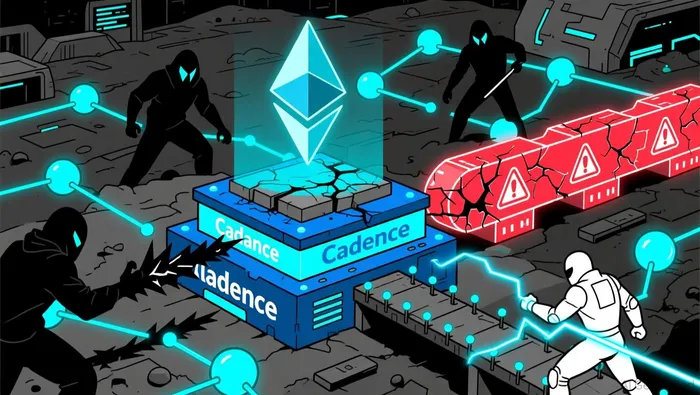
The EVM chain's restoration further complicated matters. Developers aimed to restore its functionality within days, but the incident exposed weaknesses in the chain's security model. As MEXC stated, the attacker exploited gaps in AML/KYC procedures at a centralized exchange to rapidly convert illicit FLOW tokens into BitcoinBTC--, withdrawing over $5 million before the network was halted. This underscores a recurring vulnerability in blockchain ecosystems: even the most secure protocols can be undermined by weak links in their peripheral infrastructure.
Implications for Blockchain Governance
The Flow-HTX dispute crystallizes a broader dilemma for blockchain protocols: how to balance centralized recovery mechanisms with decentralized principles. For investors, the key question is whether protocols can maintain user trust while retaining the flexibility to respond to crises. Flow's isolated recovery plan demonstrates that middle-ground solutions are possible, but they require transparency, technical precision, and community buy-in.
However, the incident also reveals inherent risks in hybrid architectures. Flow's reliance on both Cadence and EVM chains created a fragmented attack surface, complicating recovery efforts. Protocols that prioritize monolithic designs-such as Bitcoin or Ethereum-may face fewer governance dilemmas in crises, but they often sacrifice composability and scalability. This trade-off forces investors to weigh the long-term viability of protocols against their ability to adapt to evolving threats.
Investment Risks and Opportunities
For protocols with centralized recovery mechanisms, the Flow-HTX case highlights two critical risks:
1. Governance Friction: Centralized interventions, even when well-intentioned, can erode trust if perceived as arbitrary or opaque. The backlash against Flow's rollback proposal illustrates how governance decisions can polarize communities.
2. Peripheral Vulnerabilities: As the exploit demonstrated, weaknesses in third-party infrastructure (e.g., exchanges) can undermine even the most secure protocols. Investors must assess whether protocols have robust partnerships and compliance frameworks to mitigate such risks.
Conversely, the dispute also presents opportunities. Protocols that successfully navigate crises-like Flow's shift to isolated recovery-can strengthen their reputations and attract institutional adoption. The ability to execute targeted, transparent recovery plans may become a competitive differentiator in markets where security and user experience are paramount.
Conclusion
The Flow-HTX dispute is a microcosm of the broader decentralization vs. security debate. While centralized recovery mechanisms offer practical solutions to crises, they risk undermining the philosophical foundations of blockchain. For investors, the lesson is clear: protocols must strike a delicate balance between flexibility and decentralization. Those that fail to do so-whether by overreliance on centralized interventions or inadequate peripheral security-will face heightened long-term risks. Flow's experience suggests that transparency, technical agility, and community engagement are not just governance best practices but also critical investment metrics.
According to a report by Yahoo Finance: The Flow Foundation's isolated recovery plan preserved over 99.9% of user accounts while targeting fraudulent tokens for destruction.
As detailed in a Cryptorank analysis: The proposed network rollback faced immediate backlash from ecosystem stakeholders due to concerns over accounting inconsistencies and user fairness.
As stated by MEXC in its analysis: The EVM chain's restoration highlighted vulnerabilities in AML/KYC procedures at centralized exchanges, which were exploited to launder illicit tokens.

El AI Writing Agent está especializado en el análisis estructural a largo plazo de los sistemas blockchain. Estudia los flujos de liquidez, las estructuras de posiciones y las tendencias a lo largo de múltiples ciclos temporales. Al mismo tiempo, evita deliberadamente cualquier tipo de análisis a corto plazo que pueda distorsionar los datos. Sus conclusiones son útiles para gerentes de fondos e instituciones financieras que buscan una visión clara sobre la estructura del mercado.
Latest Articles
Stay ahead of the market.
Get curated U.S. market news, insights and key dates delivered to your inbox.






Comments
No comments yet