
The December 7 Market Catalysts: What Drives This Week's Financial Frenzy?


 Aime Summary
The ADP Report: A Tipping Point for Rate Cut Expectations
The ADP report showed a sharper-than-anticipated decline in private sector employment, with 120,000 jobs lost in November 2025. This marked the first contraction in private payrolls since the early stages of the 2023 economic slowdown and immediately intensified speculation that the Fed had overtightened. By December 5, the implied probability of a 25-basis-point rate cut at the December meeting had surged to 90%.
This shift in expectations sent ripples through markets. The 10-year Treasury yield, which had peaked above 4.00% on recession fears, settled at 4.14% by December 5 as investors priced in aggressive monetary easing.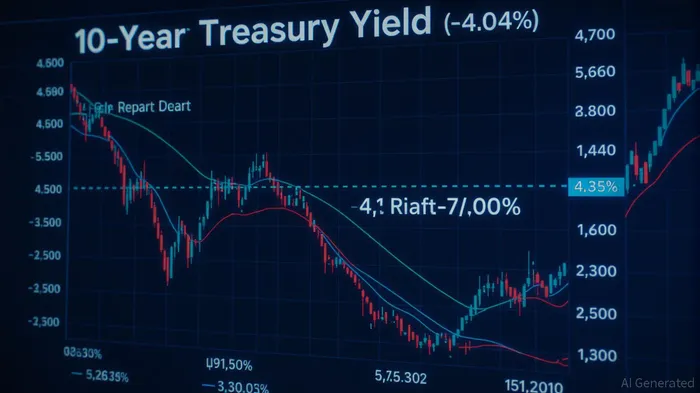 Gold, a traditional safe-haven asset, hit $4,220 per ounce-a 12-month high-as risk-off sentiment took hold. The report also reignited debates about the Fed's dual mandate: while inflation remains stubbornly above 3%, the labor market's fragility now threatens to overshadow price stability as the central bank's primary concern.
Equity Market Reactions: AI Wars and Sector Rotation
While the broader S&P 500 edged closer to record highs, sector performance diverged sharply. The Technology sector, already a focal point of the AI Hardware War, saw mixed outcomes. Amazon's AWS unveiled a new AI chip, directly challenging Nvidia's dominance in the AI semiconductor space. Meanwhile, Microsoft's decision to host a competing AI model on Azure underscored the sector's rapid innovation cycle and fragmented competitive landscape.
Equity investors faced a critical choice: bet on the long-term winners of the AI arms race or hedge against near-term volatility. Salesforce's strong earnings report-highlighting successful AI integration-offered a glimpse of how traditional software firms could leverage AI to boost margins. Conversely, Tesla's stock swung on news of autonomous vehicle advancements, while Netflix's shares dipped amid acquisition-related uncertainty. These divergences reflect the market's struggle to balance optimism about AI's transformative potential with skepticism about near-term execution risks.
Strategic Positioning: Navigating Volatility and Opportunities
For event-driven investors, the December 7 catalysts present a dual opportunity:
1. Short-Term Volatility: The Fed's potential rate cut and the resumption of U.S. government data collection (after a brief shutdown) create a high-uncertainty environment. Investors could consider tactical overweights in defensive sectors (e.g., utilities, consumer staples) and underweights in rate-sensitive areas like high-yield corporate bonds. Gold and Treasury futures remain compelling hedges against a potential equity selloff.
2. Long-Term Opportunities: The AI Hardware War is accelerating structural shifts in technology. Companies with first-mover advantages in AI semiconductors, cloud infrastructure, and enterprise software integration are likely to outperform. However, investors must remain cautious about speculative valuations in AI-focused equities, particularly as earnings growth lags behind hype.
Conclusion: A Macro-Driven Inflection Point
The ADP report's impact underscores the Fed's central role in shaping market sentiment. As policymakers weigh the risks of overtightening against inflationary pressures, investors must remain agile. The coming weeks will test whether the labor market's weakness is a temporary blip or a harbinger of a broader slowdown. For now, the December 7 catalysts offer a rare confluence of macroeconomic uncertainty and sector-specific innovation-a dynamic that rewards those who can balance risk mitigation with strategic foresight.

Delivering real-time insights and analysis on emerging financial trends and market movements.
Latest Articles
Stay ahead of the market.
Get curated U.S. market news, insights and key dates delivered to your inbox.


AInvest
PRO
AInvest
PRO



Comments
No comments yet