
December 2025 CPI Misses Estimates, Unveiling Sector Rotation Opportunities
 Aime Summary
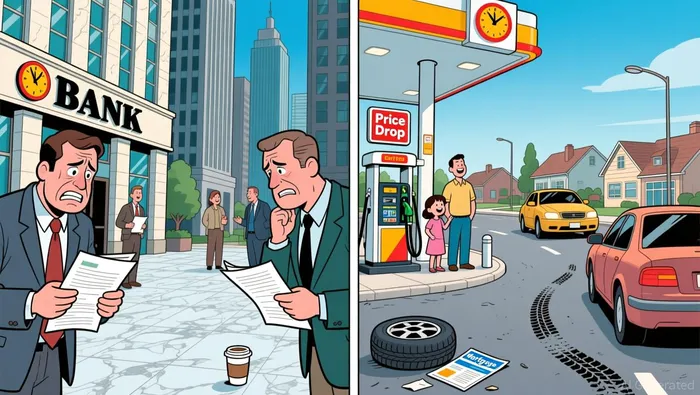
The December 2025 CPI report, released on January 13, 2026, delivered a seismic shift in market expectations. With the headline inflation rate at 2.7% and core CPI at 2.6%, the data fell short of the 3.1% and 3.0% forecasts, respectively. This “miss” wasn't just a number—it was a policy pivot signal. The Federal Reserve, already grappling with methodological distortions from the government shutdown, now faces a critical crossroads: cut rates to stimulate growth or hold steady to avoid reigniting inflation. For investors, this creates a golden opportunity to exploit sector rotation dynamics, particularly in banks and automobiles, where divergent exposures to interest rates and consumer spending could unlock asymmetric returns.
Banks: Defensive Overweight in a Rate-Cutting Scenario
The banking sector's performance is inextricably tied to the Fed's policy levers. A 2.7% CPI, while above the 2% target, suggests inflation is cooling. If the Fed responds with rate cuts—as implied by the 10-year Treasury yield dropping to 3.4% (a 40-basis-point decline since November)—banks with robust fee income and low-cost deposits will outperform. JPMorgan ChaseJPM-- (JPM) and Bank of AmericaBAC-- (BAC) are prime candidates. Both have diversified revenue streams and strong capital positions, allowing them to weather margin compression better than regional banks.
However, the real alpha lies in positioning against the underperformers. Regional banks with high loan-to-deposit ratios, such as KeyCorpKEY-- (KEY) and PNCPNC-- Financial (PNC), face sharper margin declines in a rate-cutting environment. Investors should avoid these unless hedging with short-duration bonds or rate-sensitive ETFs like XLB.
Automobiles: A Relative Underweight Amid Energy Volatility
The automotive sector, while benefiting from lower borrowing costs, faces headwinds from surging energy prices. December's 4.2% annual rise in energy costs—driven by 11.3% fuel oil and 6.9% electricity hikes—eats into profit margins. Even if auto loan rates drop by 50 basis points (reducing financing costs from 7% to 6.5%), the cost of production and logistics remains elevated.
Electric vehicle (EV) manufacturers like Tesla (TSLA) and Ford (F) may seem insulated from oil prices, but their margins are still pressured by higher electricity and battery material costs. Meanwhile, used car prices—up 3.6% annually in November—suggest residual value risks for automakers. A better bet? Energy-linked sectors (e.g., XLE) or EV charging infrastructure plays, which align with long-term decarbonization trends.
Policy-Driven Rotation: The 90-Day Playbook
The next 90 days will test the durability of the CPI miss. If the Fed cuts rates by 75 basis points by March 2026, banks will lag as spreads compress, while autos rally on cheaper financing. Conversely, if inflation reaccelerates (e.g., core CPI hits 2.9% in Q1 2026), banks will outperform.
To capitalize, adopt a dynamic strategy:
1. Overweight banks (JPM, BAC) and energy-linked sectors (XLE) if CPI remains near 2.7%.
2. Underweight autos (IYK) and rotate into TIPS if CPI drops to 2.5%.
3. Use options spreads (e.g., bull calls on banks, bear puts on autos) to hedge directional bets.
Conclusion: Navigating the Inflation-Interest Rate Tightrope
The December 2025 CPI miss isn't a one-time event—it's a catalyst for rethinking sector allocations. Banks, as defensive plays in a rate-cutting cycle, offer downside protection and steady dividends. Automobiles, meanwhile, remain a mixed bag, with energy costs and consumer affordability risks outweighing the benefits of cheaper loans. By aligning your portfolio with the Fed's likely path—whether tightening or easing—you can turn inflation surprises into actionable alpha.
The market's next move hinges on the Fed's response. Stay nimble, stay informed—and let the data guide your decisions.

Stay ahead of the market.
Get curated U.S. market news, insights and key dates delivered to your inbox.
AInvest
PRO
AInvest
PRO



Comments
No comments yet