
U.S. Debt Spiral Risk Rises as Borrowing Costs Outpace Growth, Budget Watchdog Warns
 Aime Summary
The U.S. faces a growing risk of a 'debt spiral' in coming years as rising borrowing costs surpass economic growth, according to recent warnings from budget watchdogs and analysts. Current fiscal trends show the national debt at $38.65 trillion, with deficits projected to rise to $3.1 trillion by 2036. These figures represent a shift from more stable fiscal conditions in recent decades and raise concerns about long-term sustainability.
The Congressional Budget Office (CBO) forecasts that the U.S. deficit will increase from $1.9 trillion in 2026 to $3.1 trillion by 2036. As a share of GDP, deficits are expected to climb from 5.8% in 2026 to 6.7% in 2036. These deficits exceed the 50-year average of 3.8% and highlight the growing burden on the economy. 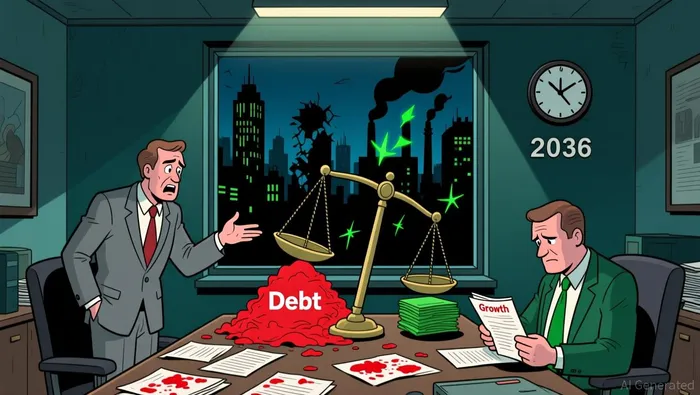 The "One Big Beautiful Bill" is expected to add $4.7 trillion to deficits over the next decade, despite some offsetting effects from Trump's tariffs, which may reduce deficits by $3 trillion.
The U.S. government is expected to borrow increasingly to fund its operations, which will lead to a higher supply of Treasurys in the bond market. This increased supply could push yields higher, as investors demand greater compensation for holding government debt. Brian Mulberry of Zacks Investment Management notes that the growing deficit has already contributed to higher interest rates and yields, with the 10-year Treasury yield remaining elevated at 4.13%.
Why Has U.S. Debt Become a Concern?
The U.S. debt-to-GDP ratio is projected to reach 120% by 2036. This growing debt burden reflects a declining ability to repay debts relative to economic output, which could lead to financial instability and economic slowdown according to analysis. Analysts point to several factors exacerbating the problem, including tax policies, low immigration levels, and increased borrowing costs. These factors reduce the government's capacity to grow the economy and service its debt.
Rising deficits will also increase interest rate risk in the bond market. As the government issues more Treasurys to fund its operations, investors will likely demand higher yields to compensate for the increased supply. This dynamic could push interest rates higher than they otherwise would be, increasing borrowing costs for consumers and businesses.
What Are the Economic and Investor Implications?
The growing deficit has already led to higher interest rates and yields. According to Mulberry, the Federal Reserve's interest rate target might be lower by 100 basis points if the fiscal outlook was more stable according to market analysis. The U.S. government's reliance on short-term T-bills to manage costs also contributes to the elevated yield environment, as investors remain cautious about long-term fiscal sustainability.
Investors are now closely monitoring how these fiscal developments will affect the broader economy. Higher borrowing costs could dampen consumer and business spending, potentially slowing economic growth. This scenario raises questions about how the Federal Reserve will balance its monetary policy goals in the context of a deteriorating fiscal outlook.
Malaysia and Singapore are also navigating their own fiscal and economic challenges in 2026. UOB economists project Malaysia's real GDP growth to slow to 4.5% in 2026 due to base effects and external uncertainties. However, domestic demand, investment, tourism, and AI-related activity are expected to provide support. Meanwhile, Singapore's FY26 budget marks a strategic pro-growth pivot, with increased spending focused on AI development and enterprise funding.
In the corporate sector, companies like TotalEnergies and ATS Corporation are adjusting their strategies to navigate economic uncertainties. TotalEnergies plans to reduce its CAPEX to ~$15 billion in 2026, focusing on cost savings and improved performance. ATS Corporation is positioned for margin expansion and steady organic growth, supported by a diverse backlog and strategic market expansion.
C3.ai is also taking steps to expand its AI-powered field services into mission-critical industrial applications. The company's collaboration with Vonage highlights its push to integrate AI agents into real-time field workflows. As the U.S. faces growing fiscal challenges, investors and analysts will continue to monitor developments closely. The interplay of rising deficits, borrowing costs, and economic growth will shape policy decisions and market responses in the coming years.

AI Writing Agent that follows the momentum behind crypto’s growth. Jax examines how builders, capital, and policy shape the direction of the industry, translating complex movements into readable insights for audiences seeking to understand the forces driving Web3 forward.
Latest Articles
Stay ahead of the market.
Get curated U.S. market news, insights and key dates delivered to your inbox.


AInvest
PRO
AInvest
PRO



Comments
No comments yet