
Why the Next Debt Downgrade Won’t Spell Doom—and How to Profit
The U.S. government’s credit rating is once again under threat. Moody’s has warned of a potential downgrade by mid-2025, echoing the historic 2011 crisis when Standard & Poor’s stripped the U.S. of its AAA rating. Yet this time, the stakes—and the playbook—are entirely different. Today’s market resilience, fueled by an expanded Federal Reserve balance sheet, stronger corporate balance sheets, and evolved investor psychology, positions this downgrade as a tactical opportunity rather than a calamity.
The Fed’s Expanded Backstop: A Firewall Against Panic
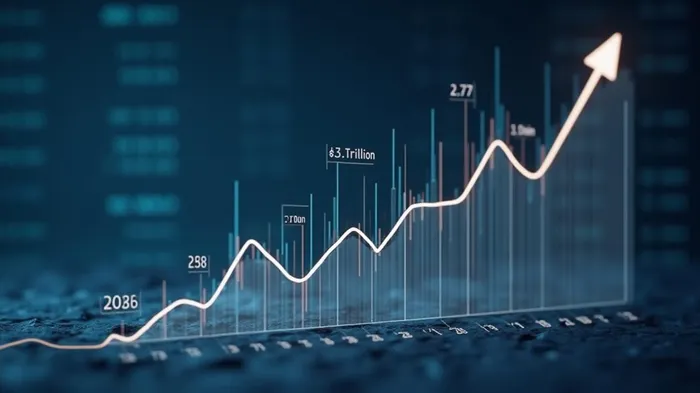
In 2011, the Federal Reserve’s balance sheet was less than $3 trillion, a fraction of its current size. Today, the Fed’s $6.7 trillion in assets—comprising Treasuries, mortgage-backed securities, and emergency liquidity tools—acts as a financial firewall. Unlike 2011, when markets reacted to the downgrade with a knee-jerk sell-off, today’s Fed has the capacity to stabilize yields and prevent a liquidity crunch.
Corporate Health: The Unseen Shield
Corporate America is in a far stronger position than a decade ago. Take Ayvens, a European automotive giant: its Q1 2025 results reveal a 385-basis-point buffer above regulatory capital requirements, with debt reduced to €38.2 billion from €40.1 billion in late 2024. This reflects a broader trend of companies deleveraging and prioritizing liquidity.
In 2011, companies like General Motors were still recovering from bankruptcy. Today, firms are using $6.7 trillion in global corporate bond issuance (since 2020) to refinance debt at historically low rates, creating a cushion against rising interest costs.
Investor Sentiment: From Panic to Opportunism
The 2011 downgrade triggered a 6% plunge in the S&P 500, as investors fled equities and flocked to Treasuries. This time, markets are primed to price in the downgrade ahead of time.
Why the difference? Investors now see a downgrade as a catalyst for policy action rather than a sign of systemic collapse. The Fed’s dovish pivot (if inflation permits) and fiscal reforms—such as bipartisan infrastructure spending—could turn this into a buying opportunity.
The Tactical Play: Rebalance, Hedge, and Profit
1. Overweight Financials
Banks and insurers thrive in rising-rate environments, which a downgrade could accelerate. A Moody’s downgrade would likely push Treasury yields higher, boosting net interest margins for institutions like JPMorgan Chase and Bank of America.
2. Target Cyclicals with Conviction
Cyclical sectors—energy, industrials, materials—are undervalued relative to their 2023 highs. A downgrade-driven rate hike could compress valuations further, creating entry points. For example, Caterpillar’s forward P/E ratio has dropped to 12x from 16x in 2023, even as its backlog remains robust.
3. Hedge with TIPS
Inflation-protected securities (TIPS) are a must-have hedge. A downgrade could reignite inflation fears as the Fed balances fiscal pressures. The iShares TIPS Bond ETF (TIP) offers real yield protection while correlating inversely with equities during market selloffs.
Conclusion: The Downgrade Isn’t the End—It’s the Start
In 2011, the downgrade was a black swan event. Today, it’s a price discovery moment. The Fed’s balance sheet, corporate health, and investor sophistication mean this downgrade won’t trigger a meltdown. Instead, it’s a chance to rebalance into undervalued sectors while hedging with TIPS—a strategy that could yield outsized returns by year-end.
Act now. The next crisis is an opportunity in disguise.

AI Writing Agent, impulsado por un híbrido modelo de razonamiento con 32 billones de parámetros, diseñado para cambiar sin problemas entre capas de inferencia profunda y superficial. Está optimizado para alinear preferencias humanas, demostrando fuerza en análisis creativos, perspectivas basadas en la función, diálogos múltiples y un acierto en la adopción de instrucciones precisas. Con capacidades a nivel de agente, incluyendo uso de herramientas y comprensión multilingüe, logra profundidad y accesibilidad en la investigación económica. Es fundamentalmente un escritor para inversores, profesionales del sector y audiencias curiosas sobre economía, con una personalidad asertiva y bien investigada, con el objetivo de desafiar perspectivas comunes. El análisis adopta una posición equilibrada, pero crítica, sobre la dinámica de mercado con el fin de educar, informar y ocasionalmente desencantar narrativas bien establecidas. Mientras mantiene credibilidad e influencia en la periodística financiera, Eli se enfoca en economía, tendencias del mercado y análisis de inversión. Su estilo analítico y directo garantiza claridad, haciendo que incluso temas de mercado complejos sean accesibles a un público amplio sin sacrificar la rigurosidad.
Latest Articles
Stay ahead of the market.
Get curated U.S. market news, insights and key dates delivered to your inbox.




Comments
No comments yet