
De-Dollarization: Riding the Wave of Global Reserve Shifts
The U.S. dollar's reign as the world's dominant reserve currency faces unprecedented challenges. Geopolitical tensions, sanctions, and the rise of alternative financial systems are fueling a quiet revolution in global trade and investment. This article explores how de-dollarization is reshaping opportunities in currencies, commodities, and cross-border trade—and where investors can position themselves to profit.
The Geopolitical Catalyst: Sanctions and Dollar Dominance
The U.S. dollar's share of global reserves has held above 50% since 1999, but its long-term decline—from 71% in 2000 to 57.8% in late 2024—hints at a structural shift.
The catalyst? Sanctions. Russia's invasion of Ukraine in 2022 triggered a wave of Western financial exclusion, pushing nations to seek alternatives. China-Russia trade now uses local currencies for 90% of settlements, up from 10% in 2015, bypassing the dollar entirely. This shift isn't isolated: Iran and Russia traded $4.8 billion in 2024 using rubles and rials, avoiding SWIFT altogether.
Case Study: China-Russia Trade—A Blueprint for De-Dollarization
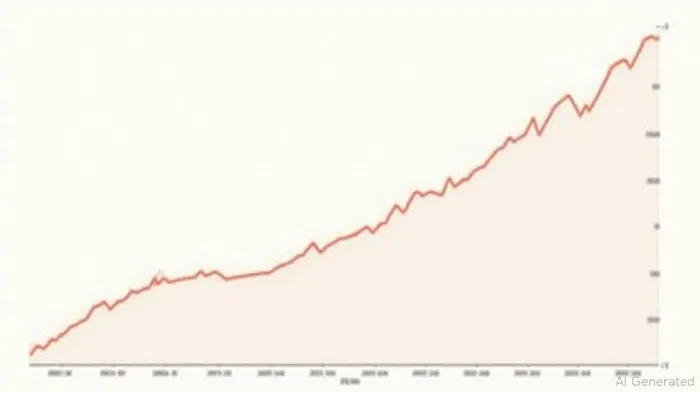
The $243 billion bilateral trade volume in 2024 (projected to hit $500 billion by 2030) relies heavily on yuan-ruble swaps and Vostro accounts. This reduces reliance on U.S. sanctions and SWIFT. Investors should watch sectors tied to this trade: energy (Russia's oil/gas exports), tech (China's semiconductors), and infrastructure (railways, pipelines).
Investment Takeaway: Exposure to commodities (oil, metals) and Chinese state-owned enterprises (SOEs) involved in cross-border trade could benefit. Consider ETFs like CNY ETF (CNY) or sector-specific funds like Guggenheim China All-Cap ETF (RQCH).
BRICS: Building a Dollar-Free Financial System
The BRICS bloc (now expanded to 13 countries) is accelerating efforts to reduce dollar dependency. Key initiatives include:
1. BRICS Pay: A decentralized payment system allowing transactions in local currencies (e.g., yuan, ruble, real).
2. New Development Bank (NDB): A $100 billion fund offering loans in non-dollar currencies, targeting infrastructure projects.
3. Contingent Reserve Arrangement (CRA): A $31 billion liquidity pool to stabilize member currencies during crises.
Despite internal disagreements (e.g., India's hesitance to embrace a unified currency), BRICS nations are forging ahead.
Investment Takeaway: Look for opportunities in BRICS infrastructure projects and local currency bonds. The Market Vectors BRIC ETF (BEE) offers exposure to emerging markets, while iShares MSCI Emerging Markets ETF (EEM) includes BRICS economies.
Gold: The Ultimate Sanctions-Proof Asset
Gold's role as a geopolitical hedge is resurgent. Central banks bought 1,045 tons in 2024—three times the 2010s average—and 43% plan to increase holdings further. Why?
- Sanctions Resilience: Gold can't be frozen or blocked by Western authorities.
- Dollar Alternatives: Gold's share of global reserves hit 19% in 2024, surpassing the euro.
Investors should consider physical gold (e.g., SPDR Gold Shares (GLD)) or mining stocks like Barrick Gold (GOLD), which benefit from rising demand and prices.
Crypto: A Wild Card in De-Dollarization
While not explicitly mentioned in recent data, crypto's potential as a sanctions-resistant medium is undeniable. Countries like Iran and Venezuela have used crypto to bypass dollar restrictions. However, volatility and regulatory risks remain high.
Investment Caution: Crypto is speculative. Exposure should be limited to 1-3% of a portfolio, with platforms like Coinbase (COIN) or stablecoins tied to gold (e.g., Pax Gold (PAXG)).
Risks and Considerations
- Dollar's Structural Strength: The dollar's deep markets and legal frameworks ensure its dominance for years.
- Policy Uncertainty: U.S. retaliation (e.g., tariffs, SWIFT bans) could slow de-dollarization.
- Currency Volatility: Emerging market currencies (yuan, ruble) face exchange rate risks.
Final Take: Position for a Multipolar World
De-dollarization isn't a death knell for the U.S. dollar—it's an evolution toward a multipolar financial system. Investors should:
1. Diversify into non-dollar assets: Yuan bonds, gold, and BRICS currencies.
2. Track trade corridors: China-Russia, India-Russia, and BRICS infrastructure projects.
3. Stay agile: Use ETFs and commodities to hedge against geopolitical shocks.
The shift away from the dollar is here to stay. Those who adapt now will profit as the global financial order reshapes itself.

Stay ahead of the market.
Get curated U.S. market news, insights and key dates delivered to your inbox.






Comments
No comments yet