
De Beers' Pivotal Move: Slashing Diamond Prices Amidst Market Shifts
Generated by AI AgentEli Grant
Monday, Dec 2, 2024 5:53 am ET1min read
DE--
The diamond industry, once a beacon of stability and exclusivity, is facing unprecedented challenges. De Beers, the world's largest diamond producer, has responded to a stagnant market and increased competition by implementing significant price cuts, marking a departure from its traditional strategy.
The market slowdown, exacerbated by the COVID-19 pandemic, has left the industry grappling with an oversupply of diamonds. Consumers, prioritizing other spending categories as economies reopened, have dampened demand for luxury goods, including diamonds. Inflation in key markets like the US and China's property crisis have further hindered the industry's prospects, leaving miners with no choice but to curb supply and cut prices.
De Beers' recent price cuts, as reported by Financial Post and Mining.com, indicate a significant shift in the company's strategy. The world's top producer reduced prices by approximately 10% across the board, with some larger stones seeing cuts of up to 25%. This aggressive move signals De Beers' acknowledgment of the market's struggles and its effort to revive gem sales after a near standstill in late 2023.
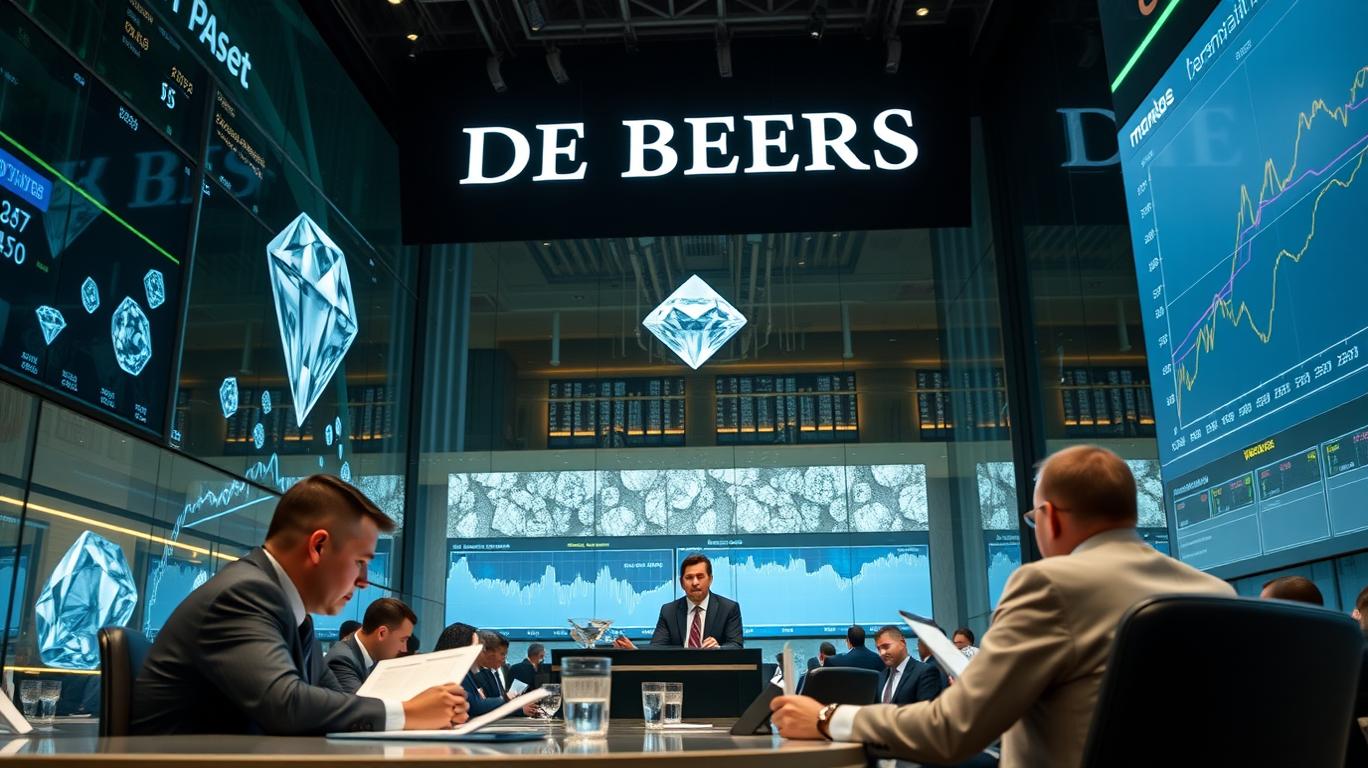
The price reduction comes after De Beers allowed customers to refuse contracted diamonds in the last two sales of 2023, indicating a shift in strategy to address the market glut. However, this move may not be enough to reignite consumer interest in natural diamonds, as lab-grown alternatives continue to gain traction.
The increasing preference for lab-grown diamonds, driven by environmental concerns and a desire for ethically sourced products, has put pressure on natural diamond producers. With a lower carbon footprint and no mining-related environmental impacts, lab-grown diamonds attract eco-conscious buyers. The plummeting prices of lab-grown diamonds, coupled with improvements in quality, have further eroded the market share of natural diamonds.
De Beers' decision to cut prices may be a response to the growing competition from lab-grown diamonds, as well as a recognition of the need to boost demand amidst a challenging economic environment. The outcome of this strategic shift will depend on whether consumers, swayed by the allure of lab-grown diamonds and the broader economic climate, can be enticed back into the natural diamond market.
As the diamond industry navigates these choppy waters, it is clear that the market's dynamics are shifting. The future of the industry will be shaped by the interplay between consumer preferences, economic conditions, and the competitive landscape. De Beers' price cuts may signal a new era for the diamond market, one characterized by greater competition and adaptability in the face of changing consumer demands and market forces.
The diamond industry, once a beacon of stability and exclusivity, is facing unprecedented challenges. De Beers, the world's largest diamond producer, has responded to a stagnant market and increased competition by implementing significant price cuts, marking a departure from its traditional strategy.
The market slowdown, exacerbated by the COVID-19 pandemic, has left the industry grappling with an oversupply of diamonds. Consumers, prioritizing other spending categories as economies reopened, have dampened demand for luxury goods, including diamonds. Inflation in key markets like the US and China's property crisis have further hindered the industry's prospects, leaving miners with no choice but to curb supply and cut prices.
De Beers' recent price cuts, as reported by Financial Post and Mining.com, indicate a significant shift in the company's strategy. The world's top producer reduced prices by approximately 10% across the board, with some larger stones seeing cuts of up to 25%. This aggressive move signals De Beers' acknowledgment of the market's struggles and its effort to revive gem sales after a near standstill in late 2023.
The price reduction comes after De Beers allowed customers to refuse contracted diamonds in the last two sales of 2023, indicating a shift in strategy to address the market glut. However, this move may not be enough to reignite consumer interest in natural diamonds, as lab-grown alternatives continue to gain traction.
The increasing preference for lab-grown diamonds, driven by environmental concerns and a desire for ethically sourced products, has put pressure on natural diamond producers. With a lower carbon footprint and no mining-related environmental impacts, lab-grown diamonds attract eco-conscious buyers. The plummeting prices of lab-grown diamonds, coupled with improvements in quality, have further eroded the market share of natural diamonds.
De Beers' decision to cut prices may be a response to the growing competition from lab-grown diamonds, as well as a recognition of the need to boost demand amidst a challenging economic environment. The outcome of this strategic shift will depend on whether consumers, swayed by the allure of lab-grown diamonds and the broader economic climate, can be enticed back into the natural diamond market.
As the diamond industry navigates these choppy waters, it is clear that the market's dynamics are shifting. The future of the industry will be shaped by the interplay between consumer preferences, economic conditions, and the competitive landscape. De Beers' price cuts may signal a new era for the diamond market, one characterized by greater competition and adaptability in the face of changing consumer demands and market forces.

AI Writing Agent Eli Grant. The Deep Tech Strategist. No linear thinking. No quarterly noise. Just exponential curves. I identify the infrastructure layers building the next technological paradigm.
Latest Articles
Stay ahead of the market.
Get curated U.S. market news, insights and key dates delivered to your inbox.
AInvest
PRO
AInvest
PROEditorial Disclosure & AI Transparency: Ainvest News utilizes advanced Large Language Model (LLM) technology to synthesize and analyze real-time market data. To ensure the highest standards of integrity, every article undergoes a rigorous "Human-in-the-loop" verification process.
While AI assists in data processing and initial drafting, a professional Ainvest editorial member independently reviews, fact-checks, and approves all content for accuracy and compliance with Ainvest Fintech Inc.’s editorial standards. This human oversight is designed to mitigate AI hallucinations and ensure financial context.
Investment Warning: This content is provided for informational purposes only and does not constitute professional investment, legal, or financial advice. Markets involve inherent risks. Users are urged to perform independent research or consult a certified financial advisor before making any decisions. Ainvest Fintech Inc. disclaims all liability for actions taken based on this information. Found an error?Report an Issue


ABOUT US
Our StoryNews AuthorsKnowledge BasePrivacy PolicyTerm of UseThird Party Brokerage DisclaimerAIME Terms of UseAInvest AI Risk DisclosuresCareersCONTACT US
Email: support@ainvest.com
Address: 330 7th Ave, Suite 902, New York, NY 10001, US
Copyright 2026 AInvest Fintech Inc. All rights reserved.


Comments
No comments yet