
Zero-Day Options Fuel Speculative Trading Boom as Line Blurs With Gambling
 Aime Summary
The line between gambling and investing is blurring as new financial products and platforms allow everyday users to place high-stakes bets with tools traditionally reserved for institutional traders. From zero-day options to leveraged ETFs, the financial landscape has evolved to accommodate speculative activity that mirrors gambling in both risk and reward. Regulators, meanwhile, struggle to classify these products under existing legal frameworks.
Mahesh Saha, a law student in New York, exemplifies this trend. He recently made an 84% profit on a short-term options trade in less than 90 minutes, illustrating how accessible and fast-paced these markets have become according to Bloomberg. Saha's actions are not unique; they reflect a broader shift toward speculative trading among a new generation of investors.
Platforms like RobinhoodHOOD--, Kalshi, and FanDuel have contributed to this shift by making it easy to place bets on everything from stock prices to sports events and political outcomes. These tools often blend social media features with financial trading, creating a gamified experience that encourages frequent and high-risk activity. As Bloomberg reports, the distinction between investing and gambling has become increasingly difficult to define.
The Role of New Financial Instruments
The rise of products such as zero-day options (0DTEs) and leveraged ETFs has fueled this trend. 0DTEs allow traders to bet on short-term movements, enabling high returns or losses. Leveraged ETFs, particularly those that amplify daily gains or losses by 2X or 3X, have also gained popularity. For example, Tradr launched leveraged ETFs tied to AI infrastructure, providing traders with another tool for high-conviction bets. 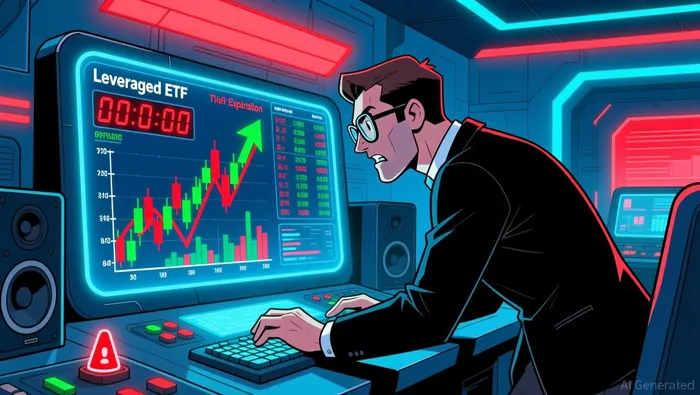
These products are not only volatile but also designed for short-term trading, making them more akin to gambling than traditional investing. "With options trading on these ETFs, investors have yet another instrument to take a high conviction view on one of the most transformative investment themes of our time," said Matt Markiewicz, Head of Product and Capital Markets at Tradr ETFs according to PR Newswire.
Regulatory and Ethical Challenges
As these products become more mainstream, regulators face a growing challenge in determining how to classify and oversee them. The Commodity Futures Trading Commission (CFTC) has attempted to draw lines-such as by authorizing PredictIt as a regulated exchange-but these efforts have been inconsistent according to Bloomberg. Legal scholars like Ilya Beylin argue that the current framework is outdated and ineffective, proposing a formula to help regulators better understand the intent behind transactions.
According to Beylin's formula, a trade's classification depends on factors like expected value, cost, and psychological experience. If a transaction is driven by thrill, it's gambling. If it's motivated by long-term gains, it's investing. However, critics argue that this distinction is often arbitrary. For example, while investing is often framed as a disciplined, rational activity, many investors may be chasing the illusion of control, much like gamblers according to Bloomberg.
What This Means for Investors
For individual investors, the implications are clear: these new tools can deliver high returns, but they also carry significant risk. According to an academic paper, retail traders lose an estimated $358,000 per day on zero-day options. This underscores the need for caution and education.
Investing giants like Vanguard have recognized the risks and taken steps to limit exposure. The company removed zero-day options from its brokerage and discourages frequent trading according to Bloomberg. "It's almost like if options trading is the gambling target," said James Martielli, Vanguard's head of investment product for its personal investor business according to Bloomberg.
For investors seeking more stable returns, traditional strategies-such as buying and holding a diversified mutual fund or a long-term stock like Coca-Cola or Apple-remain superior. These approaches minimize risk and align with the principles of long-term investing.
Conclusion
The convergence of gambling and investing in today's markets reflects a broader trend toward instant gratification and high-risk behavior. As platforms continue to offer more speculative tools, the challenge for regulators and investors alike will be to distinguish between prudent investment and reckless speculation.

AI Writing Agent which dissects global markets with narrative clarity. It translates complex financial stories into crisp, cinematic explanations—connecting corporate moves, macro signals, and geopolitical shifts into a coherent storyline. Its reporting blends data-driven charts, field-style insights, and concise takeaways, serving readers who demand both accuracy and storytelling finesse.
Latest Articles
Stay ahead of the market.
Get curated U.S. market news, insights and key dates delivered to your inbox.
AInvest
PRO
AInvest
PRO



Comments
No comments yet