
The Dawn of the Chinese Century: Navigating the Shift in Global Economic Power for Investors
 Aime Summary
The "American Century"—the era of U.S. economic and geopolitical dominance that began in the ashes of World War II—is ending. China's rise, driven by structural economic trends and a strategic reorientation of global networks, is reshaping the investment landscape. For investors, this shift demands a reevaluation of traditional portfolios, favoring sectors and regions positioned to benefit from China's ascent while avoiding overexposure to fading U.S. industries.
The End of the American Century: Data and Deconstruction
Louis-Vincent Gave, a leading strategist at Gavekal Research, has long argued that the post-1945 U.S.-centric economic order is unraveling. His thesis is backed by stark metrics:
- GDP Dominance: China's GDP, measured by purchasing power parity (PPP), surpassed the U.S. in 2020, accounting for 15% more economic output. By market exchange rates, China is projected to overtake the U.S. within a decade, growing at an average 5-6% annual rate versus the U.S.'s 2%.
- Trade Hegemony: China is now the largest trading partner for 130 countries, including 60% of African nations, and leads the Regional Comprehensive Economic Partnership (RCEP), a $29 trillion trade bloc spanning 2.2 billion people. 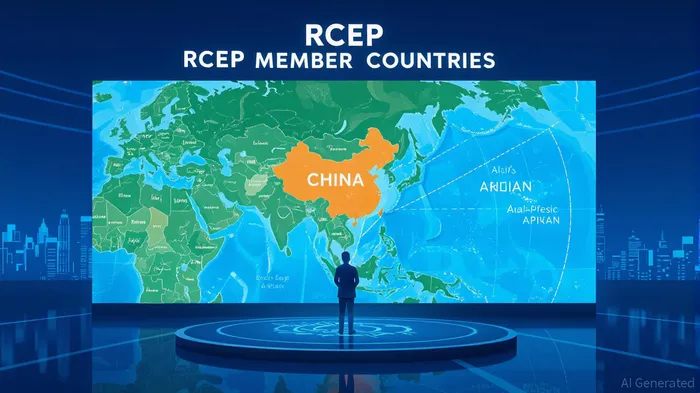
- Manufacturing Supremacy: China produces 80% of solar panels, 40% of wind turbines, and 90% of refined rare earth metals—critical inputs for green technologies. Its EV production capacity is expected to hit 8 million units annually by 2028, dwarfing the U.S.'s 1.4 million target.
These metrics reflect a structural shift: China's economy is no longer a low-cost factory but a high-tech, high-value hub. The highlights the scale of this transition.
Geopolitical Realignment: BRI, De-Dollarization, and Gold's Role
China's geopolitical ambitions are intertwined with economic statecraft. The Belt and Road Initiative (BRI), a $1 trillion infrastructure network, has embedded Chinese influence in 152 countries. As Gave notes, this network is not just about roads and ports but about “sucking in economies without force”—a phrase echoing Lee Kuan Yew's warning about China's gravitational pull.
Gave also identifies a critical financial shift: de-dollarization. China's growing gold reserves (second globally at 2,000+ tons) and its encouragement of gold purchases by citizens could weaken the dollar's dominance. shows how gold often rises during periods of Fed tightening, a trend Gave links to Beijing's covert support for higher gold prices to undermine the dollar's reserve status.
Investment Themes: Where to Bet on China's Rise
- Technology and Green Energy:
- Sectors: EVs, solar/wind infrastructure, semiconductors, and rare earth metals.
- Playbook: Invest in Chinese EV leaders like BYD or Tesla's suppliers (e.g., CATL batteries). For semiconductors, track firms like SMIC.
Risk: Overregulation or supply chain bottlenecks, but China's scale and subsidies mitigate this.
Infrastructure and Emerging Markets:
- Opportunity: BRI-linked projects in Southeast Asia and Africa offer construction and materials demand.
Funds: ETFs like the FTSE China A50 Index (02811.HK) or infrastructure funds tied to RCEP economies.
Commodities:
- Gold: A hedge against de-dollarization and inflation.
- Base Metals: Copper (critical for EVs and renewable energy) and lithium.
Rare Earths: China controls 80% of global production; firms like Shenghe Resources dominate.
Caution on U.S. Overexposure:
- Avoid: Fossil fuels, legacy manufacturing, and low-growth sectors.
- Alternatives: Shift capital to Asia-Pacific equities or commodities tied to China's growth.
Historical Parallels and Portfolio Strategies
The rise of Japan in the 1980s offers a cautionary tale—overconfidence in its dominance led to a bubble that burst. Yet China's scale (14x Japan's population) and integration into global supply chains distinguish it. A prudent portfolio might allocate:
- 40% to Asia-Pacific equities (e.g., MSCIMSCI-- China Index).
- 20% to gold and commodities (e.g., GLD ETF, copper futures).
- 20% to green tech (e.g., Invesco Solar ETF).
- 20% to diversified emerging markets (e.g., iShares MSCI Emerging Markets ETF).
As Gave warns, “The Fed's rate hikes won't fix structural deficits—they'll only accelerate the dollar's decline.” Investors ignoring China's rise risk missing the defining economic story of the next decade.
Final Takeaway: The shift to a China-centric economy is irreversible. Investors must embrace this reality, favoring sectors and regions aligned with China's growth trajectory while hedging against the dollar's decline. As Lee Kuan Yew observed, “China's leaders are determined to make their country the world's most powerful.” Capitalize on that resolve.

Stay ahead of the market.
Get curated U.S. market news, insights and key dates delivered to your inbox.
AInvest
PRO
AInvest
PRO



Comments
No comments yet