
David Ellison vs. Larry Ellison: Comparing Valuation Gains in 2025
 Aime Summary
As the world's top tech investors and billionaires continue to reshape global markets, the fortunes of OracleORCL-- co-founder Larry Ellison and his son, David Ellison—founder of Cublr and a key figure in the AI and deepfake space—offer an intriguing contrast. In 2025, Larry Ellison briefly reclaimed the title of the world's richest person with a net worth of $393 billion, driven by Oracle's strong performance and AI-linked growth. Meanwhile, David Ellison has been quietly building a valuation story of his own, with Cublr and investments in AI infrastructure gaining traction. The comparison between the two offers a fascinating lens into the evolving dynamics of tech valuation in an era of artificial intelligence and generative content.
The Valuation Trajectories of Two Tech Powerhouses
Larry Ellison's wealth has surged largely due to Oracle's strong AI contracts and rising stock prices. By the end of Q3 2025, Oracle had signed four multibillion-dollar AI deals, and its share price had climbed 40% to $338. Oracle is also embedding AI into its business processes through its NetSuite platform, which is set to roll out in 2026. Larry Ellison's net worth reached $296 billion by early 2025, putting him at the top of the billionaire rankings alongside tech titans like Elon Musk and Jeff Bezos.
On the other hand, 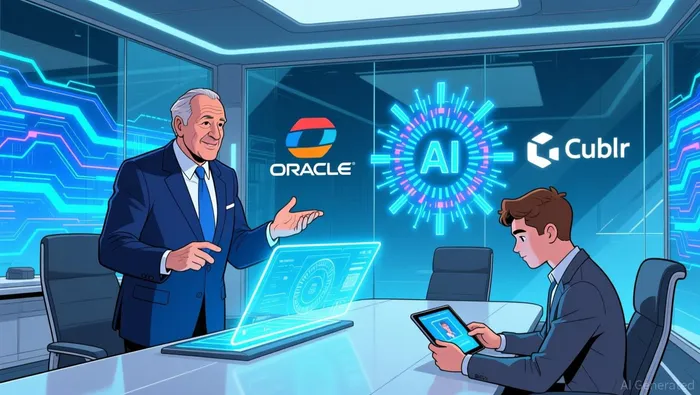 David Ellison has focused more on AI innovation, including Cublr—a platform for AI-generated content. His investments in the AI sector have grown alongside the broader AI boom, which saw global capital expenditures jump from $250 billion in 2024 to over $405 billion by mid-2025. Despite the sector's volatility, David's ventures are positioned to benefit from the growing demand for AI-driven tools and applications.
Market Forces Shaping AI Valuation in 2025
The AI sector has seen explosive growth in 2025, with major players like Nvidia, Microsoft, and Amazon leading the charge. Nvidia's Q3 earnings report showed $57.01 billion in revenue, a 62% year-over-year increase, driven by demand for AI infrastructure. The company now has a $500 billion order book for next-generation GPUs through 2026.
Meanwhile, Microsoft and OpenAI have started to scale back their AI sales goals after falling short of initial targets. This shift signals a growing realism in the market, with CIOs prioritizing measurable outcomes over hype. Still, the AI arms race continues, with companies like Amazon and Oracle spending billions on AI infrastructure. Amazon burned through $222 billion in free cash flow from 2020 to Q3 2025, while Oracle spent $94 billion over the same period.
Despite these headwinds, AI-related investments remain strong. Companies are increasingly using debt to fund AI development, with Oracle's debt-to-equity ratio hitting 500%. The AI market remains a high-risk, high-reward environment, where valuation growth is driven by both performance and perception.
Implications for Investors and the AI Market
For investors, the contrast between Larry and David Ellison highlights the dual forces shaping AI valuation: enterprise adoption and speculative demand. Larry's Oracle is focused on enterprise AI integration and long-term contracts, making it a more stable, albeit slower-moving, investment. By contrast, David's ventures—particularly those in AI content generation—represent the fast-moving, speculative edge of the market, where valuations can rise and fall rapidly based on trends and investor sentiment.
This duality is also reflected in broader market trends. While AI stocks have surged, institutional investors like Peter Thiel and Bridgewater have reduced their Nvidia holdings due to valuation concerns. This signals a potential correction in the AI sector, especially if growth slows or demand fails to meet expectations.
Meanwhile, alternative assets like gold and cryptocurrency have also played a role in investor behavior. Gold prices broke through $4,100 in 2025, driven by expectations of Federal Reserve rate cuts and a weaker dollar. Cryptocurrencies like XRPXRP-- showed signs of bullish momentum, with whale accumulation and a drop in exchange-held XRP suggesting long-term buyer interest according to analysis.
Looking Ahead: Valuation Sustainability and the Future of AI
As we move into 2026, the sustainability of AI valuations will depend heavily on real-world applications and enterprise adoption. Larry Ellison's Oracle is well-positioned to benefit from this trend, with strong enterprise contracts and a growing AI infrastructure. On the other hand, David Ellison's ventures remain in the speculative phase, relying on market confidence and rapid innovation.
The broader AI market is also evolving. While the AI arms race continues, companies are beginning to prioritize practical value over hype. Microsoft and OpenAI have adjusted their AI strategies, focusing more on tangible business outcomes. This shift could lead to a more balanced valuation environment, where companies are judged by actual performance rather than speculative potential.
For now, both Larry and David Ellison represent different facets of the AI economy. Larry's Oracle is a long-term, enterprise-focused player, while David's ventures reflect the fast-paced, speculative nature of AI innovation. Investors should keep both strategies in mind as they navigate the rapidly changing landscape of AI and technology valuation.

Delivering real-time insights and analysis on emerging financial trends and market movements.
Latest Articles
Stay ahead of the market.
Get curated U.S. market news, insights and key dates delivered to your inbox.




Comments
No comments yet