
David Ellison's Hostile Takeover of Paramount Global: Strategic and Financial Implications for Media Consolidation and Shareholder Value


 Aime Summary
The media landscape is undergoing a seismic shift as 's Paramount Global, in partnership with Skydance Media, . Discovery (WBD). , to WBD's undisturbed stock price, . The competing bids highlight a critical juncture in media consolidation, with profound implications for competition, regulatory scrutiny, and shareholder value. This analysis examines the strategic and financial dimensions of Ellison's bid, contrasting it with Netflix's approach and evaluating the broader consequences for the industry.
Strategic Implications of Media Consolidation
Paramount's bid underscores a bold vision for vertical integration in the media sector. By acquiring WBD's entire portfolio-including its cable networks (e.g., CNN, HBO) and streaming platforms-Paramount aims to create a diversified media giant capable of competing with Netflix's dominance in streaming. This strategy contrasts sharply with Netflix's narrower focus on WBD's studio and streaming assets, which excludes traditional television networks. Paramount argues that its offer preserves theatrical movie releases and fosters content diversity, positioning it as a more consumer-friendly alternative.
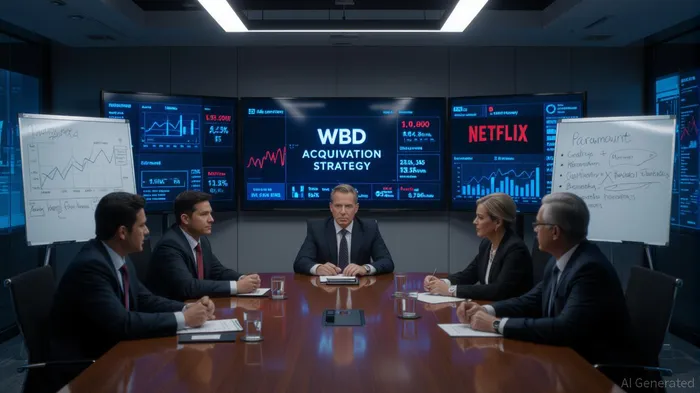
However, the broader scope of Paramount's bid also raises antitrust concerns. The combined entity would control a significant share of global (SVOD) subscribers, potentially exacerbating market concentration. According to a report by Deadline, the Netflix-WBD deal alone would create a 43% market share in SVOD, triggering regulatory scrutiny in the U.S. and the European Union. Paramount's inclusion of WBD's cable networks further complicates the regulatory calculus, as it could amplify concerns about media ownership fragmentation and its impact on democratic discourse.
Financial Risks and Benefits for Shareholders
From a shareholder value perspective, Paramount's all-cash offer is structurally advantageous. At $30 per share, , which includes a mix of cash and stock. This structure appeals to WBDWBD-- shareholders prioritizing certainty over long-term strategic alignment, particularly given Netflix's inexperience in large-scale acquisitions (https://www.theguardian.com/business/2025/dec/08/paramount-skydance-warner-bros-bid).
Yet, Paramount's bid is not without financial risks. , as well as equity from the Ellison family and RedBird Capital (https://www.prnewswire.com/news-releases/paramount-launches-all-cash-tender-offer-to-acquire-warner-bros-discovery-for-30-per-share-302635412.html). This heavy leverage exposes Paramount to interest rate volatility and refinancing risks, which could strain its balance sheet. In contrast, Netflix's offer, while lower in per-share value, benefits from a simpler regulatory path and a quicker closing timeline of 6–9 months (https://variety.com/2025/tv/news/paramount-hostile-takeover-bid-warner-bros-discovery-1236603175/). note that Netflix's stock-based component also aligns with long-term shareholder interests, though it introduces exposure to market fluctuations.
Regulatory Challenges and Political Dynamics
Regulatory hurdles remain a pivotal factor in this contest. Paramount has positioned its bid as a pro-competitive alternative to the Netflix-WBD deal, emphasizing its alignment with consumer and creative community interests. However, the European Union's stringent antitrust framework could pose significant obstacles, particularly if regulators view the combined entity as a threat to market fairness.
Ellison has leveraged political connections to bolster his case, citing his relationship with President and his advocacy for competitive markets. This political angle introduces an element of unpredictability, as regulatory outcomes may hinge on the administration's stance toward media consolidation. Meanwhile, Netflix's deal faces scrutiny over its potential to create a streaming duopoly with Disney, further complicating its approval prospects.
Expert Analysis and Market Reactions
Experts remain divided on the merits of each bid. analysis highlights Paramount's offer as a "superior value proposition" for WBD shareholders, citing its all-cash structure and regulatory clarity. Conversely, Variety cautions that Paramount's debt-heavy financing model could deter investors during a period of economic uncertainty. The potential for a bidding war also looms, with some analysts suggesting that NetflixNFLX-- may raise its offer to retain WBD's assets (https://www.businessworld.in/article/netflix-warner-bros-82-7b-deal-faces-108-4b-hostile-takeover-analysis-582852).
From a strategic standpoint, the outcome of this battle will shape the future of media consolidation. A Paramount-led WBD could redefine the industry's balance between streaming and traditional media, while a Netflix-WBD merger might accelerate the decline of cable networks. Shareholders must weigh these possibilities against the financial and regulatory risks inherent in both paths.
Conclusion
David Ellison's hostile takeover of WBD represents a high-stakes gamble with far-reaching implications. While Paramount's all-cash bid offers immediate value and regulatory simplicity, its financial leverage and broader scope introduce significant risks. Conversely, Netflix's streamlined approach prioritizes speed and strategic alignment but faces antitrust headwinds. As regulators and shareholders deliberate, the outcome will not only determine WBD's fate but also set a precedent for media consolidation in an increasingly fragmented market.

Stay ahead of the market.
Get curated U.S. market news, insights and key dates delivered to your inbox.
AInvest
PRO
AInvest
PRO



Comments
No comments yet