
David Ellison's Hostile Bid for Warner Bros. Discovery: What This Means for Hollywood and Investors


 Aime Summary
The entertainment industry is in the throes of one of the biggest corporate battles in recent years. At the center of the storm is David Ellison, the CEO of Paramount Global, who has launched a $108.4 billion hostile bid to acquire Warner Bros.WBD-- Discovery (WBD). This move, backed by his father Larry Ellison of Oracle fame, is a direct challenge to Netflix's $72 billion deal for WBD's film studio and HBO Max streaming service. With stakes this high, the implications are far-reaching for Hollywood, investors, and the broader media landscape.
The Core of the Battle: What's at Stake in the $108 Billion Bid
Paramount Skydance's all-cash offer of $30 per share eclipses Netflix's $27.75-per-share proposal, which includes 15% in stock and hinges on uncertain asset sales. The $2.8 billion difference in the two offers alone underscores the intensity of this competition. According to CNBC, Paramount's bid also promises greater regulatory clarity, as it is fully backed by the Ellison family, RedBird Capital, and a coalition of banks including Bank of America, Citi, and Apollo Global Management.
Paramount argues that its all-cash offer provides a more straightforward path to approval, while Netflix's inclusion of equity raises concerns about market uncertainty. At the same time, Paramount's bid includes a promise of 30 annual theatrical releases, a significant draw for investors who are betting on the return to traditional moviegoing. But WBD's board has already rejected Paramount's offer, opting for the Netflix deal despite pressure from some shareholders.
Key Players and Financials: Larry Ellison, RedBird Capital, and the NetflixNFLX-- Rivalry
Larry Ellison's involvement is no small detail. As the founder of Oracle and one of the wealthiest people in the world, his financial backing is a formidable force in this deal. Together with RedBird Capital and Middle Eastern investors, the Ellison family is offering a full, all-cash package that could give them greater leverage in negotiations. Meanwhile, Netflix's offer has been met with skepticism by some analysts, who question the streaming giant's ability to integrate WBD's assets efficiently. This skepticism was reflected in Netflix's stock price, which fell over 3% after Paramount's announcement.
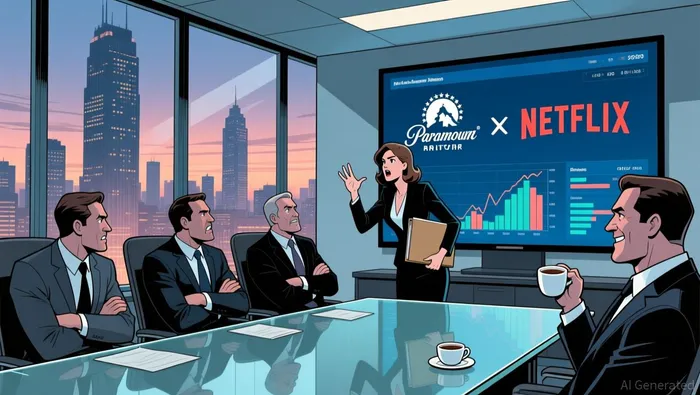
The battle between these two media titans is not just a financial contest but also a strategic one. Netflix has long relied on a direct-to-stream model, while Paramount and WBDWBD-- are pushing for a hybrid approach with evolving release windows. The outcome of this fight will likely set a precedent for how Hollywood studios adapt to the changing media landscape.
What This Means for Investors, Shareholders, and the Market
For investors, this deal represents both opportunity and risk. On one hand, Paramount's aggressive bid could signal a shift toward more traditional media models, which could stabilize the industry in a time of uncertainty. On the other, the regulatory hurdles and competition from Netflix raise the question of whether the deal will ultimately go through.
Shareholders of WBD are also in a tricky position. The company's board has committed to the Netflix deal, but some investors are reportedly open to Paramount's higher offer. This uncertainty has created a volatile market for WBD and NFLXNFLX-- shares, with the latter falling nearly 3.4% in recent trading.
From a broader market perspective, the bidding war is a sign of consolidation in the media industry. With streaming services becoming increasingly expensive to operate, larger studios are seeking to consolidate power and scale. This deal, if successful, could reshape the future of content creation and distribution in the entertainment sector.
Looking Ahead: Regulatory Hurdles and the Uncertain Future of Media Consolidation
The final chapter in this saga is far from written. According to Yahoo Finance, Paramount will likely continue to pressure WBD to reconsider its decision, and there are reports that WBD CEO David Zaslav is weighing whether to raise his offer to cover the $2.8 billion breakup fee for Netflix. At the same time, Paramount has signaled that it may pursue legal action if it believes the auction was rigged in favor of Netflix.
Regulatory approval is another major unknown. Both offers must pass scrutiny from antitrust regulators, and there are concerns that the deal could be seen as anti-competitive. Paramount's all-cash bid may give it an advantage in this regard, but the final decision is far from guaranteed.
In the end, this high-stakes takeover battle is more than just a corporate maneuver—it's a glimpse into the future of media. The winner will not only gain control of one of the most valuable entertainment assets in the world but also set a new benchmark for how Hollywood operates in the streaming era.

Delivering real-time insights and analysis on emerging financial trends and market movements.
Latest Articles
Stay ahead of the market.
Get curated U.S. market news, insights and key dates delivered to your inbox.
AInvest
PRO
AInvest
PRO



Comments
No comments yet