
David Ellison: What Recent Data Means for Investors


 Aime Summary
The Man Behind the Code: Who Is David Ellison?
David Ellison is the son of Larry Ellison, co-founder of OracleORCL--, and has taken a more active role in the company's direction in recent years. As the president and co-CEO of Oracle, he oversees the company's core technologies, including cloud services, enterprise software, and strategic acquisitions. While he may not be as high-profile as his father, David Ellison is instrumental in driving Oracle's innovation and expansion into the next phase of enterprise computing.
Oracle, under David's watch, has made several strategic moves — from acquiring Cerner to doubling down on AI integration. These are not just corporate maneuvers; they reflect broader shifts in how businesses are adapting to a world where data is king and automation is becoming standard. For investors, this means Oracle's trajectory is closely tied to the software industry's evolution, and David Ellison is at the center of it.
Software Trends, Oracle's Moves, and What It Means for Growth
The software industry is undergoing a transformation. Companies that once relied on traditional enterprise software are now pivoting to cloud-based solutions, AI integration, and data analytics. Oracle, under David Ellison's leadership, has responded with a mix of innovation and acquisition. For example, Oracle's recent investment in generative AI tools and its expansion into healthcare IT via the Cerner acquisition are clear indicators of where the company sees opportunity.
One of the most notable moves was the Cerner acquisition in 2023, 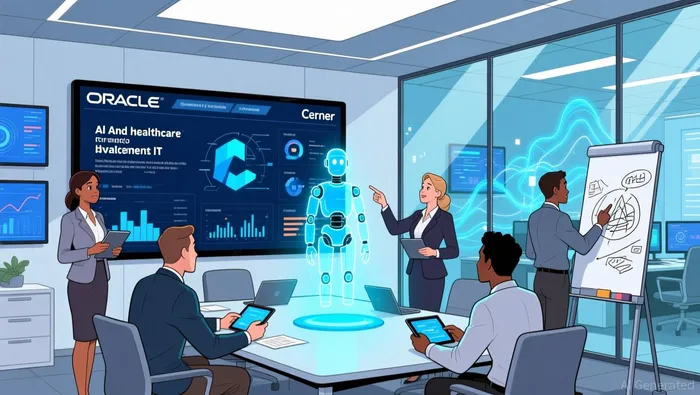 which Oracle has since restructured and refocused to better serve the healthcare technology market. This wasn't just a big purchase; it was a strategic pivot toward a sector that is growing rapidly due to regulatory changes and digital health innovation. Ellison's push into AI and automation tools also reflects an industry-wide shift — the need to streamline operations, reduce costs, and offer smarter solutions to enterprise clients.
For investors, these developments mean Oracle is not just surviving but adapting — and that's a sign of resilience. However, it also means that Oracle's growth will be more dependent on its ability to execute on these large-scale integrations and innovation projects than on traditional enterprise software sales alone.
What This Means for Retail Investors
Oracle is no stranger to large-scale moves, but the pace of its recent initiatives has raised questions about execution risk and long-term profitability. For retail investors, the key is to understand the balance Oracle is trying to strike between short-term performance and long-term innovation.
On one hand, Oracle remains a cash-flow-positive company with a strong enterprise software customer base. On the other, Ellison's aggressive investments in AI and cloud infrastructure require significant capital and carry the risk of overcommitment. The question for investors is whether Oracle's long-term vision justifies these costs — and whether Ellison can maintain the company's profitability while pushing into new frontiers.
Still, Oracle has a proven track record of turning bold moves into long-term value. The key for investors is to stay engaged, monitor how these new initiatives are performing, and assess whether Oracle's strategy is paying off in the stock price. At the end of the day, Oracle's ability to adapt is a sign of strength — and that's something investors should keep an eye on as the software landscape continues to evolve.
Looking Ahead: What's Next for Oracle and Its Leadership
As 2025 comes to a close, Oracle — and David Ellison — stand at a crossroads. The company has made major strides in cloud computing, AI, and healthcare IT, but the challenge now is scaling these initiatives effectively. With a rapidly evolving tech environment, Oracle's ability to maintain its competitive edge will depend on more than just leadership — it will require consistent innovation and execution.
For investors, the takeaway is clear: Oracle is not resting on its laurels. In fact, it's doubling down on its transformation, and David Ellison is playing a central role in that. Whether that translates to sustained growth will depend on the company's ability to deliver real value to customers — and to investors.
In the end, the story of Oracle in 2025 is one of reinvention. And for the average investor, that means staying informed and watching closely as this tech titan charts its next chapter.

Delivering real-time insights and analysis on emerging financial trends and market movements.
Latest Articles
Stay ahead of the market.
Get curated U.S. market news, insights and key dates delivered to your inbox.




Comments
No comments yet