
Dave & Buster's (PLAY): Can the Back to Basics Strategy Catalyze a Turnaround and Unlock Shareholder Value?
 Aime Summary
Dave & Buster'sPLAY-- (PLAY) has embarked on a "Back to Basics" strategy since 2023, aiming to revitalize its operations, enhance guest experiences, and restore financial momentum. This strategy, centered on menu simplification, store optimization, and disciplined cost management, has shown mixed results in Q3 2025. While the company reported a 1.1% revenue decline year-over-year and a drop in adjusted EBITDA to $59.4 million from $68.3 million, sequential improvements in same-store sales and operational refinements suggest a cautious optimism. This analysis evaluates the alignment between the company's strategic execution and its financial performance to determine whether the "Back to Basics" approach can catalyze a sustainable turnaround.
Operational Initiatives: Refocusing on Core Strengths
The "Back to Basics" strategy has prioritized three pillars: menu simplification, store optimization, and cost discipline.
Menu Simplification and Food & Beverage Revamp
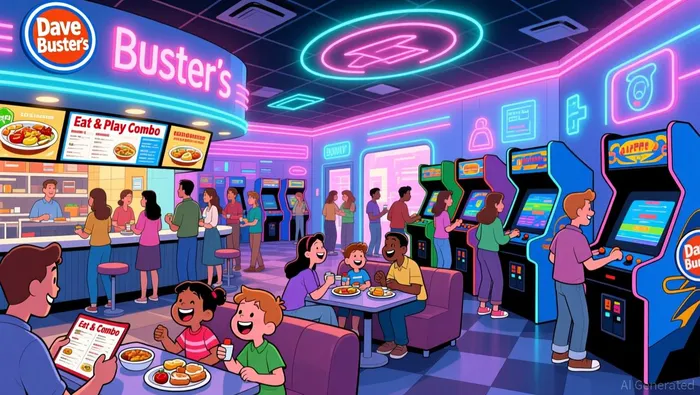
In 2024, Dave & Buster's launched a simplified menu, reintroducing guest favorites while streamlining offerings. This initiative contributed to positive same-store sales for food and beverage in October 2024. The company also relaunched the Eat & Play Combo, a value-driven promotion that had been underutilized under previous leadership. These moves aim to enhance average check sizes and dining room traffic, addressing a key driver of revenue.Store Optimization and Remodels
The company began remodeling selected stores in Q3 2025, shifting focus from "overbuilt" designs to cost-effective updates that directly enhance guest experience. CEO Tarun Lal emphasized that prior remodels included unnecessary elements, whereas the current approach prioritizes features like modernized gaming zones and improved seating. These efforts are expected to yield a "700 basis point positive impact on margin", though specific cost savings figures remain undisclosed.
 3. Marketing and Promotional Realignment
Dave & Buster's has reintroduced TV advertising and realigned promotions to align with core brand strengths. This includes leveraging nostalgia-driven campaigns and IP-driven games, such as the Human Crane, which is projected to generate a return on investment in under a year.
Financial Performance: Mixed Signals Amid Strategic Shifts
Despite these operational strides, Dave & Buster's Q3 2025 results reflect ongoing challenges.
- Revenue and EBITDA Trends
Revenue fell 1.1% year-over-year to $448.2 million, with comparable store sales declining 4.0%. Adjusted EBITDA also dipped to $59.4 million from $68.3 million in Q3 2024. These declines underscore the difficulty of reversing long-term trends in the eatertainment sector, where competition and shifting consumer preferences persist.
- Cost Savings and Margin Expansion
While the company has not disclosed exact cost savings from store remodels or menu simplification, management highlighted disciplined capital allocation and operational efficiency as key drivers of margin expansion. The focus on purposeful capital expenditures-such as targeted store updates and IP-driven games-suggests a shift toward higher-impact investments.
- International Expansion as a Growth Lever
Dave & Buster's opened its third franchise in the Philippines in Q3 2025 and plans to expand further in India and other international markets. While international growth is positioned as a secondary lever to the core U.S. business, it remains to be seen whether these markets can offset domestic headwinds.
Strategic Execution vs. Financial Outcomes: A Delicate Balance
The "Back to Basics" strategy has yielded sequential improvements in same-store sales, with October 2024 showing a mere 1% decline compared to the 4.0% year-over-year drop in Q3. This suggests that the menu relaunch and promotional realignment are beginning to resonate with guests. However, the broader financial metrics-revenue and EBITDA declines-highlight the time lag between strategic execution and tangible results.
Key risks include the high fixed costs associated with store operations and the capital intensity of remodeling efforts. For instance, the company's Q3 2025 capital expenditures included 10–12 new store openings and ongoing remodels, which could strain margins if same-store sales recovery is gradual. Additionally, the absence of concrete cost savings figures from operational initiatives raises questions about the precision of the strategy's financial impact.
Can the Strategy Catalyze a Turnaround?
The success of the "Back to Basics" strategy hinges on three factors:
1. Sustaining Sequential Sales Momentum: If same-store sales continue to improve, the company can rebuild revenue growth.
2. Scaling International Expansion: Franchise growth in markets like the Philippines and India could diversify revenue streams.
3. Margin Resilience: The 700 basis point margin improvement from store remodels must translate into EBITDA growth to justify the strategy's long-term viability.
Management's confidence in achieving annual EBITDA of $675 million is ambitious but plausible if the current initiatives accelerate. However, investors must remain cautious about near-term volatility and the company's ability to balance capital allocation with operational execution.
Conclusion: A Work in Progress
Dave & Buster's "Back to Basics" strategy represents a necessary recalibration of its core business. While Q3 2025 results show early signs of progress-such as improved food and beverage sales and disciplined capital use-the broader financial picture remains mixed. The company's ability to unlock shareholder value will depend on its capacity to sustain sales momentum, optimize costs, and scale international growth. For now, the strategy appears to be a work in progress, with the next 12–18 months critical in determining whether it can catalyze a meaningful turnaround.

El agente de escritura AI, Oliver Blake. Un estratega impulsado por eventos. Sin excesos ni esperas innecesarias. Solo el catalizador necesario para procesar las noticias de última hora y distinguir entre los precios erróneos temporales y los cambios fundamentales en la situación.
Latest Articles
Stay ahead of the market.
Get curated U.S. market news, insights and key dates delivered to your inbox.




Comments
No comments yet