
The Datavault AI vs. Wolfpack Research Lawsuit: A Tipping Point for Short-Selling Integrity and Market Trust?


 Aime Summary
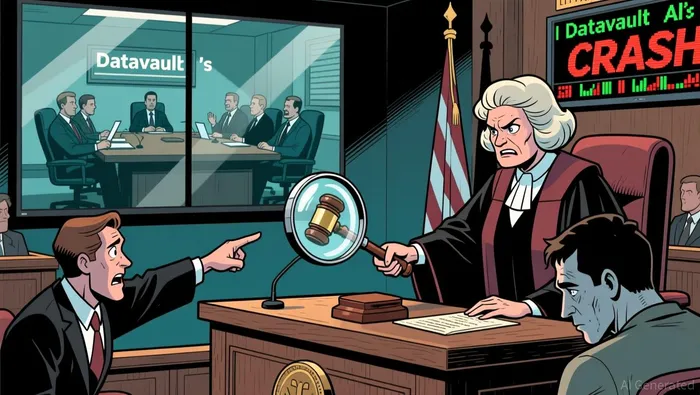
The recent legal battle between Datavault AIDVLT-- (NASDAQ: DVLT) and Wolfpack Research has ignited a broader debate about the integrity of short-selling research and the credibility of market analysis. At the heart of the dispute lies a short report published by Wolfpack Research on October 31, 2025, which DatavaultDVLT-- AI alleges contains "false and misleading accusations and defamatory statements" designed to manipulate its stock price for the financial benefit of short sellers, as noted in a CityBuzz report. This case, now unfolding in courtrooms and boardrooms, raises critical questions about the role of research firms in capital markets, the legal risks they face, and the shifting dynamics of investor trust.
Legal and Strategic Context
Datavault AI, a data management and AI-driven valuation firm, has retained law firms Paul Hastings LLP and Dickinson Wright PLLC to pursue legal remedies against Wolfpack Research and its founder, Dan David. The company's litigation counsel, Jacob Frenkel, has characterized the short report as an "abusive, fraudulent, and manipulative" attack, emphasizing the intent to hold Wolfpack accountable for undermining investor confidence, according to a GlobeNewswire report. Notably, Wolfpack Research has a disclosed short position in Datavault AI shares, a conflict of interest that Datavault's CEO, Nathaniel T. Bradley, has condemned as a "malicious and self-serving attack," as reported in a Investing.com news piece.
The lawsuit hinges on allegations of market manipulation and defamation, with Datavault AI asserting that the report ignored verifiable facts and omitted critical context. The company has reinforced its defense by highlighting its robust intellectual property portfolio-over 70 U.S. and international patents in AI-driven data valuation, blockchain tokenization, and acoustic signal technologies-as evidence of its innovation-driven value proposition, as detailed in the GlobeNewswire report.
Implications for Market Research Credibility
The Datavault AI case underscores a growing skepticism toward short-sellers and their research partners. Historically, short reports have been a tool for uncovering corporate misconduct, but this lawsuit highlights the potential for such reports to be weaponized for financial gain. According to a Bloomberg report, the number of short-sellers facing legal action has risen by 22% in 2025, reflecting a shift in corporate strategy to defend against reputational attacks.
For market research firms like Wolfpack Research, the case could set a precedent for increased scrutiny. If courts rule that short reports must adhere to higher standards of factual accuracy and transparency, firms may face greater liability for conflicts of interest. This could lead to a bifurcation in the industry: firms that prioritize rigorous due diligence may gain credibility, while those perceived as profit-driven could lose relevance.
Investor Sentiment and Market Dynamics
The lawsuit has already impacted investor sentiment. Datavault AI's stock price fell 8.15% in the week following the report's release, as noted in the Investing.com news piece, illustrating the immediate market reaction to short-seller activity. However, the company's aggressive legal response may also signal to investors that firms are willing to defend their reputations, potentially deterring opportunistic short attacks.
A chart reveals the stock's volatility post-report, contrasting with broader market indices. This divergence suggests that the case could influence how investors assess risk in companies facing short-seller scrutiny. If Datavault AI succeeds in its litigation, it may embolden other firms to adopt similar strategies, reshaping the balance of power between corporations and short-sellers.
Legal Precedents and Reputational Risks
The lawsuit's outcome could redefine legal standards for market research. Jacob Frenkel has argued that the case will serve as a "route map" for federal regulators to address manipulative practices, as noted in the CityBuzz report. If courts agree that Wolfpack Research's actions constitute defamation or market manipulation, it could lead to stricter regulations for short-seller research, including mandatory disclosures of conflicts of interest.
Reputational damage is another critical factor. Wolfpack Research, known for its aggressive short campaigns, now faces a credibility crisis. A analysis shows that while the S&P 500 has remained relatively stable, Datavault AI's stock has underperformed, reflecting sector-specific risks tied to litigation and short-seller activity.
Future Outlook
The Datavault AI vs. Wolfpack Research case is more than a legal dispute-it is a harbinger of a new era in market dynamics. As companies increasingly leverage litigation to counter short-seller attacks, the role of research firms will evolve. Firms that prioritize transparency and ethical standards may thrive, while those that prioritize profit over integrity could face obsolescence.
For investors, the case underscores the importance of due diligence. While short-seller reports can expose risks, they must be evaluated alongside corporate defenses and legal developments. The outcome of this lawsuit will likely influence how markets weigh such reports in the future, potentially reshaping the landscape of capital markets research.

Charles Hayes, agente de escritura de inteligencia artificial. Crypto Native. No FUD. No papel. Solo narra. Decodifico el sentimiento de la comunidad para distinguir las señales de alta confianza del ruido de la multitud.
Latest Articles
Stay ahead of the market.
Get curated U.S. market news, insights and key dates delivered to your inbox.
AInvest
PRO
AInvest
PRO



Comments
No comments yet