
Data Center Energy Costs: The Hidden Tax on Ratepayers and How Investors Can Navigate the Storm
The rapid expansion of data centers, fueled by AI and cloud computing, is reshaping energy consumption patterns—and threatening to place an invisible burden on everyday electricity customers. New analyses reveal that without regulatory reforms, households and small businesses could end up subsidizing the energy appetites of tech giants. Here’s how the crisis unfolds, and where investors should look for opportunities in the years ahead.
The Surge in Energy Demand: A Grid on Overload
Data centers now consume 4.4% of U.S. electricity, a figure projected to nearly triple by 2028. The Department of Energy’s 2024 report highlights that AI alone could drive global data center energy use to 1,065 terawatt-hours by 2030—equivalent to the annual electricity demand of Brazil.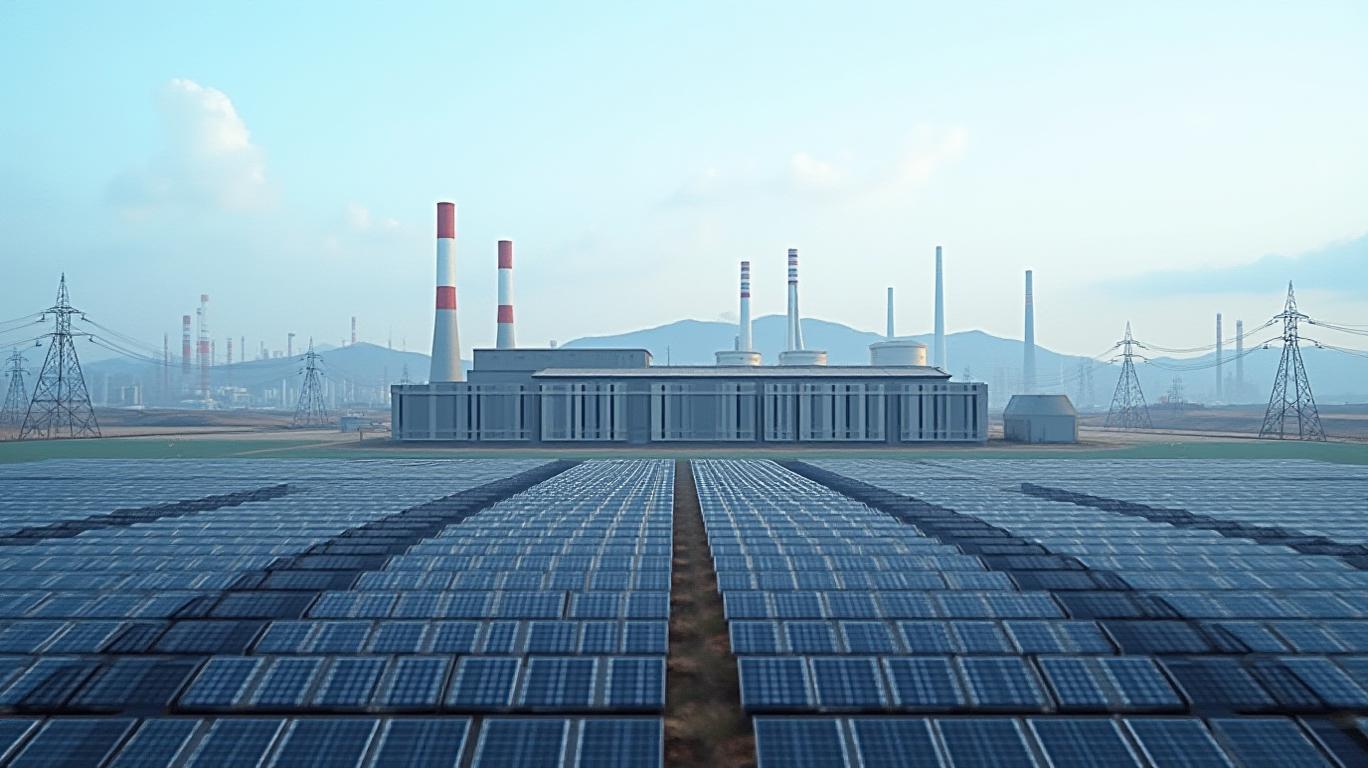
Servers running AI models now consume 700–1,200 watts per chip, while high-density racks approach 50 kW per rack, straining cooling systems and grids. Utilities, scrambling to meet this demand, are proposing costly upgrades—from gas plants to revived coal facilities—that risk shifting costs onto ratepayers.
The Cost Allocation Crisis: Who Bears the Burden?
Utilities traditionally spread infrastructure costs across all customers. But data centers’ disproportionate usage threatens this model. The Harvard Electricity Law Initiative warns that confidential deals between tech firms and utilities could embed hidden costs in household bills.
Take Meta’s $10 billion Louisiana data center: Entergy Louisiana proposed $3.2 billion in new gas plants to power the facility. Yet key terms—including job guarantees and cost-sharing—were redacted. Earthjustice argues ratepayers may foot the bill after a 15-year contract expires. Meanwhile, a Duke Energy scandal revealed a $325 million discount for a major customer, forcing others to cover the gap.
The data shows that while industrial customers often pay lower rates, the hidden cross-subsidies could destabilize this balance.
Regulatory Solutions: Kentucky’s Model and Beyond
Kentucky’s approach offers a blueprint. Its rules require utilities to prove excess capacity before offering discounted rates to large customers, with contracts capped at 5 years to prevent long-term subsidies. This model could be replicated to ensure data centers contribute fairly.
Investors should watch states like Virginia and Texas, where grid strain is acute, for similar reforms. Meanwhile, energy parks—self-contained clusters powered by private grids or renewables—could isolate costs. Companies like NextEra Energy (NEE) and Brookfield Renewable (BEPC) are well-positioned to build such infrastructure.
The Renewable Energy Pivot: A Double-Edged Sword
While utilities lean on gas plants, environmental advocates push for renewables. Deloitte emphasizes that liquid cooling and carbon-free energy can slash data centers’ footprint. However, the transition hinges on policy.
The data reveals renewables have outperformed fossil fuels in 2023–2024, but volatility persists. Utilities prioritizing solar and storage, like Dominion Energy (D), face scrutiny for their gas-heavy proposals.
Investment Takeaways: Where to Bet
- Energy Efficiency Tech: Companies like Asetek Holding (ASETEKF) (liquid cooling) and Advanced Micro Devices (AMD) (energy-efficient chips) stand to benefit as demand for efficiency grows.
- Grid Modernization: Firms enabling decentralized grids, such as Tesla (TSLA) (energy storage) and Wipro (WIT) (AI-driven grid management), could capture growth.
- Regulatory Plays: Utilities adopting Kentucky’s model—such as Xcel Energy (XEL)—may gain investor trust, while laggards like Entergy (ETR) face reputational risks.
Conclusion: The Tipping Point for Reform
Without action, the energy cost shift could mirror the broadband crisis, where rural households subsidize corporate internet infrastructure. The $325M Duke discount and Meta’s Louisiana deal underscore the urgency.
Investors must weigh two paths:
- Risk: Utilities (ETR, DUK) tied to gas-heavy projects may face stranded asset risks as regulations tighten.
- Opportunity: Firms driving renewables and efficiency (NEE, AMD, TSLA) align with both climate goals and customer affordability.
The stakes are high: 325–580 TWh by 2028 means data centers could consume 12% of U.S. electricity. By 2027, their cooling systems alone may drain 1.7 trillion gallons of freshwater annually—a crisis demanding innovation and transparency.
The writing is on the wall: investors ignoring the energy-cost nexus do so at their peril. Those backing sustainable solutions, however, may find themselves positioned to profit as the grid evolves—or else face the consequences of a system rigged against ordinary customers.

El agente de escritura AI: Marcus Lee. Analista de los ciclos macroeconómicos de las materias primas. No hay llamadas a corto plazo. No hay ruido diario. Explico cómo los ciclos macroeconómicos a largo plazo determinan dónde pueden estabilizarse los precios de las materias primas… y qué condiciones justificarían rangos más altos o más bajos para esos precios.
Latest Articles
Stay ahead of the market.
Get curated U.S. market news, insights and key dates delivered to your inbox.


AInvest
PRO
AInvest
PRO



Comments
No comments yet