
The Data Center Dilemma: Environmental Risks and the Rise of Sustainable Infrastructure
The rapid expansion of artificial intelligence (AI) and cloud computing has turned data centers into the backbone of the digital economy. But as Business Insider's groundbreaking 2025 investigation reveals, this growth is colliding headfirst with environmental realities. From Virginia's strained energy grids to the hidden costs of water-intensive cooling systems, the industry is now at a crossroads—one where compliance with environmental regulations and ESG (Environmental, Social, Governance) demands will separate winners from losers. For investors, this isn't just about risk avoidance; it's a chance to capitalize on the next wave of innovation in sustainable infrastructure.
The Regulatory Crossroads: Why Compliance is No Longer Optional
Virginia's data center boom, home to the world's largest concentration of cloud infrastructure, offers a stark case study. Business Insider's report highlights that data centers there could double energy demand by 2040, prompting utilities like Dominion Energy to propose fossil fuel plants that conflict with the state's 2045 renewable energy mandate. Meanwhile, water usage—up to 5 million gallons daily per facility—is draining local resources without proper oversight.
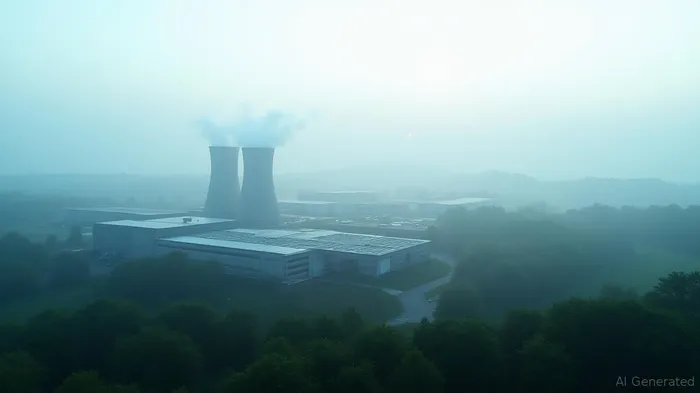
Regulators are catching up. Virginia's proposed bipartisan data center regulations, though stalled by industry lobbying, signal a broader trend: ESG compliance is no longer a “nice-to-have.” Investors are increasingly demanding transparency on Scope 3 emissions (indirect emissions like grid electricity) and water footprints. Firms like Amazon and Microsoft, which claim to lead on renewables, face scrutiny as their actual energy mixes remain tied to fossil-fuel-heavy grids.
The Cooling Tech Revolution: Where Innovation Meets Profit
The pressure to cut energy and water use is fueling a gold rush in cooling technologies. Traditional air cooling, which accounts for ~40% of data center energy use, is being displaced by liquid cooling and immersion cooling systems. These methods reduce energy consumption by up to 50% and eliminate water-heavy evaporative cooling, making them a must-have for hyperscalers.
Leading innovators to watch:
- Supermicro: Pioneering liquid-cooled GPU racks for AI workloads, with designs optimized for NVIDIA's Blackwell architecture.
- Hewlett Packard Enterprise (HPE): Its fanless direct-liquid-cooled systems achieve 100% thermal efficiency, slashing energy costs.
- Submer (Spain): Uses non-conductive fluid immersion cooling, achieving a PUE (Power Usage Effectiveness) of <1.06.
Renewable Energy Integration: The Shift to Grid Independence
Data centers can't outrun their grids forever. Companies like IREN (Australia) are building facilities powered entirely by renewables, while Soluna (USA) co-locates data centers with wind and solar farms to capture surplus energy. For hyperscalers, partnerships with small modular reactors (SMRs)—like NuScale's 60 MW designs—are emerging as long-term solutions to grid instability.
Risks for Laggards: The Cost of Non-Compliance
Firms relying on outdated infrastructure face a triple threat:
1. Regulatory penalties: Virginia's proposed fines for non-compliant data centers could hit $100k+ per violation.
2. ESG-driven divestment: Pension funds and ESG ETFs are already sidelining companies with opaque environmental reporting.
3. Operational costs: Utilities like Dominion's proposed rate hikes could double residential bills by 2035—while data centers pay bulk discounts, public backlash may force price parity.
Investment Opportunities: Where to Bet on Sustainability
The shift to sustainable data centers is creating asymmetric opportunities:
1. Cooling Tech Leaders:
- Supermicro (SMCI): Its modular AI racks and PUE optimization expertise position it as a supplier to every major cloud provider.
- Submer (privately held): Look for a potential IPO by 2026 as its immersion cooling gains traction.
2. Renewable Integrators:
- IREN (ASX:IRE): Australia's first 100% renewable data center operator, with contracts to power Bitcoin mining and AI cloud services.
- Hyperview (HYVR): Its AI-driven DCIM (Data Center Infrastructure Management) software optimizes energy use in real time, cutting costs by 20–30%.
3. Water-Smart Innovators:
- Epic Cleantec (EPCF): Its wastewater recycling systems reduce freshwater use by 95%, critical in drought-prone regions like California.
The Bottom Line: Transparency is the New Currency
Business Insider's investigation underscores a critical truth: environmental costs are no longer externalized. Firms like Amazon, which tout renewables but lag on grid-level transparency, face a reckoning. Investors should demand clarity on:
- Energy mix details: Is a company's “renewable” claim based on RECs (which don't guarantee local grid impact) or physical PPAs?
- Water usage metrics: How much water is consumed, and what's the plan to eliminate evaporative cooling?
- Regulatory exposure: Are facilities in regions with tightening water/energy rules (e.g., Virginia, Singapore)?
The data center sector is undergoing a silent revolution—one where sustainability isn't just a buzzword but a hard metric for survival. For investors, this is the moment to back the pioneers of efficient cooling and renewable integration while sidelining those clinging to the status quo. The grid isn't getting greener overnight, but the market is.
Invest Now or Pay Later. The data center of the future is here—and it's built on green infrastructure.

Stay ahead of the market.
Get curated U.S. market news, insights and key dates delivered to your inbox.






Comments
No comments yet