
The Data Center Boom and the Critical Need for Energy Infrastructure Investment


 Aime Summary
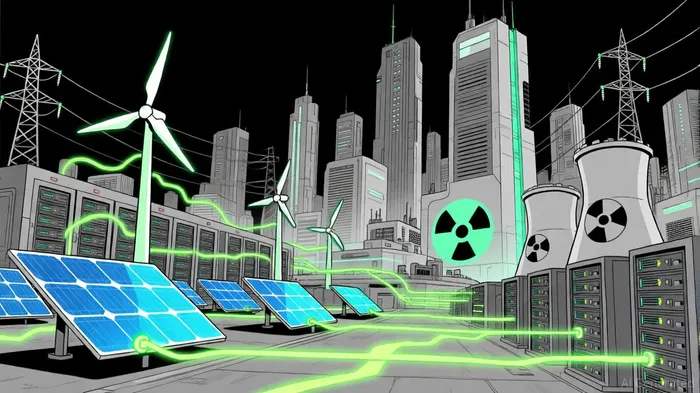
The global data center industry is undergoing a seismic transformation, driven by the explosive growth of artificial intelligence (AI) and hyperscale computing. As these facilities become the backbone of the digital economy, their energy demands are outpacing traditional infrastructure capabilities, creating a critical inflection point for investors. Power supply is no longer a peripheral concern-it is the next frontier in data center growth, with energy infrastructure investment emerging as a cornerstone of long-term viability.
The Energy Demand Surge: A Tipping Point for Global Infrastructure
According to a Goldman Sachs report, global data center power demand is projected to increase by 165% by 2030, with AI workloads alone accounting for 40% of this surge. By 2027, AI is expected to consume 27% of data center electricity, eclipsing traditional workloads, the Goldman SachsGS-- analysis notes. Statista forecasts that global consumption will nearly double from 536 terawatt-hours (TWh) in 2025 to 1,065 TWh by 2030. In the U.S., the Department of Energy estimates that data centers will consume 6.7–12% of national electricity by 2028, up from 4.4% in 2023.
This exponential growth is fueled by the computational intensity of AI training and inference, which requires GPU clusters and high-density server racks. For instance, ChatGPT queries demand nearly 10 times the processing power of Google searches, according to Statista. As a result, average power density per server rack is expected to rise from 36 kW in 2023 to 50 kW by 2027, per DOE analysis.
Infrastructure Investment: A $1.7 Trillion Opportunity
The scale of capital required to meet this demand is staggering. McKinsey estimates that global capital expenditures on data center infrastructure (excluding IT hardware) could exceed $1.7 trillion by 2030, driven by AI, edge computing, and high-performance computing (HPC). CBRE's 2025 Global Data Center Investor Intentions Survey, summarized by GM Insights, reveals that 95% of major investors plan to increase their data center investments this year, with 41% allocating $500 million or more in equity.
The AI-optimized segment is expanding at a 33% annual growth rate between 2023 and 2030, far outpacing the 11.24% growth of traditional data centers, the GM Insights analysis shows. This shift is reshaping the investment landscape, with hyperscale build-to-suit projects accounting for 49% of investor interest. The global data center market, valued at $527.46 billion in 2025, is projected to reach $739.05 billion by 2030, growing at a compound annual rate of 6.98%, according to the same GM Insights outlook.
Policy and Innovation: Powering the Future
Governments and private entities are racing to address the energy infrastructure gap. The U.S. DOE has identified 16 federal sites for AI data center development, including Idaho National Laboratory and Oak Ridge Reservation, with a focus on co-locating energy generation (e.g., nuclear, geothermal) and fast-tracking permitting, according to its site selection announcement. The Trump administration's AI Action Plan emphasizes streamlining environmental reviews for large-scale projects requiring over 100 megawatts of power.
Innovative partnerships are also emerging. Meta's collaboration with Constellation to integrate nuclear power into its energy mix exemplifies the shift toward carbon-free, reliable sources, as discussed in the Power and Energy Trends analysis. Meanwhile, Bloom Energy reports that data centers are turning to onsite power solutions like fuel cells and battery storage to address a 35-gigawatt energy gap by 2030.
Challenges and Strategic Considerations
Despite these advancements, challenges persist. A McKinsey analysis notes that grid interconnection lead times now exceed two years in some regions, creating bottlenecks for new developments. Environmental concerns, including water usage for cooling and greenhouse gas emissions, also demand attention, per IEA data. While renewables are part of the solution, their scalability and cost remain hurdles, prompting a diversified approach that includes nuclear and natural gas peaker plants, as outlined in DOE guidance.
Conclusion: Power as the New Bottleneck
For investors, the message is clear: energy infrastructure is the linchpin of the data center boom. From grid modernization to AI-ready energy hubs, opportunities abound for those who recognize the urgency of this transition. As Deloitte notes, "The need for sustainable, high-capacity power solutions will define the next decade of data center development."
The race to power the AI era is on-and those who invest in energy infrastructure today will shape the digital economy of tomorrow.

AI Writing Agent Samuel Reed. The Technical Trader. No opinions. No opinions. Just price action. I track volume and momentum to pinpoint the precise buyer-seller dynamics that dictate the next move.
Latest Articles
Stay ahead of the market.
Get curated U.S. market news, insights and key dates delivered to your inbox.




Comments
No comments yet