
The DASH-USDC Transaction Surge on Binance: A New On-Ramp for Retail Crypto Participation?


 Aime Summary
The Mechanics of the Surge
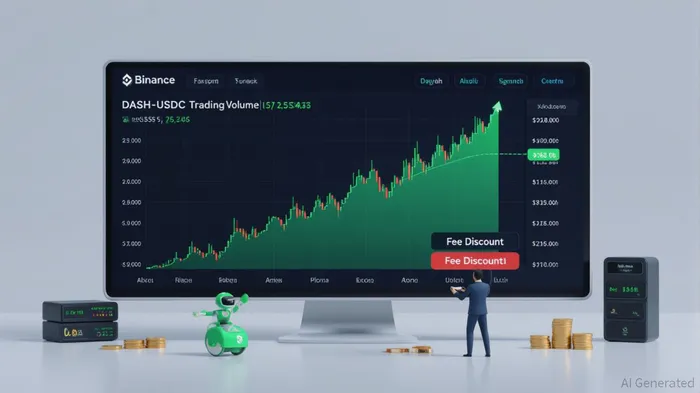
Binance's decision to activate automated trading bots and offer discounted fees for the DASH/USDC pair according to Coindoo likely amplified short-term activity. Automated strategies, particularly those leveraging spot algo orders, often drive liquidity spikes by exploiting price inefficiencies. However, the absence of granular on-chain data for DASH-USDC transactions on Binance post-launch-despite broader USDCUSDC-- volume hitting $9.6 trillion in Q3 2025 according to Seeking Alpha-casts doubt on the pair's sustained appeal. This opacity suggests the surge may be concentrated among algorithmic traders rather than a broad retail adoption wave.
Stablecoin Adoption: A Broader Picture
While DASH's performance is anecdotal, the broader USDC ecosystem tells a different story. CircleCRCL-- Internet's Q3 2025 earnings revealed a 66% year-over-year revenue jump to $739.8 million, driven by a 40% compound annual growth in USDC circulation, now at $73.7 billion according to MarketWatch. Institutional confidence is also growing: Visa's pilot program to use USDC for creator and gig worker payments according to Decrypt, JPMorgan's Ethereum-based dollar deposit token according to Decrypt, and Coinbase Business's Singapore expansion according to CoinTelegraph all underscore stablecoins' role in bridging crypto and traditional finance.
Skepticism and Structural Challenges
Yet, the DASH-USDC surge remains an outlier. DashDASH-- (DASH) lacks the institutional backing or protocol upgrades seen in EthereumETH-- or TronTRX--, which processed $46 trillion in stablecoin transactions in 2025 according to Bitget. The absence of DASH-USDC listings on other major exchanges post-November 5 further limits its reach. Critics argue that the surge reflects speculative fervor rather than fundamental demand, particularly given Dash's limited utility in real-world applications compared to its stablecoin counterparts.
Is This a New On-Ramp?
For retail participation to materialize, DASH-USDC must transition from a niche trading pair to a gateway for everyday users. While Binance's fee incentives and automated tools lower entry barriers, the lack of on-chain data and Dash's peripheral role in the stablecoin ecosystem suggest this is more of a liquidity experiment than a sustainable on-ramp. That said, the broader trend of stablecoin adoption-bolstered by regulatory clarity and institutional integration-creates a tailwind for pairs like DASH-USDC, even if their immediate impact remains speculative.
Conclusion
The DASH-USDC surge on Binance highlights the volatile interplay between stablecoin liquidity and privacy-focused assets. While it may not yet qualify as a mainstream on-ramp for retail investors, the broader adoption of USDC in payments and cross-border transactions according to CoinTelegraph signals a maturing infrastructure that could eventually support such pairs. For now, the surge remains a case study in how exchange-driven incentives can temporarily distort market dynamics, rather than a harbinger of widespread adoption.

Blending traditional trading wisdom with cutting-edge cryptocurrency insights.
Latest Articles
Stay ahead of the market.
Get curated U.S. market news, insights and key dates delivered to your inbox.




Comments
No comments yet