
DASH TIPS Reduced by $550M as NYC Alleges DoorDash and Uber Eats Manipulated App Interfaces
 Aime Summary
The New York City Department of Consumer and Worker Protection (DCWP) alleges that DoorDashDASH-- and Uber Eats redesigned their app interfaces to discourage customers from tipping, leading to an estimated $550 million in lost tips for delivery workers since December 2023.
Average tips for delivery workers on DoorDash and Uber Eats dropped from $3.66 to $0.76 per delivery following the app interface changes, while platforms like GrubHub retained an average of $2.17 per delivery for drivers who can tip before checkout according to reports.
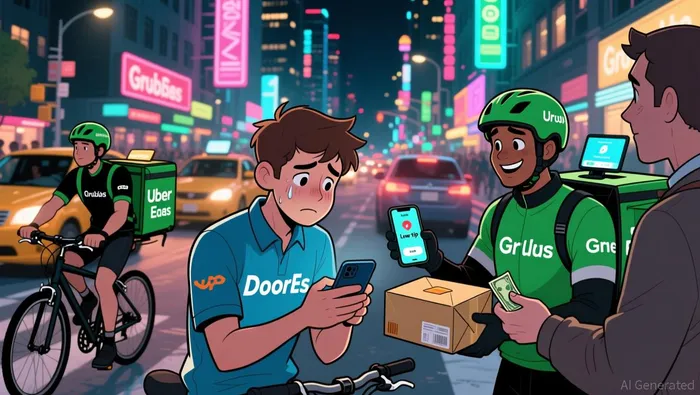
The DCWP claims the changes were a deliberate scheme to undermine delivery worker earnings and reduce voluntary tipping, while DoorDash and Uber Eats deny the allegations and argue the changes were a response to new minimum wage laws and consumer behavior.
The changes to tipping policies were implemented in December 2023 and coincided with New York City's new minimum pay laws for delivery workers, which set an hourly wage of $21.44. In the first week after the policy change, average tips dropped from $3.66 to $0.93, and have since fallen further to $0.76 per delivery according to Gothamist. The DCWP has described the new tipping interface as "easy to miss and difficult to navigate," accusing the platforms of removing conspicuous tipping options.
DoorDash and Uber Eats have denied the allegations and argue that the tipping changes were not intended to reduce worker earnings. DoorDash claims delivery workers have earned $1.2 billion more under the new minimum pay law and maintains that the changes to the tipping interface are standard in other industries. Uber Eats has also challenged the new city law, claiming it violates their First Amendment rights by compelling them to "speak a government-mandated message" as reported.
What Happened with Tipping Policies and Worker Earnings?
The DCWP report found that the tipping interface changes on DoorDash and Uber Eats reduced the visibility of tipping options, leading to a sharp drop in average tip amounts. This policy change coincided with the city's minimum wage law for delivery workers, which guaranteed a $21.44 hourly wage. The DCWP criticized the changes as a deliberate attempt to reduce worker earnings and undermine their ability to earn tips voluntarily according to the report.
DoorDash and Uber Eats responded by asserting that the policy changes were not "novel or nefarious" and emphasized that total worker pay increased by $1.2 billion since the minimum wage law took effect according to the DCWP. The companies also highlighted that the changes were publicly announced in 2023 and that customers still have the option to tip after delivery as stated.
Why the Tipping Changes Matter to Workers and Platforms?
The DCWP report estimated that each delivery worker lost an average of $5,800 in tips annually due to the interface changes according to the report. The report also contrasted the situation with platforms like GrubHub, where tips remain at $2.17 per delivery as noted. Labor advocates and the Worker's Justice Project welcomed the DCWP report as evidence of a shift in city policy toward supporting delivery workers according to reports.
DoorDash and Uber Eats have been involved in legal battles with the city over the new tipping laws. The companies argue the laws infringe on their free speech rights and claim that the changes are a response to rising delivery costs and consumer behavior. The DCWP, however, maintains that the laws are necessary to ensure fair compensation for delivery workers and protect their rights according to city officials.
How the Legal and Regulatory Battle is Unfolding?
The DCWP is enforcing new laws that require delivery platforms to provide clear tipping options at checkout according to the DCWP. These laws are set to take effect on January 26, 2026, and are part of the city's broader efforts to regulate large corporations as reported. DoorDash and Uber Eats have sued the city, arguing the law violates the First Amendment by compelling them to "speak a government-mandated message" as claimed.
DoorDash and Uber Eats have also challenged the city's minimum wage law, claiming it violates their free speech rights according to company statements. The DCWP has defended the laws as necessary to protect delivery workers and ensure fair compensation as stated. The legal battle is ongoing, and the outcome could have significant implications for the delivery industry and workers' rights in New York City.
The city has also launched public outreach efforts to inform delivery workers about their rights under the new laws according to city officials. Workers can access their rights by visiting nyc.gov/deliveryapps or calling 311 as directed. The DCWP is committed to enforcing the laws and holding companies accountable for worker protections according to the department.

Blending traditional trading wisdom with cutting-edge cryptocurrency insights.
Latest Articles
Stay ahead of the market.
Get curated U.S. market news, insights and key dates delivered to your inbox.




Comments
No comments yet