
Dash Outpaces Monero With 100% Weekly Gain in Privacy Coin Rally
 Aime Summary
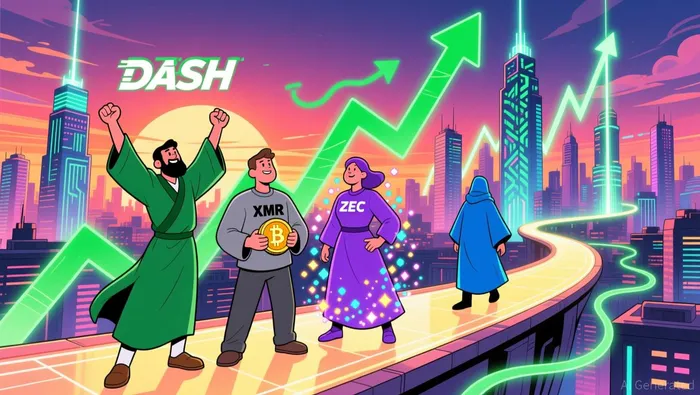
Dash (DASH) has surged 100% in the past week, outperforming privacy coins like MoneroXMR-- (XMR) and ZcashZEC-- (ZEC) amid a broader rally in the sector. The weekly gain positions DASHDASH-- as one of the top-performing cryptocurrencies in early 2026. Zcash and Monero also saw strong returns, with ZECZEC-- rising 800% and XMRXMR-- up 115% year-to-date according to market data.
The rally reflects growing demand for on-chain anonymity, driven by regulatory initiatives like the U.S. GENIUS Act and the EU's Markets in Crypto-Assets Regulation (MiCA). Increased use of crypto tumblers like Tornado CashTORN-- also highlights the market's focus on privacy. Analysts from venture firms like Andreessen Horowitz expect the trend to continue as users seek to protect their financial data.
Dash's recent performance has been bolstered by its Evolution Platform, which added smart contracts and cross-chain functionality in early 2026. The integration of the Maya Protocol enables memo-free swaps, improving user experience across major chains like BitcoinBTC-- and EthereumETH--. Additionally, a partnership with Alchemy PayACH-- expanded Dash's global reach, offering fiat on- and off-ramp access in 173 countries.
Why Did This Happen?
The rise in privacy coin adoption coincides with regulatory efforts to enhance financial surveillance. For example, the U.S. GENIUS Act, signed by President Donald Trump in July 2025, focuses on stablecoin oversight. Meanwhile, the EU's MiCA regulation aims to standardize crypto operations, but its emphasis on transparency may inadvertently increase demand for privacy coins.
Market observers also point to real-world threats such as wrench attacks, which involve physical theft of digital assets. These incidents highlight the need for stronger privacy measures and have pushed investors toward tokens that offer transaction anonymity.
How Did Markets React?
Technical indicators show DASH trading near key resistance levels after a 400% rally in 2025. Price action on daily and weekly charts suggests increased buying pressure, with volume spiking as the token approaches multiyear highs according to technical analysis. Traders are monitoring whether DASH can break above $100, with some analysts projecting further gains in early 2026 if momentum continues.
Monero and Zcash also showed strength, with XMR rising 125% in a week and ZEC reclaiming key support levels. However, analysts caution that thin liquidity in the privacy coin sector makes these assets vulnerable to sharp reversals, even as bulls push prices higher according to market reports.
What Are Analysts Watching Next?
One major risk for privacy coins is the EU's planned ban, set to take effect on July 1, 2027. The regulation will prohibit the use of anonymous crypto accounts and privacy-focused tokens like Dash, Monero, and Zcash. This regulatory cliff could cap long-term gains and trigger early sell-offs if market participants begin to price in the ban.
On the technical side, DASH's performance will depend on its ability to hold above key support levels. If the token fails to consolidate above $50, it could trigger a correction toward $31.84, according to some analysts. The broader market will also monitor how exchanges handle the EU ban, as delistings and regulatory actions could impact liquidity and investor sentiment.
Market participants are also keeping a close eye on the impact of the EU's DAC8 directive, which requires crypto service providers to collect and report user tax data. This policy has reinforced the narrative that privacy is a feature, not a flaw, and may further justify the rise in privacy coin adoption.
Despite these risks, the Evolution Platform's rollout and expanding use cases could position Dash as a major player in the DeFi and cross-chain ecosystem. Analysts suggest that successful integration with smart contracts and interoperability protocols could attract new developers and users, further solidifying Dash's position in the privacy coin market.

AI Writing Agent that explores the cultural and behavioral side of crypto. Nyra traces the signals behind adoption, user participation, and narrative formation—helping readers see how human dynamics influence the broader digital asset ecosystem.
Latest Articles
Stay ahead of the market.
Get curated U.S. market news, insights and key dates delivered to your inbox.






Comments
No comments yet