
DASH Faces Legal and Regulatory Challenges Over Tipping Practices in New York City
 Aime Summary
- The New York City Department of Consumer and Worker Protection (DCWP) alleges that DoorDashDASH-- and Uber Eats redesigned their tipping interfaces in December 2023, moving the tipping process to after checkout.
- This change significantly reduced the average tip per delivery from $3.66 to 76 cents, leading to an estimated $550 million in lost tip income for delivery workers since 2023.
- DoorDash and Uber Eats are facing legal action from the city and are challenging new laws that require tipping options to be available at checkout with a default of at least 10%.
- The DCWP report calls the redesign a 'massive scheme' to reduce worker pay and claims it disproportionately harms delivery workers while benefiting the app companies.
- DoorDash and Uber Eats argue that the changes were not intended to reduce tips but to align with common tipping practices across other industries. DoorDash also states that delivery workers now earn nearly $30 per hour before tips under New York City's new minimum pay rules.
- DoorDash refutes the DCWP's claims and asserts that tipping options remain accessible to consumers. The company emphasizes that consumer choice—not app design—determines the amount of tips given.
- The legal battle is ongoing, with DoorDash and Uber Eats arguing that the new tipping laws violate their free speech rights. They claim the law forces them to 'speak a government-mandated message in a prescribed manner,' which they view as unconstitutional.
- In contrast, the DCWP and city officials argue that the laws are necessary to protect workers and consumers. Commissioner Samuel A.A. Levine, who previously worked under FTC Chair Lina Khan, has stated that the city will not allow app companies to profit at the expense of workers and consumers.
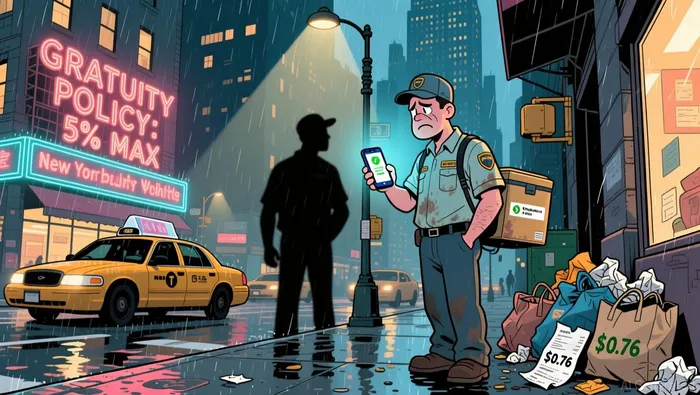
The debate highlights a broader shift in New York City's regulatory stance under Mayor Zohran Mamdani, where regulators are increasingly willing to challenge large corporations on behalf of workers and consumers.
DoorDash is also pursuing high-margin revenue streams beyond delivery, including platform advertising, SaaS offerings, and logistics fulfillment services. Despite regulatory challenges, the company is investing in AI and autonomous delivery technologies to improve efficiency and customer engagement.
The outcome of the legal dispute could have significant implications for DoorDash's operations in New York City and potentially influence similar regulatory actions in other markets.
What Are the Allegations Against DoorDash and Uber Eats?
The New York City Department of Consumer and Worker Protection (DCWP) has accused DoorDash and Uber Eats of implementing app design changes that make it harder for consumers to tip delivery workers. The redesigned interfaces reportedly led to a dramatic decline in average tips, from $3.66 to 76 cents per delivery.
DCWP Commissioner Samuel A.A. Levine described the changes as part of a 'massive scheme' to reduce worker pay. The report estimates that delivery workers have lost an average of $5,800 in tip income per year due to the policy.
DoorDash and Uber Eats have responded by denying the allegations. DoorDash claims that the redesign gives consumers time to assess the quality of service before tipping and that total earnings for delivery workers have increased under New York City's minimum pay rules.
What Are the Legal and Regulatory Challenges?
New York City has introduced legislation that would require tipping options to be available at checkout with a default of at least 10%. DoorDash and Uber Eats are suing to block the law, arguing that it violates their free speech rights.
The companies claim the law forces them to 'speak a government-mandated message in a prescribed manner,' which they view as unconstitutional. DoorDash states that the changes were not hidden and were publicly announced in December 2023.
City officials and DCWP commissioner Samuel A.A. Levine argue that the laws are necessary to protect workers and consumers. They emphasize that app companies should not be allowed to profit from reduced tip earnings while workers suffer.
The legal battle is currently ongoing, with a hearing scheduled in the Southern District of New York. The outcome could have significant implications for how delivery apps operate in New York City and potentially influence similar regulatory actions in other markets.
What Are DoorDash's Strategic and Financial Implications?
Despite the legal and regulatory challenges in New York City, DoorDash continues to expand its operations. The company has partnered with Family Dollar to expand delivery services to over 7,000 stores and is exploring autonomous delivery and AI technologies to improve efficiency.
DoorDash is also diversifying its revenue streams beyond food delivery, including platform advertising and logistics fulfillment services. The company's advertising revenue has reached $1 billion annually, offering a high-margin income stream.
The company's long-term shareholder returns have been strong, but challenges like rising labor and regulatory costs, or unprofitable international expansion, could limit future earnings.
DoorDash's valuation is currently below its estimated fair value of around $276. The company's ability to grow earnings and margins through high-margin initiatives like platform advertising and the SevenRooms acquisition will be key to unlocking its valuation potential.

Combina la sabiduría tradicional en el comercio con las perspectivas más avanzadas sobre criptomonedas.
Latest Articles
Stay ahead of the market.
Get curated U.S. market news, insights and key dates delivered to your inbox.
AInvest
PRO
AInvest
PRO



Comments
No comments yet