
DASH Expands Platform Utility With Family Dollar Delivery and Faced Regulatory Pressures in 2026
 Aime Summary
DoorDash expanded its platform utility by partnering with Family Dollar, delivering household essentials from 7,000 U.S. locations to target value-conscious shoppers according to reports. This move emphasized affordability and accessibility, including support for SNAP/EBT users, to better serve price-sensitive customers as research shows. The integration of Family Dollar into DoorDash's delivery network is part of a broader strategy to increase order frequency and reinforce its brand as an everyday essentials provider according to industry analysis.
DoorDash's partnership with Family Dollar represents a strategic shift from being primarily a food delivery app to a more comprehensive platform for everyday needs. The initiative is designed to expand the company's reach to lower-income customers, who are particularly sensitive to price and value according to market data. This is achieved through the delivery of discounted household items, which aligns with broader goals to increase platform utility and customer engagement. By leveraging Family Dollar's extensive network of discount stores, DoorDashDASH-- aims to tap into a market segment that has traditionally been underserved by digital delivery services as industry reports indicate.
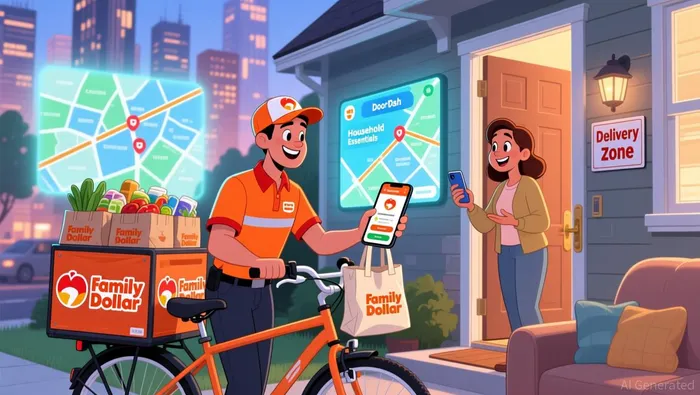
The move into household essentials also positions DoorDash to compete more effectively with other online delivery services and retail platforms. The addition of everyday essentials to the DoorDash platform could increase user frequency and retention, as customers are more likely to return to an app that offers a wide range of services according to consumer behavior studies. The company's emphasis on affordability and accessibility, including support for government-assisted programs like SNAP/EBT, further strengthens its appeal to a broader demographic as analysis shows.
Despite the strategic benefits of the Family Dollar partnership, DoorDash has faced significant regulatory and reputational challenges in 2026. New York City regulators have accused DoorDash and Uber Eats of manipulating app interfaces to discourage customer tipping, resulting in a $550 million loss in tips for delivery workers according to financial reports. This has led to a legal challenge, with the companies filing a joint federal lawsuit to overturn new tipping laws that require clearer tipping options for consumers as legal documents state. The legal and regulatory pressures have contributed to downward pressure on DoorDash's stock price according to market analysis.
How Has the DoorDash and Family Dollar Partnership Impacted DoorDash's Strategic Positioning?
The partnership with Family Dollar represents a key element of DoorDash's strategy to evolve from a food delivery service to a comprehensive delivery platform. By expanding into household essentials, DoorDash can offer a broader range of products and services to its customers, potentially increasing order frequency and customer loyalty as industry reports indicate. This move also aligns with broader industry trends toward omnichannel delivery and e-commerce integration according to market research.
From a business perspective, the Family Dollar partnership allows DoorDash to leverage its existing logistics and delivery infrastructure to reach a new customer base. The ability to deliver household essentials could increase the number of daily orders, as customers may use the platform more frequently for everyday needs rather than just meals according to business analysis. This could lead to increased revenue and improved unit economics over time as financial data shows.
However, the expansion into retail delivery also introduces new operational and financial challenges. DoorDash must manage the complexities of delivering a wider range of products, including inventory management, product handling, and customer expectations for non-food items according to operational reports. These factors could affect the company's margins and profitability, particularly if the operational costs of the new service outweigh the potential revenue gains as cost analysis indicates.
What Regulatory and Reputational Risks Has DoorDash Faced in 2026?
DoorDash has faced significant regulatory and reputational challenges in 2026, particularly in New York City. Regulators have accused the company of using "dark patterns" in its app interface to discourage customer tipping, resulting in a loss of over $550 million in tips for delivery drivers according to regulatory filings. The allegations claim that the redesigned interface made it harder for customers to voluntarily tip, which directly impacted driver earnings as legal analysis shows.
The regulatory scrutiny has led to a federal lawsuit, with DoorDash and Uber Eats challenging the new tipping laws that require clear and accessible tipping options for consumers as legal documents state. This legal battle adds uncertainty to the company's regulatory environment and could result in significant financial and operational costs if the company is required to modify its platform to comply with the new regulations according to market analysis.
In addition to regulatory risks, DoorDash has also faced reputational damage from a series of operational incidents, including a driver fatality in South Nashville and an AI deepfake incident involving a delivery as industry reports indicate. These events have raised concerns about driver safety and platform security, potentially affecting customer trust and engagement. While the AI deepfake incident appears to be contained for now, it highlights the potential for more serious operational risks in the future according to security analysis.
What Are the Broader Implications of DoorDash's Strategic and Regulatory Developments?
The strategic and regulatory developments surrounding DoorDash in 2026 have broader implications for the e-commerce and delivery industry. The expansion of delivery services beyond food to include everyday essentials reflects a growing trend toward omnichannel delivery and the integration of digital platforms into daily life according to market research. This could lead to increased competition among delivery and retail platforms, as companies seek to capture a larger share of the e-commerce market as industry analysis shows.
At the same time, the regulatory scrutiny faced by DoorDash highlights the ongoing challenges of balancing business innovation with consumer and worker protections. The allegations of interface manipulation to discourage tipping raise questions about the ethical responsibilities of platform-based companies in managing customer behavior and worker compensation according to legal analysis. If the new tipping laws are upheld, they could set a precedent for how other platforms are required to handle tipping and worker pay as legal experts note.
For investors, the combination of strategic expansion and regulatory pressures presents both opportunities and risks. The Family Dollar partnership could drive long-term growth and increase the company's market share, but the regulatory and reputational challenges could affect short-term performance and investor sentiment according to financial analysis. The company's ability to navigate these challenges will be a key factor in determining its future success in the competitive e-commerce and delivery industry.

Blending traditional trading wisdom with cutting-edge cryptocurrency insights.
Latest Articles
Stay ahead of the market.
Get curated U.S. market news, insights and key dates delivered to your inbox.
AInvest
PRO
AInvest
PRO



Comments
No comments yet