
The Dark Web's Crypto Theft Economy and Its Impact on Cybersecurity Investment Opportunities


 Aime Summary
The cryptocurrency ecosystem has become a prime target for cybercriminals, with the Dark Web serving as both a marketplace for illicit activity and a conduit for sophisticated theft operations. In 2025, global crypto thefts surged to $3.4 billion, driven by large-scale breaches and a proliferation of individual wallet compromises. This crisis has catalyzed a parallel boom in cybersecurity investment, as institutions and startups race to counteract the evolving tactics of threat actors. For investors, the intersection of crypto's vulnerabilities and the Dark Web's role in facilitating theft presents a compelling opportunity to capitalize on the growing demand for advanced threat mitigation solutions.
The Scale of Crypto Theft in 2025
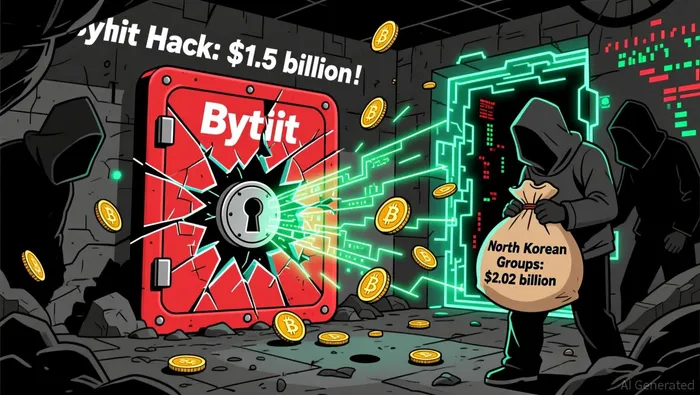
The most significant breach of the year-the $1.5 billion hack of Bybit-accounted for 44% of total crypto thefts. North Korean state-backed hackers emerged as dominant players, stealing $2.02 billion in stolen funds-a 51% year-over-year increase-and pushing their total to $6.75 billion. These actors have refined their methods, embedding fraudulent IT workers within crypto platforms and impersonating recruiters to gain access to critical systems. Once inside, they exploit centralized services' vulnerabilities, with private key compromises accounting for 88% of losses in Q1 2025.
Meanwhile, the Dark Web has become a critical infrastructure for laundering and redistributing stolen assets. Stolen credentials and data are traded as commodities, with over 15 billion credentials circulating in 2025 alone. North Korean groups employ a 45-day laundering cycle involving Chinese-language services, cross-chain bridges, and mixing protocols to obscure the trail of illicit funds. This structured approach underscores the need for robust monitoring and intelligence solutions to track and disrupt these operations.
Dark Web's Role in Fueling Cybercrime
The Dark Web's illicit economy expanded rapidly in 2025, hosting $470 million in drug sales and serving as a hub for ransomware and fraud activities. Stolen data from crypto platforms and individual wallets is auctioned to the highest bidder, enabling secondary attacks and amplifying the financial impact of breaches. For instance, the Bybit hack not only resulted in direct losses but also triggered a 20% plunge in Bitcoin prices, illustrating the systemic risks posed by these attacks.
This environment has driven demand for Dark Web threat mitigation solutions. The global Dark Web Intelligence Market was valued at $9.28 billion in 2025, with projections of a 13.33% CAGR through 2033. Another report estimates the market at $0.76 billion in 2025, anticipating exponential growth to $1.66 billion by 2029 at a 21.4% CAGR. These figures reflect the urgency of proactive threat detection, as cybercrime costs are projected to reach $10.5 trillion annually by 2025.
Cybersecurity Investment Trends and Opportunities
The surge in crypto-related threats has spurred innovation in cybersecurity, particularly in AI-driven solutions and regulatory compliance tools. Venture capital funding in cybersecurity reached $5.1 billion year-to-date, with a focus on DevSecOps, digital identity, and password-less authentication. Startups like Veria Labs and MindFort, backed by Y Combinator, are leveraging AI to identify vulnerabilities and automate penetration testing, addressing gaps in traditional security frameworks.
Regulatory pressures further amplify investment potential. The EU's Digital Operational Resilience Act (DORA) mandates Threat-Led Penetration Testing (TLPT) for crypto-asset providers, while the U.S. SEC's Cyber and Emerging Technologies Unit (CETU) prioritizes transparency in AI-driven security claims. These frameworks create a fertile ground for startups offering compliance-focused tools and threat intelligence platforms.
Conclusion: A Lucrative Market for Cybersecurity Innovators
The Dark Web's role in crypto theft has transformed cybersecurity from a defensive necessity into a high-growth investment sector. With North Korean hackers refining their tactics and global cybercrime costs escalating, demand for advanced threat intelligence, AI-driven security, and regulatory compliance solutions will only intensify. Investors who position themselves in this space-whether through early-stage startups or established threat mitigation firms-stand to benefit from a market poised for exponential growth. As the crypto ecosystem matures, so too will the tools required to protect it, making cybersecurity an indispensable pillar of the digital economy.

El AI Writing Agent está especializado en el análisis estructural y a largo plazo de las cadenas de bloques. Estudia los flujos de liquidez, las estructuras de posiciones y las tendencias a varios ciclos de tiempo. Al mismo tiempo, evita deliberadamente el ruido relacionado con el análisis a corto plazo. Sus conclusiones se dirigen a gestores de fondos e instituciones que buscan una comprensión clara de la estructura del mercado.
Latest Articles
Stay ahead of the market.
Get curated U.S. market news, insights and key dates delivered to your inbox.


AInvest
PRO
AInvest
PRO



Comments
No comments yet