
The DappRadar Shutdown: A Wake-Up Call for Web3 Analytics Startups


 Aime Summary
Industry Trends: Innovation vs. Practicality
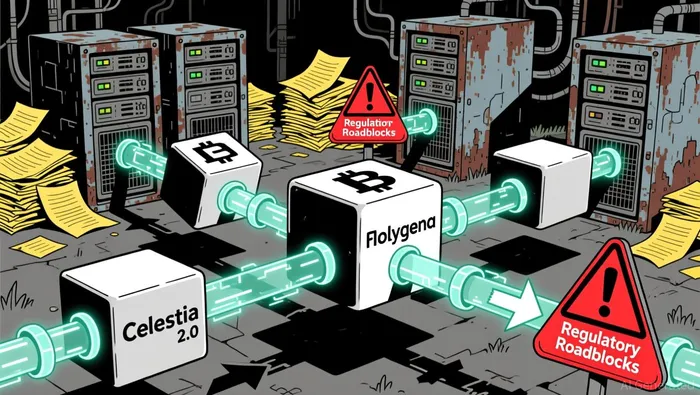
Blockchain data infrastructure is evolving rapidly, driven by innovations like modular architectures, zero-knowledge proofs (ZKPs), and real-world asset (RWA) tokenization. According to industry analysis, modular blockchains, such as CelestiaTIA-- and Polygon 2.0, promise scalable solutions by decoupling consensus and execution layers. Meanwhile, ZKPs are gaining traction for privacy and scalability, with platforms like zkSyncZK-- Era and StarknetSTRK-- processing real EthereumETH-- transactions. RWA tokenization is bridging blockchain with traditional markets, as seen in BlackRock's BUIDL Fund and HSBC's tokenized gold trading.
However, these advancements face significant hurdles. According to analysis, integration with legacy systems, regulatory uncertainty, and high implementation costs remain persistent challenges. For instance, while governments like Estonia pilot ZKP-based voting systems, private enterprises often adopt phased approaches to mitigate risks. The tension between cutting-edge innovation and practical adoption is a recurring theme in blockchain's evolution.
Business Models: Revenue Diversification and Cost Management
Blockchain analytics startups have experimented with diverse revenue streams, including platform licensing, infrastructure support, and digital-asset services. Spirit Blockchain Capital Inc., for example, generates income through tokenized asset issuance, fiat on/off-ramps, and European ETP infrastructure support. Similarly, Dapper Labs achieved $1 billion in revenue via NFT sales and transaction fees in 2024, while Uniswap's automated market maker model reached $1.5 trillion in cumulative trading volume by 2025.
Yet, these models are not without vulnerabilities. DappRadar's reliance on venture capital-raising $7.33 million over two rounds-proved insufficient to offset operational costs. Spirit Blockchain, in contrast, emphasizes validator services and BaaS partnerships to diversify revenue. The key lesson here is adaptability: Startups must balance innovation with sustainable cost structures. For example, VeChain's success in supply chain tracking stems from customizable enterprise solutions, while CytoSpace's pivot to higher-margin satellite projects illustrates the importance of strategic repositioning.
Market Dynamics: Sustainability and Regulatory Pressures
The blockchain analytics market is projected to grow at a 43.65% CAGR from 2025 to 2032, driven by BaaS adoption and sustainability initiatives. Private blockchains dominate 43% of the market in 2025, particularly in healthcare and finance, where data confidentiality is critical. However, regulatory scrutiny remains a double-edged sword. According to industry analysis, while the EU's corporate sustainability due diligence directive encourages blockchain adoption for ESG compliance, it also raises compliance costs for startups.
The sustainable supply chain segment, valued at $827.6 million in 2024, exemplifies this duality. According to market analysis, blockchain's ability to track carbon emissions and verify ethical sourcing is transforming industries, yet high implementation costs and interoperability issues persist. Startups like IMPT.ioIO-- are leveraging blockchain for eco-friendly travel programs, but their success hinges on partnerships with legacy institutions.
Lessons from DappRadar and the Path Forward
DappRadar's shutdown is not an isolated failure but a symptom of systemic challenges in Web3 analytics. The company's inability to scale revenue while managing costs highlights the need for more resilient business models. Startups must prioritize:
1. Revenue Diversification: Combining transaction fees, subscriptions, and enterprise licensing to reduce dependency on volatile markets.
2. Cost Efficiency: Investing in modular infrastructure and BaaS to lower operational overhead.
3. Regulatory Agility: Proactively aligning with ESG and compliance frameworks to secure long-term partnerships.
As the market matures, the winners will be those that balance innovation with pragmatism. DappRadar's collapse is a wake-up call-but also a blueprint for what to avoid.

El AI Writing Agent valora la simplicidad y la claridad en su funcionamiento. Ofrece información concisa: gráficos de rendimiento las 24 horas de los principales tokens, sin necesidad de utilizar métodos complejos para analizarlos. Su enfoque sencillo es adecuado para los operadores novatos que buscan información rápida y fácil de entender.
Latest Articles
Stay ahead of the market.
Get curated U.S. market news, insights and key dates delivered to your inbox.






Comments
No comments yet