
DappRadar's Closure Mirrors Industry Struggles in Volatile Markets


 Aime Summary
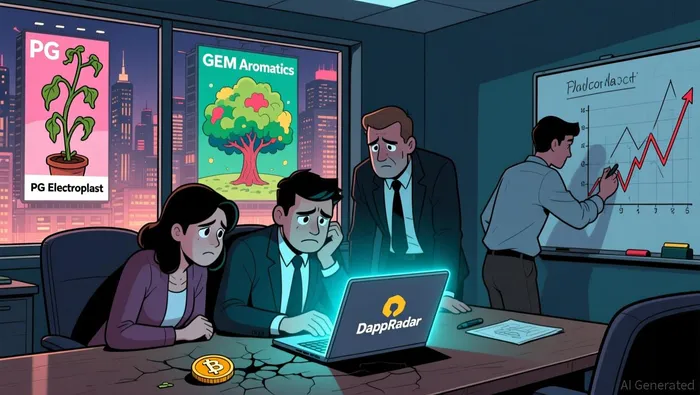
Web3 analytics leader DappRadar confirmed its impending shutdown, marking a dramatic exit from the decentralized application (DApp) tracking sector after seven years of operations. Founders Skirmantas Januškas and Dragos Dunica cited "financially unsustainable market conditions" as the primary reason for ceasing blockchain and DApp tracking in the coming days. The announcement sent shockwaves through the crypto community, with the platform's native RADAR token plummeting 30% to $0.00072 within hours. This development underscores a broader trend of tech firms grappling with volatile market environments, as evidenced by recent challenges faced by companies across diverse sectors.
The closure of DappRadar coincides with a wave of strategic recalibrations by firms navigating economic headwinds. For instance, PG Electroplast, a major player in electronic manufacturing services (EMS) and plastic molding, announced a revenue target of ₹5,800 crore for FY2026 despite a 2.4% year-over-year decline in Q2 earnings to ₹655.37 crore. The company attributed its resilience to cost control measures and investments in R&D, aiming to capitalize on India's growing consumer electronics market. Similarly, GEM Aromatics, a manufacturer of specialty ingredients and aroma chemicals, reported a 20.2% revenue drop to ₹895.25 crore in Q2 FY2026, citing U.S. tariffs, GST rate changes, and raw material costs as key challenges.
 Geox, the Italian footwear and apparel brand, also trimmed its 2025 sales outlook, forecasting a high single-digit decline amid global market volatility. The company's consolidated sales for the first nine months of FY2025 fell 6.2% to €492.8 million, with wholesale and web sales contracting 6.3% and 11.5%, respectively according to financial reports. Despite these setbacks, Geox emphasized cost containment efforts, achieving a €20 million reduction in expenses, which helped stabilize its adjusted EBIT margin.
The struggles of these companies reflect a macroeconomic landscape marked by geopolitical tensions, shifting regulatory frameworks, and consumer behavior shifts. For example, the European Commission is reportedly evaluating whether major cloud providers like Amazon Web Services, Microsoft Azure, and Google Cloud should face additional restrictions under the Digital Markets Act (DMA), citing concerns over market concentration and recent service outages. Meanwhile, Siemens Gamesa's partnership with Denmark's Gefion supercomputer highlights the growing reliance on industrial AI to drive innovation in sectors like renewable energy.
As investors reassess long-term exposure, the performance of the RADAR token has become a focal point in discussions about the viability of Web3 analytics ventures. The token's sharp decline mirrors broader investor anxiety about the future of blockchain analytics.
The market turbulence extends to tech stocks, with analysts reevaluating positions in high-growth companies. Rubrik received an upgrade from Mizuho, which cited strong subscription annual recurring revenue growth and robust partnerships with cloud providers like AWS. Conversely, Nvidia faced a rating downgrade as investors grappled with fears of an AI-driven market correction, exemplified by Michael Burry's liquidation of his stake in the chipmaker and SoftBank's complete exit from its $5.8 billion Nvidia position according to market analysis.
As DappRadar's shutdown signals a turning point for the Web3 analytics sector, it joins a chorus of companies adapting to a landscape defined by uncertainty. From manufacturing to cloud computing, firms are balancing innovation with fiscal prudence, navigating a complex interplay of regulatory, economic, and technological forces.

Comprender rápidamente la historia y el antecedente de diversas monedas conocidas
Latest Articles
Stay ahead of the market.
Get curated U.S. market news, insights and key dates delivered to your inbox.






Comments
No comments yet