
Danish Consumers Boycott American Products Amid Trade Tensions, 10% Tariffs
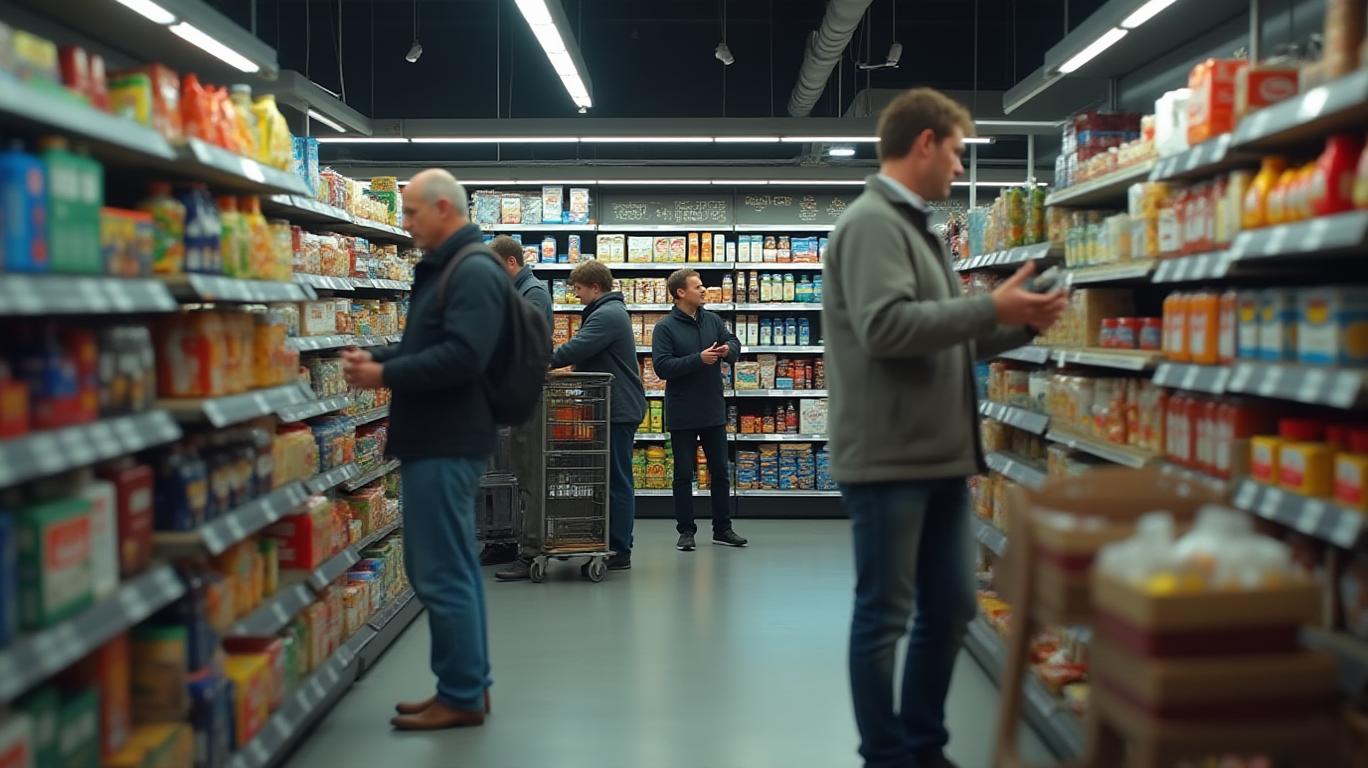
In response to escalating trade tensions, Danish consumers have begun boycotting American productsAIG--. This movement is driven by frustration over President Donald Trump's stance on GreenlandGTEC-- and the imposition of widespread tariffs. The Salling Group, which operates major supermarket chains such as Føtex, Bilka, and Netto, has taken steps to facilitate this boycott by clearly labeling products that are owned by European companies on their electronic price tags. This initiative aims to make it easier for consumers to identify and support local and European products over American ones.
Danish consumers, longstanding allies of the United States, have found themselves at odds with the Trump administration due to his interest in Greenland, a semi-autonomous Danish territory. The recent imposition of tariffs, now reduced to 10%, has further strained relations and hindered EU exports to a key market. Trump's repeated assertions that the U.S. should control Greenland, citing national security interests, have been met with strong opposition from Danish officials. This has led to a consumer backlash, with shoppers expressing their discontent through purchasing decisions.
“This is their way of protesting against Trump,” said Sanne, an employee at a Føtex supermarket in Copenhagen. The sentiment is echoed by other consumers, such as Sanja, an Australian resident in Copenhagen, who stated, “At this point, it’s basically ‘screw American products.’” The Salling Group's labeling initiative, introduced last month across its 1,700 stores in Denmark, Germany, and Poland, has made it easier for consumers to avoid American products. While the company maintains that the move is not a boycott but a response to consumer inquiries for clearer information on European brands, shoppers have welcomed the change.
“I prefer European products over American ones, not just because of the conflict, but also because of the standards,” said Sanja, whose mother visiting from Australia also plans to avoid American products. Another shopper, Eva, agreed, stating, “Yes, I will avoid American products. I think they need a new president.” This boycott is part of a broader trend in Europe, where consumers are increasingly favoring domestic and regional products. Social media campaigns and local groups are helping consumers find alternatives to American goods. In Canada, similar actions have led to the renaming of American-style coffee as Canadian coffee.
American brands are facing significant challenges due to these boycotts. In France, a survey indicated that well-known brands like Starbucks, McDonald's, and Coca-Cola are being targeted. Tesla, in particular, has seen a sharp decline in sales in regions like Germany, Italy, and Sweden, with some dealerships vandalized in protest against CEO Elon Musk's political actions. The recent imposition of a 20% tariff on all European imports by Trump, part of a broader reciprocal tariff policy, has caused market volatility and is expected to disrupt global supply chains and consumer habits.
Jens Lund, CEO of Danish logistics company DSV, noted that while the immediate impact of tariffs on trade is evident, other effects may take longer to manifest. “Time will tell how consumers react, because ultimately it is the consumers who decide,” Lund said. “For larger items, such as cars, sales will decrease.” However, he also pointed out that some protests may be temporary, as consumers eventually return to their usual habits. “Consumers will vote with their feet and choose the cheapest products. Where they can get the best deal, that’s where consumers will go,” Lund added.
For Lourdes, a French shopper at Føtex, the decision is clear. “We will choose the best deal,” she said. “If there is a star (indicating a European product) but it’s more expensive, I will choose the cheaper one.” The shift in shopping habits reflects a broader change in consumer sentiment, influenced by Trump's trade policies, unfavorable currency fluctuations, and the high-profile detention of visa holders. This has led to a decline in travel to the U.S., with data showing a significant drop in bookings from Canada to the U.S. and similar trends emerging in Europe. For Sanja, this means avoiding travel through the U.S. to visit her in-laws in Italy and Colombia. “Of course, we will. Even if we go to Colombia, we will avoid the U.S.,” she said. “I have two young children, and it’s not worth it.”

Manténgase al tanto de las últimas noticias de Wall Street en tiempo real.
Latest Articles
Stay ahead of the market.
Get curated U.S. market news, insights and key dates delivered to your inbox.






Comments
No comments yet