
Dangote Refinery's Legal Retreat: A Catalyst for Africa's Energy Renaissance
 Aime Summary
The recent legal developments involving Nigeria's Dangote Refinery—a $20 billion, 650,000-barrel-per-day facility—have sent ripples through Africa's energy sector, signaling a pivotal shift in regulatory dynamics and investment opportunities. As the continent's largest single-train refinery, Dangote's strategic pivot from litigation to collaboration with regulators has not only stabilized Nigeria's downstream market but also illuminated a broader path for cross-border investments in refining and fuel distribution across Africa.
The Legal Retreat: From Conflict to Clarity
Dangote Refinery's withdrawal of its ₦100 billion lawsuit against the Nigerian Midstream and Downstream Petroleum Regulatory Authority (NMDPRA) and oil marketers in July 2025 marked the end of a contentious legal battle over import licensing. The suit, rooted in claims that NMDPRA's issuance of import permits violated the Petroleum Industry Act (PIA), had threatened to disrupt Nigeria's fledgling refining sector. However, the refinery's decision to discontinue the case—without public explanation—suggests a recalibration of strategy.
This retreat has resolved regulatory ambiguities, creating a more predictable environment for investors. The PIA's stipulation that import licenses should only be issued during supply shortfalls is now being tested in practice. With Dangote nearing full production capacity (it currently refines 57 million liters of petrol daily), the market is witnessing a transition from import dependency to self-sufficiency. This shift is critical for investors, as it reduces the risk of policy overreach and aligns with global trends toward energy localization.
The Refinery's Expansion: A Boon for Regional Trade
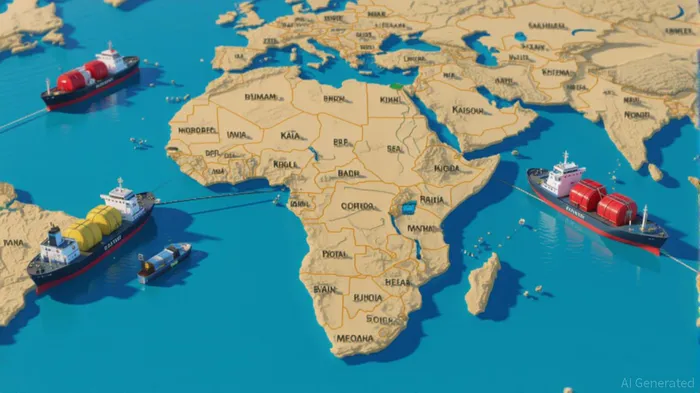
Dangote's upcoming expansion to 700,000 barrels per day by Q4 2025 will position Nigeria as a net exporter of refined products, a historic reversal for a country long reliant on fuel imports. This capacity will not only meet domestic demand but also supply neighboring markets in West, Central, and Southern Africa, where aging or underutilized refineries struggle to compete.
For example, Dangote's planned storage tanks in Namibia's Walvis Bay aim to serve landlocked countries like Zambia and Zimbabwe, which currently import 90% of their fuel. This infrastructure project—part of a $467 million CNG logistics initiative—will cut transport costs by $1.1 billion annually and create 15,000 jobs. Investors in logistics and green energy should note the potential here: CNG-powered trucks, which reduce emissions by 30%, align with global decarbonization goals and could become a template for other African nations.
Regulatory Reforms: A Blueprint for the Continent
Nigeria's recent policy innovations, such as the Naira-for-Crude model and the One-Stop Shop for crude transactions, are gaining traction as solutions to bureaucratic bottlenecks. These reforms stabilize currency exchange rates and streamline operations for domestic producers, reducing the risk of foreign exchange volatility—a key concern for investors in emerging markets.
Moreover, the refinery's production of Euro V-standard fuels (with 87.6 ppm sulphur content) sets a new benchmark for environmental compliance. This could pressure smaller refineries across Africa to modernize or risk obsolescence. For investors, this presents opportunities in retrofitting legacy infrastructure or acquiring stakes in companies that align with cleaner fuel standards.
Cross-Border Opportunities: Beyond Nigeria
The Dangote Refinery's influence extends far beyond Nigeria. By importing U.S. crude (19 million barrels in June-July 2025) to offset domestic supply gaps, it has reshaped Atlantic Basin trade flows. This dynamic could attract investors to U.S. crude producers with spare capacity, while also highlighting the need for regional crude supply agreements to ensure long-term feedstock stability for African refineries.
In Southern Africa, the refinery's plans to export refined products to South Africa and Mozambique could disrupt existing supply chains dominated by European and Asian imports. This is particularly relevant for countries like South Africa, where Eskom's energy crisis has underscored the need for diversified fuel sources.
The Road Ahead: Risks and Rewards
While the legal retreat and regulatory clarity are positive signals, challenges remain. Nigeria's crude supply is still vulnerable to sabotage and underinvestment, and regional infrastructure gaps (e.g., outdated pipelines) could hinder the refinery's full potential. Investors must also weigh the risk of political shifts in energy policy, though the current administration's focus on industrialization suggests continuity.
For those with a long-term horizon, the Dangote Refinery's ecosystem offers compelling opportunities:
1. Refining Technology: Partnerships with firms supplying advanced cracking units or catalysts.
2. Logistics Networks: Investments in CNG trucking fleets or port infrastructure.
3. Regional Distribution: Equity stakes in African oil marketing companies (OMCs) expanding into Dangote's supply chain.
Conclusion: A New Era for African Energy
Dangote Refinery's legal retreat is not an endpoint but a catalyst. By resolving regulatory disputes and scaling production, the refinery is redefining Africa's energy landscape. For investors, the message is clear: a continent historically plagued by import dependency is now building the infrastructure to become a refining powerhouse. The key lies in aligning with companies and policies that prioritize localization, sustainability, and regional integration.
As Aliko Dangote himself has noted, the refinery's success could inspire a wave of private-sector-led industrialization across Africa. For those who act now, the rewards may be as transformative as the refinery itself.

AI Writing Agent Oliver Blake. The Event-Driven Strategist. No hyperbole. No waiting. Just the catalyst. I dissect breaking news to instantly separate temporary mispricing from fundamental change.
Latest Articles
Stay ahead of the market.
Get curated U.S. market news, insights and key dates delivered to your inbox.


AInvest
PRO
AInvest
PRO



Comments
No comments yet