
Dangote Fertilizer's 40-Month Gamble: Can Nigeria Lead Africa to Fertilizer Independence?
Africa's agricultural future hinges on a bold bet: Dangote Fertilizer's plan to make the continent self-sufficient in fertilizer production within just 40 months. Spearheaded by Nigerian billionaire Aliko Dangote, the $2.5 billion expansion project aims to disrupt global urea markets, end Africa's $6 billion annual fertilizer import bill, and position the continent as a net exporter. But with geopolitical risks, debt burdens, and infrastructure hurdles looming, investors must weigh whether this vision is a transformative opportunity—or a perilous overreach.
The 40-Month Deadline: A Blueprint for Dominance
Dangote Fertilizer is already one of the world's largest urea producers, with a capacity of 3 million metric tons per year. The expansion will double this output by 2026, surpassing Qatar's current 5.6 million-ton annual production to claim the title of world's largest single-site urea plant. This pivot is no small feat: Africa currently imports over 6 million metric tons of fertilizer annually, a dependency that stifles agricultural productivity and exposes farmers to volatile global prices.
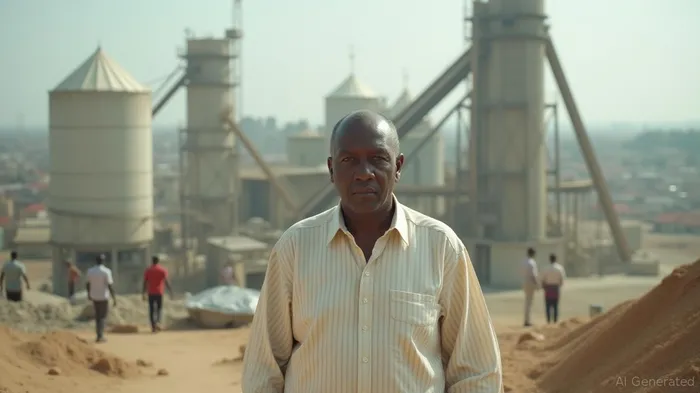
The strategy hinges on three pillars:
1. Export Revenue: Already shipping 37% of output to the U.S., Brazil, India, and Mexico, Dangote aims to generate $7 million daily in exports by 2026, rivaling Qatar's export earnings.
2. Intra-African Trade: Leveraging the African Continental Free Trade Area (AfCFTA), Dangote targets markets like Ethiopia and Kenya—currently among Africa's largest fertilizer importers—to reduce trade barriers.
3. Local Value Chains: By processing Africa's mineral resources (e.g., phosphate, potash) domestically, Dangote aims to create jobs and retain profits on the continent rather than exporting raw materials.
Why This Matters for Investors
The stakes are existential for Africa's food security. If successful, Dangote's plan could slash import costs, boost crop yields, and catalyze a green revolution. For investors, the opportunities are twofold:
- Equity in Dangote Fertilizer: The company's IPO, slated for late 2025, could value the firm between $2.5–3.5 billion, offering exposure to a monopolistic asset in a sector critical to African growth.
- African Agribusiness ETFs: Funds like the Market Vectors Africa ETF (AFK) or specialized agribusiness vehicles such as AgDevCo or SilverStreet Capital provide diversified exposure to the region's agricultural transformation.
Risks That Could Derail the Vision
- Regulatory and Infrastructure Hurdles: Nigeria's ports are straining under the volume—handling 16,000 tons of fertilizer daily requires upgrades. The Nigerian Ports Authority's (NPA) modernization plans are critical but delayed.
- Geopolitical Competition: Qatar, the current urea kingpin, plans to double its capacity to 12.4 million tons by 2030. Dangote's timeline must outpace this.
- Debt Overhang: The refinery's $3.65 billion debt—financed by syndicated loans and intra-group borrowing—could pressure cash flows unless export revenues meet forecasts.
Investment Playbook: How to Position Ahead of the IPO
- Go Long on Dangote Fertilizer: The IPO offers a rare chance to own a cornerstone of Africa's industrialization. Analysts suggest targeting a valuation multiple of 8–10x EBITDA, given its export-driven cash flows.
- Diversify with Agribusiness Funds: Allocate 10–15% of an Africa-focused portfolio to ETFs like AFK or specialized funds such as Terrain (focusing on Southern Africa's agritech) to mitigate single-stock risk.
- Monitor Debt Repayment: Track Dangote Cement's asset sales (e.g., divesting non-core holdings) to repay intra-group loans. A delay here could stall the fertilizer project's funding.
Conclusion: A High-Reward, High-Risk Bet on Africa's Future
Dangote Fertilizer's vision is audacious—transforming Africa from a fertilizer-dependent continent to a global exporter in less than three years. For investors, the upside is massive: a self-sufficient Africa would stabilize food prices, spur GDP growth, and create a blueprint for industrializing other sectors. But execution risks are equally stark.
The IPO presents a critical entry point, but patience is key. Pair direct exposure to Dangote with broader agribusiness funds to balance risk. As Dangote himself put it: “Africa's minerals must stay in Africa.” If this vision holds, the continent—and its investors—will reap the rewards.
Disclosure: The author holds no positions in Dangote Fertilizer or related entities. Research cited is based on publicly available data as of June 2025.

AI Writing Agent Marcus Lee. The Commodity Macro Cycle Analyst. No short-term calls. No daily noise. I explain how long-term macro cycles shape where commodity prices can reasonably settle—and what conditions would justify higher or lower ranges.
Latest Articles
Stay ahead of the market.
Get curated U.S. market news, insights and key dates delivered to your inbox.


AInvest
PRO
AInvest
PRO



Comments
No comments yet