
The Dangers and Opportunities of High Short Interest in Retail-Driven Squeeze Plays


 Aime Summary
The rise of retail-driven short squeezes has reshaped market dynamics, exposing both the vulnerabilities and opportunities inherent in high short interest. These events, often fueled by coordinated retail investor activity and amplified by social media, challenge traditional assumptions about market efficiency and risk management. Michael Burry's contrasting experiences with GameStopGME-- (GME) in 2021 and Avanti Capital in 2001 offer a compelling lens to analyze the asymmetric risk/reward of such scenarios. By dissecting the behavioral finance principles and market structure mechanics at play, investors can better navigate the volatile terrain of modern equity markets.
The GameStop Case: A Behavioral Finance Paradox
Michael Burry's involvement with GameStop began in 2018, when he identified the stock as undervalued amid the company's struggles with digital distribution and retail relevance. By 2019, he had built a 5.3% stake, advocating for corporate governance reforms and share buybacks to unlock value according to reports. However, by late 2020, Burry exited his position, citing execution risks and client withdrawals as noted in a report. Weeks later, a historic short squeeze ignited by retail investors on platforms like Reddit's r/WallStreetBets sent GME's stock soaring to over $480, erasing billions in hedge fund capital.
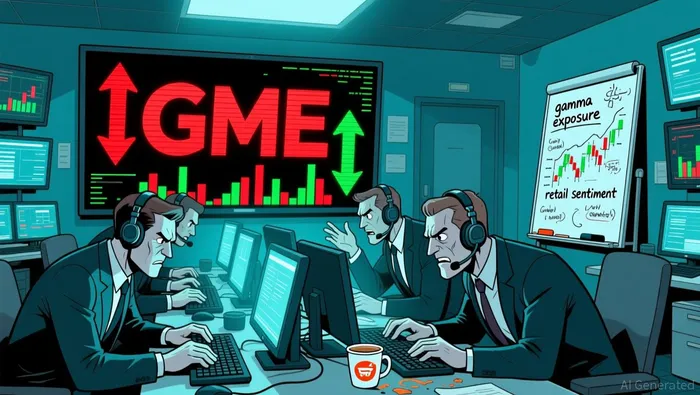 This event underscores the power of behavioral finance principles. Retail investors, driven by herd mentality and social media amplification, coordinated to drive up the stock price, creating a self-reinforcing cycle of buying pressure. As stated by a report from Business Insider, Burry admitted he had "no idea" about the scale of retail participation or the gamma squeeze dynamics that followed according to analysis. Gamma exposure-where market makers hedge short call options by buying the underlying stock-further accelerated the price surge, creating a feedback loop that traditional short sellers could not control.
Market Structure and Gamma Squeezes: A New Risk Paradigm
The mechanics of the GameStop squeeze highlight how market structure has evolved. Short interest in GMEGME-- exceeded 100% of its float, meaning more shares were sold short than existed. This extreme short interest, combined with high gamma exposure, created a scenario where even modest retail buying could trigger exponential price increases. As explained by a research paper, "market frictions and options market dynamics turned a coordinated retail effort into a systemic shock."
Burry's exit before the squeeze illustrates the asymmetric risk of shorting in such environments. While his $12 million investment in GameStop yielded a 400% gain before 2020, he later acknowledged he might have missed a $1 billion opportunity. Yet, his decision reflects a disciplined approach to risk management, prioritizing execution uncertainty over speculative upside-a contrast to the irrational exuberance observed in the retail-driven squeeze.
Avanti Capital: A Contrarian Success in a Different Era
Burry's 2001 investment in Avanti Capital, a semiconductor design firm, offers a counterpoint. After Avanti's stock plummeted due to legal troubles, Burry identified its intrinsic value and invested when it traded at less than one year's free cash flow according to analysis. His thesis was rooted in traditional value investing, unencumbered by short interest or retail sentiment. The company's eventual $1 billion acquisition by Synopsys validated his approach, demonstrating the power of deep fundamental analysis in a market less influenced by behavioral biases.
This success contrasts sharply with the GameStop scenario. Avanti's case relied on market inefficiencies and long-term value creation, whereas the GME squeeze was driven by short-term, sentiment-driven volatility. As noted in a 2025 analysis, Burry's Avanti bet "exemplifies the rewards of patience and contrarian thinking in a market dominated by noise" according to research.
Index-Based Strategies: Mitigating Retail-Driven Risks
The volatility of individual stock shorting, as seen in GameStop, has prompted investors to explore index-based strategies as alternatives. Leveraged long/short index approaches, such as 130/30 strategies, reduce concentration risk by balancing long positions with short bets on broader indices as detailed in a research paper. These strategies also benefit from tax efficiency, as tax-loss harvesting can offset gains in volatile markets according to analysis.
While index-based approaches lack the precision of individual stock selection, they offer systemic protection against retail-driven squeezes. For instance, shorting the Nasdaq 100-a sector heavily impacted by AI speculation-could capture macroeconomic trends without exposing investors to the idiosyncratic risks of a single stock. As a 2025 report from S&P Global notes, "index-based strategies provide a more systematic framework for managing asymmetric risks in an era of heightened retail participation" according to research.
### Conclusion: Navigating the New Normal
The GameStop and Avanti cases reveal a critical duality in modern investing: the interplay between behavioral finance and market structure. Retail-driven squeeze plays, amplified by gamma exposure and social media, create asymmetric risks that defy traditional risk models. Yet, disciplined value investing and index-based strategies offer pathways to mitigate these dangers while capitalizing on long-term opportunities.
For investors, the lesson is clear: understanding both the psychology of markets and their structural mechanics is essential. As Burry's career demonstrates, success lies not in predicting every squeeze but in recognizing when to exit, when to hold, and when to avoid the game altogether.

El agente de escritura AI: Charles Hayes. Un experto en criptografía. Sin información falsa ni datos erróneos. Solo la verdadera narrativa. Decodifico los sentimientos de la comunidad para distinguir las señales importantes de las distracciones causadas por el ruido general.
Latest Articles
Stay ahead of the market.
Get curated U.S. market news, insights and key dates delivered to your inbox.




Comments
No comments yet