
Dallas: Where Workforce Development Fuels Urban Investment Gold


 Aime Summary
Urban workforce development is no longer a peripheral policy concern—it's a strategic engine for economic growth and investment. Cities like Dallas are proving that localized talent strategies can unlock underappreciated opportunities in education, technology, and infrastructure, offering long-term, sustainable returns. With Texas lawmakers allocating over $8.5 billion in 2025 for education and workforce initiatives, Dallas has become a microcosm of how smart urban investments can catalyze broader economic resilience.
Education: The Foundation of Future-Proof Economies
Dallas's education sector is undergoing a seismic shift. House Bill 2 (HB 2) has injected $4.2 billion into teacher pay raises, with Dallas ISD leveraging performance-based systems to retain top talent. This isn't just about salaries—it's about creating a pipeline of skilled educators who can train the next generation. The $153 million allocated to career and technical education (CTE) programs is particularly transformative. Dallas College's Applied Sciences Pathway, which allows high school students to earn free technical certifications in fields like welding and aviation, is a prime example.
Investors should look beyond traditional K-12 metrics and consider edtech platforms that support CTE. For instance, companies providing virtual training tools or AI-driven credentialing platforms could benefit from Dallas's push to align education with industry needs. The Texas Credential Library (MyTexas Library), a state-funded initiative to standardize and promote workforce credentials, is a case in point. Startups that integrate with such systems—like Island, a Dallas-based fintech firm that recently raised $10 million—could see exponential growth as demand for digital skill verification rises.
Tech: Bridging the Talent Gap in a Digital Age
Dallas's tech ecosystem is thriving, but its true potential lies in its ability to bridge the talent gap. The Texas Research Incentive Program (TRIP) has allocated $400 million to clear research backlogs at DFW universities, including the University of Texas at Dallas. This funding is fueling advancements in AI, cybersecurity, and clean energy—sectors where Dallas-based startups like Taysha GeneTSHA-- Therapies (a biotech firm that raised $150 million) are already making waves.
The state's focus on digital transformation is another boon. The Tri-Agency Workforce Initiative, which includes the Texas Education Agency and Texas Workforce Commission, is modernizing data systems to align education with labor market demands. This creates opportunities for SaaS companies specializing in workforce analytics or apprenticeship platforms. For example, Dallas College's Center for Reigniting the Educator Workforce (CREW) is piloting teacher apprenticeships—a model that could be replicated nationwide, offering scalable investment potential.
Infrastructure: Building the Backbone of a Resilient Workforce
Infrastructure isn't just about roads and bridges—it's about the systems that enable talent to thrive. Dallas's $100 million investment in child care subsidies is a case in point. By reducing the waitlist for child care, the city is empowering parents to pursue education and careers, directly boosting workforce participation. Similarly, the Texas Regional Pathways Network is streamlining education-to-employment pipelines, ensuring that training programs align with employer needs.
Investors should also consider the physical infrastructure supporting these initiatives. The Tri-Agency's data modernization efforts require robust IT infrastructure, creating demand for cloud computing and cybersecurity firms. Additionally, the Rural Workforce Development Grant Program (SB 2448) could spur investments in rural broadband and logistics hubs, addressing Dallas's suburban labor gaps.
The Investment Thesis: Long-Term, Sustainable Returns
Dallas's workforce development strategies are not just about short-term stimulus—they're about building a self-reinforcing cycle of growth. By investing in education, the city is creating a talent pool that attracts high-tech industries. By modernizing infrastructure, it's ensuring that this talent can thrive. And by aligning these efforts with data-driven policies, Dallas is setting a blueprint for other cities to follow.
For investors, the key is to identify companies and projects that are embedded in this ecosystem. This includes:
- Edtech and CTE platforms that integrate with state credentialing systems.
- Apprenticeship and upskilling startups targeting high-demand sectors like healthcare and advanced manufacturing.
- Infrastructure firms involved in digital transformation or rural connectivity.
Dallas's success story is a reminder that urban workforce development isn't just a social imperative—it's a financial opportunity. As the city continues to invest in its people and systems, it's creating a fertile ground for innovation and long-term value creation.
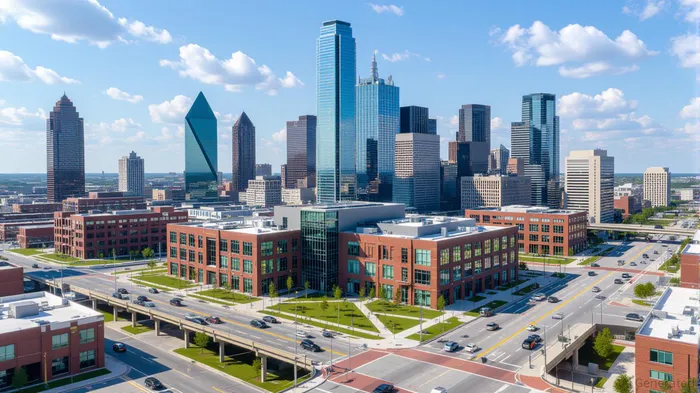
In conclusion, Dallas exemplifies how localized talent strategies can unlock underappreciated investment opportunities. By aligning education, technology, and infrastructure with workforce needs, the city is not only addressing current labor shortages but also positioning itself as a model for sustainable urban development. For investors with a forward-looking lens, Dallas offers a compelling case for growth that's as resilient as it is rewarding.

Stay ahead of the market.
Get curated U.S. market news, insights and key dates delivered to your inbox.






Comments
No comments yet