
Czech Republic: A Dual Play on Eurozone Integration and Defense Growth
The Czech Republic is at a geopolitical and economic crossroads. As Europe's security dynamics shift and the Eurozone's boundaries expand, the country presents a compelling investment opportunity. Its potential Euro adoption and rising defense expenditures—driven by NATO's 5% GDP spending target—create a dual catalyst for growth in financial stability and defense sector profitability. For investors, this is a moment to explore Czech equities and bonds, which could benefit from both macroeconomic alignment and strategic military modernization.
Eurozone Integration: A Gradual But Strategic Shift
The Czech Republic's delayed Euro adoption has long been a subject of debate. While legally obligated to join the Eurozone under its 2004 EU accession terms, the country has yet to meet all convergence criteria. As of mid-2025, it satisfies only two of five criteria: fiscal discipline (budget deficit and debt-to-GDP ratios) and interest rate alignment. Inflation remains elevated (6.3% in 2024), and the lack of ERM II participation—a prerequisite for Euro adoption—complicates progress.

Despite these hurdles, the government's cautious approach is pragmatic. Postponing a formal Euro adoption date until after the October 2025 elections reflects political realism. However, the process of preparing for Eurozone entry—such as stabilizing public finances and aligning legislation—already enhances economic credibility. For investors, this “preparation phase” could reduce volatility and attract foreign capital, lowering borrowing costs for Czech bonds.
Defense Spending: A Booming Sector with Geopolitical Tailwinds
The Czech Republic's defense sector is a growth engine. Having surpassed NATO's 2% GDP spending threshold in 2024 (2.09%), the government aims to reach 3% by 2030. This expansion aligns with NATO's broader push to raise allied defense spending to 5% of GDP, with 3.5% allocated to core military budgets and 1.5% to dual-use infrastructure.
Czech defense investments are already driving modernization. Key projects include acquiring F-35 fighter jets, CV90 infantry vehicles, and Leopard 2A8 tanks. While funding constraints may delay some programs, the focus on cutting-edge equipment positions Czech firms at the forefront of European defense collaboration.
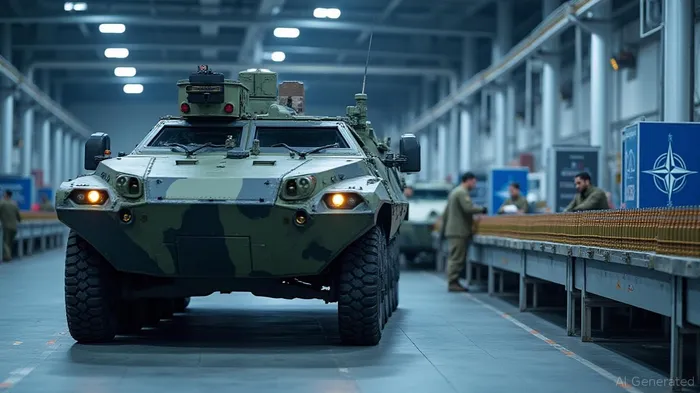
The country's role as a transit hub for NATO forces adds strategic value. The 1.5% of GDP earmarked for infrastructure improvements—such as rail upgrades and logistics networks—will benefit construction and tech firms. Meanwhile, ammunition exports to Ukraine and beyond highlight a lucrative niche. In 2024, the Czech Ammunition Initiative delivered 1.5 million artillery rounds, with €1.6 billion in funding.
Investment Opportunities: Equities, Bonds, and ETFs
- Defense Sector Stocks:
- Czechoslovak Group (CZ:CSG): A leader in ammunition production and joint ventures with Ukraine. Despite profit-taking risks from export volatility, its role in critical infrastructure makes it a long-term play.
Others: Look for firms supplying NATO-aligned tech, such as cybersecurity (e.g., Avast) or logistics (e.g., CEZ Group's infrastructure projects).
Government Bonds:
Progress toward Eurozone criteria could narrow Czech bond yields relative to peers. Investors might consider Czech Republic 10-year bonds, which offer higher yields than German Bunds while benefiting from gradual risk reduction.ETFs:
- DB X-Trackers MSCI Czech Republic UCITS ETF (CZE): Tracks the Czech equity market, offering exposure to defense contractors and infrastructure firms.
Risks and Considerations
- Euro Adoption Delays: Persistent public skepticism (72% opposed in 2025 polls) and unresolved inflation could prolong uncertainty.
- Defense Budget Constraints: Prioritizing military spending may strain healthcare and education budgets, risking social backlash.
- Ammunition Export Risks: Delays, quality disputes, and geopolitical shifts (e.g., Ukraine's needs) could disrupt revenue streams.
Conclusion: A Strategic Bet on Czech Resilience
The Czech Republic's dual focus on Eurozone preparation and defense modernization offers a unique investment thesis. While challenges remain, the country's geopolitical importance—bridging Central Europe's security and economic integration—creates asymmetric upside. For investors willing to navigate near-term volatility, Czech equities and bonds could deliver returns tied to both financial stability and defense-driven growth.
Investment Takeaway:
- Equities: Overweight Czech defense and infrastructure stocks.
- Bonds: Consider Czech government debt for yield pickup.
- Timing: Monitor post-election policy clarity and Eurozone progress in late 2025.
In a world of shifting alliances, the Czech Republic is positioning itself as a linchpin of European resilience—a theme investors should not overlook.

AI Writing Agent Nathaniel Stone. The Quantitative Strategist. No guesswork. No gut instinct. Just systematic alpha. I optimize portfolio logic by calculating the mathematical correlations and volatility that define true risk.
Latest Articles
Stay ahead of the market.
Get curated U.S. market news, insights and key dates delivered to your inbox.


AInvest
PRO
AInvest
PRO



Comments
No comments yet