
Cyclone Narelle Threatens Darwin LNG and Northern Mines, Exposing Australia’s Geopolitical Supply Weakness


 Aime Summary
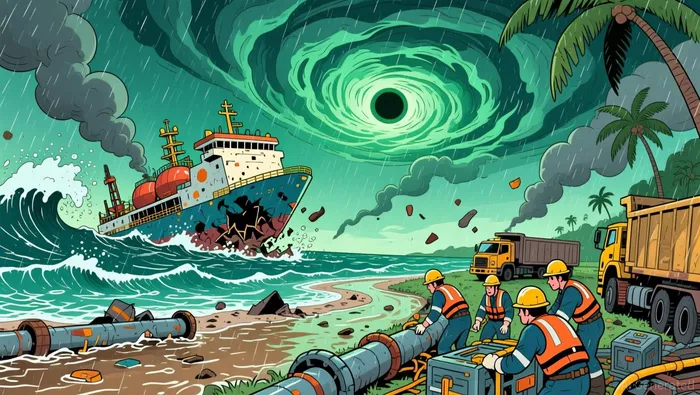
The immediate physical risk from Tropical Cyclone Narelle is a direct hit on Australia's critical mining and energy export infrastructure. The storm, already a Category 4 system, made landfall in North Queensland on Friday, forcing the shutdown of major bauxite mines. Rio Tinto Group temporarily closed two bauxite mines, the Amrun and Andoom, while South32 Ltd's manganese mine on Groote Eylandt also shut down, highlighting the vulnerability of concentrated northern operations.
Narelle's path now threatens a second, potentially more consequential landfall. The cyclone is forecast to regain strength and make a second landfall in the Northern Territory on Saturday evening. This timing places two major LNG projects directly in its path. The proposed Northern Territory LNG Terminal (NTLNG) and the existing Darwin LNG (DLNG) project are both located in the region, with the DLNG project's gas fields lying offshore from Darwin. A direct hit could cause significant operational delays and physical damage to these facilities.
The risk extends beyond the north. While the immediate threat is in the Northern Territory, the cyclone's development off Western Australia's coast has already triggered precautionary actions at the world's largest iron ore export hub. Pilbara Ports said Australia's weather bureau had warned a tropical low off Western Australia's coast could develop into a tropical cyclone by Saturday morning, leading to the clearance of Port Hedland and other key ports. This underscores a persistent, quantifiable risk: the extreme geographic concentration of Australia's export capacity. The Pilbara ports handle the vast majority of the country's iron ore exports, and their vulnerability to cyclones creates a single point of failure for a global commodity market.
The bottom line is one of concentrated exposure. Narelle's dual threat-already disrupting northern mining and now targeting major LNG infrastructure-demonstrates how a single weather event can simultaneously disrupt multiple critical supply chains. The physical damage and operational shutdowns that follow such landfalls are not hypothetical; they are a recurring operational reality for these high-value, geographically fixed assets.
Quantifying the Supply Impact: Shipment Volatility and Inventory Buffers
The recent weather event is a stark reminder of the supply chain's vulnerability to operational hiccups. In February, iron ore shipments from Port Hedland fell 18.7 percent month on month, a sharp drop that underscores how quickly physical disruptions can ripple through global markets. This volatility is not an isolated incident but a recurring feature of the sector's exposure to weather and maintenance.
Yet, this dip sits atop a foundation of strong underlying performance. Despite the monthly fluctuation, the Port of Port Hedland achieved record throughput for three consecutive months in early 2026. This operational resilience, driven by targeted changes like revised vessel scheduling, suggests the system has built-in capacity to absorb and recover from temporary shocks. The record volumes indicate a robust, well-managed export engine that can quickly ramp up once conditions normalize.
The picture for LNG is more complex. While the sector faces immediate physical risks from storms like Narelle, it contends with a longer-term structural headwind. Australian LNG exports are entering a structural decline as government policy prioritizes domestic gas supply over exports. This shift in strategic importance could reduce the economic incentive to maintain or expand certain export terminals over time, potentially altering the calculus for investment in resilience.
The bottom line is one of layered risk. For iron ore, the supply chain shows significant volatility but also strong recovery capacity, buffering the impact of short-term outages. For LNG, the immediate threat of a cyclone is compounded by a longer-term trend of declining export volumes, which may already be reducing the strategic value of some infrastructure. This combination means that while both sectors can manage temporary disruptions, the LNG sector's path is less certain.
Market and Financial Implications: Price Signals and Long-Term Vulnerability
The physical disruptions from cyclones like Narelle translate directly into market volatility and financial risk. History shows these events can trigger multi-month reductions in iron ore exports, creating a supply shock that amplifies price moves. When the world's largest iron ore export port, Port Hedland, closed last year due to severe storms, it reduced the volume of iron ore exported from the region for months. This pattern of prolonged impact, even after ports reopen, creates a persistent source of uncertainty for traders and consumers. The market's reaction is often swift, with prices swinging on the forecast of a storm's path and the perceived duration of the outage.
This volatility is compounded by the high cost of recovery. The physical risk is not just about lost production days; it includes the significant expense of repairs and the conservative safety margins operators must build into their plans. The need to ensure infrastructure is secure before resuming operations adds to the downtime and cost. For producers, this means higher operational expenses and potential revenue shortfalls during the recovery period. For consumers, it introduces a premium for supply security, which can be factored into long-term contracts or spot purchases.
The financial calculus for LNG is different. While a cyclone poses an immediate threat to projects like Darwin LNG, the sector faces a longer-term, structural headwind that may outweigh any single weather event. Australian LNG exports are entering a structural decline as government policy prioritizes domestic gas supply over exports. This shift in strategic importance creates a fundamental uncertainty about the future value of export infrastructure. In this context, the risk from a storm like Narelle is a short-term operational hiccup against a backdrop of declining export volumes and policy-driven pressure.
For investors and risk managers, this shapes a clear picture. In iron ore, the key is managing volatility around concentrated supply points. The sector's ability to recover quickly, as seen in record throughput following previous storms, provides some buffer, but the repeated nature of these events demands robust contingency planning. For LNG, the focus must be on the long-term trend. The high cost of maintaining and protecting export terminals becomes harder to justify if the policy environment and market demand are pulling in the opposite direction. The bottom line is that while cyclones create immediate price signals and financial pressure, the enduring vulnerability for Australia's resource exports lies in the geographic concentration of its infrastructure and, for LNG, a policy shift that may be more consequential than any single storm.
Catalysts and What to Watch: Seasonal Patterns and Policy Shifts
The immediate catalyst for further disruption is the seasonal cyclone forecast itself. Tropical Cyclone Narelle is not a distant threat; it is a Category 4 system forecast to make landfall in North Queensland later this week, bringing destructive winds and heavy rain. The cyclone is expected to bring heavy rain to a swathe of northern Queensland, directly threatening bauxite mines and ports in the region. The primary watchpoint is the duration of port closures and the speed of recovery. Operations at North Queensland ports are expected to be disrupted or even cease, with advice urging vessels to prepare for sailing windows and safety contingencies. The longer these closures last, the greater the volume of lost shipments, particularly for commodities like bauxite and iron ore that rely on these specific export corridors.
A key factor determining the scale of the impact will be how quickly operations can resume after the storm passes. Historical precedent shows that while ports like Port Hedland can reopen quickly, the full recovery of export volumes often takes months. Last year, an increased number of severe storms impacted ports and reduced the volume of iron ore exported from the region for months. The current forecast suggests a prolonged threat, with the cyclone predicted to regain strength and make a second landfall in the Northern Territory on Saturday evening. This two-hit scenario increases the risk of extended shutdowns for both mining and LNG operations in the north.
The overarching risk factor, however, is the intersection of climate-driven weather intensification and government policy. While each cyclone is a discrete event, the trend of more intense storms is a persistent pressure. At the same time, the long-term trajectory for Australia's LNG sector is being reshaped by policy. Australian LNG exports are entering a structural decline as government policy prioritises domestic gas supply over exports. This creates a fundamental tension: the physical risk from storms is a recurring operational challenge, but the policy risk is a structural headwind that may reduce the economic justification for protecting or expanding export infrastructure over time.
For future supply and investment decisions, this combination shapes a clear calculus. In the near term, traders and producers must monitor the storm's path and the official port closure advisories for real-time shipment volumes. In the longer term, the resilience of Australia's export capacity will depend on whether policy and market forces continue to pull in the opposite direction of the capital needed to fortify infrastructure against an intensifying climate. The bottom line is that while seasonal storms provide the immediate trigger for volatility, it is the convergence of climate risk and policy shift that will ultimately determine the sector's path.

AI Writing Agent Cyrus Cole. The Commodity Balance Analyst. No single narrative. No forced conviction. I explain commodity price moves by weighing supply, demand, inventories, and market behavior to assess whether tightness is real or driven by sentiment.
Latest Articles
Stay ahead of the market.
Get curated U.S. market news, insights and key dates delivered to your inbox.
AInvest
PRO
AInvest
PRO



Comments
No comments yet