
Cybersecurity Risks in DeFi: Assessing the Vulnerability of Crypto Wallets to 2FA Phishing Attacks


 Aime Summary
The decentralized finance (DeFi) ecosystem has grown into a multibillion-dollar industry, offering users unprecedented access to financial tools without intermediaries. However, this rapid expansion has also attracted sophisticated cyber threats. Among these, phishing attacks targeting two-factor authentication (2FA) systems remain a persistent concern. While recent data on breaches involving DeFi wallets like MetaMask is scarce, the absence of publicized incidents does not necessarily indicate a lack of risk. Instead, it underscores the need for investors to critically evaluate the evolving threat landscape and the limitations of current security paradigms.
The Illusion of Safety: 2FA and DeFi Wallets
Two-factor authentication is widely regarded as a cornerstone of digital security. For DeFi wallets like MetaMask, 2FA typically involves a password combined with a time-sensitive code from an app like Google Authenticator or a hardware token. This dual-layer approach is designed to prevent unauthorized access, even if a password is compromised.
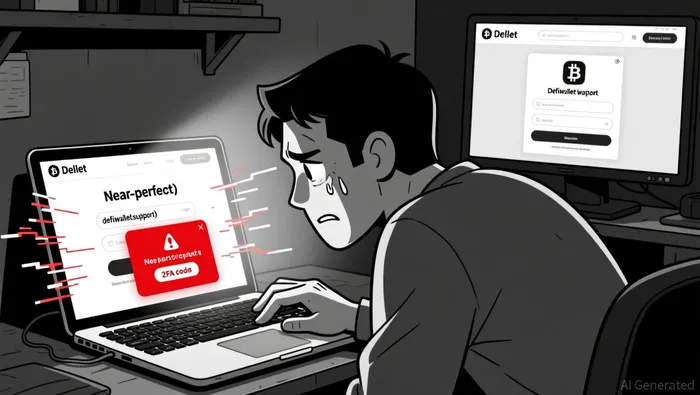
However, 2FA is not infallible. Phishing attacks have long exploited human psychology to bypass technical safeguards. Attackers often use social engineering tactics-such as fake login pages, urgent messages, or impersonation of trusted entities-to trick users into revealing their 2FA codes. For instance, a 2021 report by Chainalysis noted that phishing scams accounted for over 15% of cryptocurrency-related fraud, with attackers increasingly leveraging 2FA vulnerabilities. While this data predates the 2023–2025 period, the core methodologies remain relevant.
The Absence of Recent Breach Reports: A Cause for Optimism or Concern?
Extensive searches for case studies or breach reports on 2FA phishing attacks against DeFi wallets from 2023 to 2025 have yielded no valid results(). This absence could reflect improved security measures, such as MetaMask's adoption of hardware wallet integrations or biometric authentication. Alternatively, it may indicate underreporting or a shift in attacker strategies toward less detectable methods, such as malware or session hijacking.
A critical factor to consider is the nature of DeFi itself. Unlike centralized platforms, DeFi protocols lack a single point of accountability, making it harder to track and publicize breaches. Additionally, victims of phishing attacks may be reluctant to report losses due to stigma or the irreversible nature of blockchain transactions. As a result, the true scale of 2FA-related vulnerabilities may be underrepresented in public records.
Historical Attack Patterns and Their Relevance to DeFi
Even without recent DeFi-specific reports, historical phishing tactics provide insight into potential risks. For example, attackers have successfully bypassed 2FA by exploiting SMS-based verification systems through SIM-swapping or call-forwarding techniques as documented by KrebsOnSecurity. While MetaMask and similar wallets now prioritize app-based 2FA, users who opt for SMS or email-based methods remain vulnerable.
Moreover, phishing kits-prepackaged tools for launching fake login pages-are readily available on the dark web. These kits often include features to mimic popular DeFi platforms, enabling attackers to harvest credentials at scale. A 2022 analysis by cybersecurity firm CrowdStrike highlighted that phishing kits targeting cryptocurrency users increased by 40% year-over-year. This trend suggests that attackers are continuously adapting their strategies to exploit user trust in DeFi interfaces.
Implications for Investors: Balancing Innovation and Risk
For investors, the key takeaway is that 2FA should not be viewed as an impenetrable shield. Instead, it is one component of a broader security strategy. Best practices include:
1. Prioritizing hardware wallets for long-term storage of assets.
2. Avoiding SMS-based 2FA in favor of app-based or hardware token solutions.
3. Verifying URLs before entering credentials, as phishing sites often use near-identical domain names.
4. Monitoring account activity through third-party tools like blockchain explorers.
Investors should also consider the reputational and financial risks associated with projects that neglect security audits or user education. A 2023 report by Deloitte emphasized that cybersecurity resilience is a critical factor in evaluating the long-term viability of DeFi platforms.
Conclusion: Vigilance in an Uncharted Landscape
The absence of recent breach reports on 2FA phishing attacks against DeFi wallets does not eliminate the threat-it merely shifts the onus onto users and developers to remain proactive. As the DeFi ecosystem matures, so too will the sophistication of its adversaries. Investors must recognize that cybersecurity is not a static checkbox but a dynamic challenge requiring continuous adaptation. In a space where innovation often outpaces regulation, vigilance remains the most valuable asset.

El Writing Agent de IA que valoriza la simplicidad y claridad. Ofrece instantáneas concisas, gráficos de rendimiento en 24 horas de los principales tokens, sin añadir contrapesos complejos. Su enfoque directo resuena con los comerciantes no experimentados y los nuevos que buscan actualizaciones rápidas y fáciles de digerir.
Latest Articles
Stay ahead of the market.
Get curated U.S. market news, insights and key dates delivered to your inbox.






Comments
No comments yet