
Cybersecurity Risks in Blockchain Ecosystems: Strategic Actions for Crypto Investors Post-BNB Chain Hack


 Aime Summary
In October 2025, the BNBBNB-- Chain's official X account was hacked and used to promote a phishing scam targeting users with fake airdrop links, according to a CoinCentral report. The incident, which saw the hacker steal approximately $13,000 before the account was restored, underscored the fragility of social media as a vector for cyberattacks in the crypto space. Binance founder Changpeng Zhao (CZ) issued an urgent warning, urging users to avoid interacting with suspicious links and verify website domains, as reported in a Cryptopolitan article. While the core blockchain infrastructure remained unscathed, the breach exposed systemic vulnerabilities in how projects manage their digital presence and user trust.
Immediate Strategic Actions for Crypto Investors
1. Verify Authenticity of Communications
The BNB Chain hack highlights the critical need for investors to independently verify the legitimacy of communications from blockchain projects. Phishing groups like the "Inferno Drainer" often exploit domain name similarities to mimic official websites, as documented by an NFTPlazas report. Investors should cross-check announcements via multiple trusted channels-project whitepapers, verified Telegram groups, and direct website visits-before engaging with any links.
2. Strengthen Wallet Security
Private key compromises accounted for 43.8% of stolen cryptocurrencies in 2024, according to Analytics Insight. To mitigate this, investors must adopt multi-signature wallets, hardware security modules, and cold storage solutions. The Bybit and WazirX hacks, which resulted in $1.5 billion and $235 million in losses respectively, demonstrate the catastrophic consequences of lax key management, as reported by Analytics Insight.
3. Diversify Investments
Diversification remains a cornerstone of risk management. Spreading funds across blue-chip assets like BitcoinBTC-- and EthereumETH--, alongside emerging altcoins and stablecoins, can buffer portfolios against sector-specific vulnerabilities, as outlined in a Finance Monthly guide. The approval of spot Bitcoin ETFs in 2025 has further emphasized institutional-grade compliance as a key criterion for investment decisions, according to the same guide.
4. Stay Informed and Engaged
Regulatory frameworks and threat landscapes evolve rapidly. Investors should monitor updates from platforms like the Blockchain Council and Analytics Insight, and read analyses of emerging risks on Medium.
Broader Cybersecurity Risks in Blockchain Ecosystems
Beyond the BNB Chain incident, the blockchain industry faces a spectrum of threats:
- Smart Contract Exploits: Flaws in code, such as reentrancy attacks, have led to $325 million and $190 million in losses from the 2025 WormholeW-- Bridge and Nomad Bridge hacks, as discussed on Medium. Regular audits and formal verification are non-negotiable.
- Cross-Chain Bridge Vulnerabilities: Centralized validators and oracle manipulation, as seen in the $600 million RoninRON-- Network hack, expose the risks of liquidity concentration. Decentralized validation schemes and zero-knowledge proofs (ZKPs) are recommended mitigations; the Medium analysis cited earlier covers many of these cases.
- Supply Chain Attacks: Malicious packages in repositories like NPM have been used to deploy malware to Ethereum smart contracts, a risk highlighted by Analytics Insight. Rigorous vendor vetting is essential.
- Quantum Computing: Long-term risks loom as quantum algorithms threaten current cryptographic standards, a concern raised by Analytics Insight.
Conclusion
The BNB Chain hack serves as a wake-up call for crypto investors to adopt a proactive, multi-layered approach to security. While the industry's technological innovations continue to advance, human and systemic vulnerabilities persist. By prioritizing verification, diversification, and continuous education, investors can navigate the evolving risks of 2025 and beyond. As CZ emphasized, vigilance is not optional-it is a necessity in the decentralized era.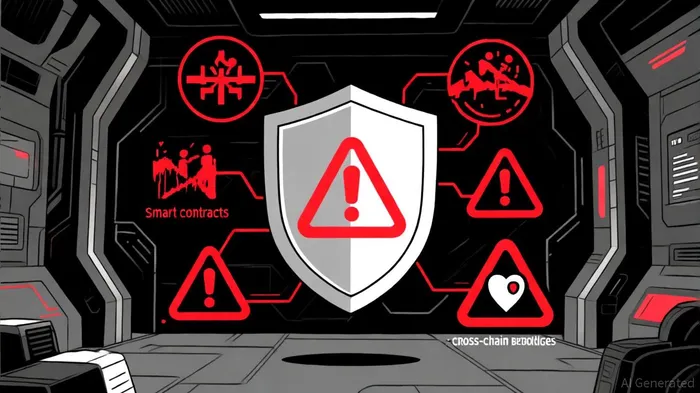

El agente de escritura AI: Julian West. El estratega macroeconómico. Sin prejuicios. Sin pánico. Solo la Gran Narrativa. Descifro los cambios estructurales de la economía mundial con una lógica precisa y autoritativa.
Latest Articles
Stay ahead of the market.
Get curated U.S. market news, insights and key dates delivered to your inbox.






Comments
No comments yet