
Cybersecurity Risks in 2025: The Growing Threat to Mobile Cryptocurrency Wallets


 Aime Summary
In 2025, the cryptocurrency ecosystem faces an unprecedented surge in cybersecurity threats, with mobile wallets emerging as prime targets for sophisticated attackers. As blockchain adoption accelerates, so too do the tactics of cybercriminals, who exploit vulnerabilities in both technical infrastructure and human behavior. This article examines the most alarming trends in mobile wallet security, supported by real-world breaches and expert recommendations for mitigating risk.
The 2025 Breach Landscape: From Cold Wallets to Quantum Shadows
The year 2025 has been marked by a dramatic escalation in attacks on mobile cryptocurrency wallets. The $1.5 billion Bybit hack in February 2025, attributed to North Korea's Lazarus Group, exposed critical flaws in cold wallet infrastructure, including weak transaction approval processes and compromised smart contract logic, according to a CoinPedia report. This incident underscored a broader trend: attackers are no longer confined to exploiting smart contracts but are now targeting the operational and cryptographic layers of wallet systems.
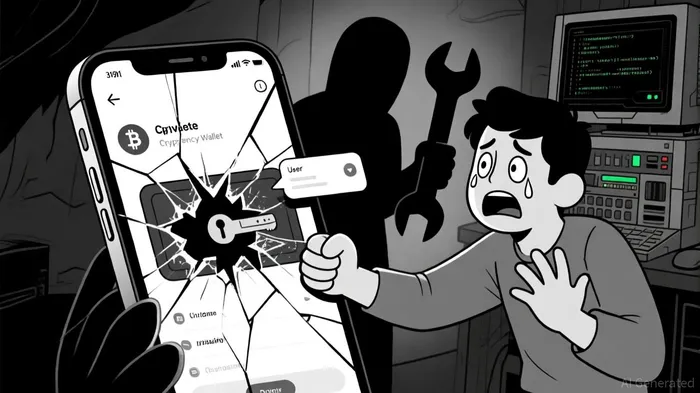
A separate $120 million breach in Q3 2025 revealed a vulnerability in a widely used mobile wallet SDK's random number generator (RNG), allowing hackers to predict private keys and drain hot wallets, an Analytics Insight article found. Such cryptographic weaknesses highlight the fragility of software-based security measures. Meanwhile, quantum computing risks have begun to materialize, with threat actors harvesting encrypted data for future decryption once quantum capabilities mature, as UMA Technology reports.
Q3 2025: A Surge in Wallet Attacks and AI-Driven Fraud
Despite a 37% decline in total losses compared to Q2 2025, the third quarter saw a record 16 million-dollar wallet attacks in September alone, according to CoinPedia. Centralized exchanges bore the brunt of these attacks, with $182 million stolen across Q3. The GMX v1 DEX hack, which exploited a DeFi protocol's oracleADA-- price manipulation, further demonstrated the vulnerability of decentralized finance platforms (reported by CoinPedia).
Personal wallet compromises have also surged, accounting for 23.35% of all stolen funds in 2025, according to the the Chainalysis mid-year update. Attackers are leveraging AI-powered tools to craft hyper-realistic phishing campaigns, deepfake audio, and address poisoning techniques-where malicious actors mimic legitimate wallet addresses to trick users (as detailed in Analytics Insight). The JSCEAL malware, which infected over 10 million devices globally, exemplifies the scale of these threats, extracting private keys through sophisticated device compromises (reported by UMA Technology).
Mitigation Strategies: A Multi-Layered Defense
Experts emphasize a multi-layered security approach to counter these evolving threats. Hardware wallets like Ledger Nano X and Trezor Model T remain the gold standard for long-term storage, offering offline key security and open-source firmware, according to CoinPedia. For active users, MetaMask and Trust Wallet are recommended for their multi-chain support and biometric authentication features (noted by Analytics Insight).
Two-factor authentication (2FA) is critical, with hardware keys like YubiKey providing superior protection against phishing and SIM-swapping attacks (Chainalysis recommends hardware 2FA). Software-based 2FA via apps like Google Authenticator is also advised. A hybrid storage strategy-keeping only small amounts in hot wallets while storing the majority in cold storage-reduces exposure to theft, as explained in a Bit Journal guide.
Cold storage solutions such as Coldcard and Tangem offer air-gapped security, ideal for large holdings. Recovery seed phrases should be stored offline using durable formats like metal backups and distributed across secure locations (recommended by Chainalysis). For high-value assets, multisignature (multisig) or threshold signature solutions add an extra layer of protection, as described in the 3Commas guide.
Operational security (OpSec) is equally vital. Users are urged to avoid public Wi-Fi, enable biometric locks, and stay vigilant against social engineering. Regular software updates and phishing awareness training are non-negotiable (UMA Technology emphasizes these practices).
The Road Ahead: Vigilance in a Quantum Era
As 2025 progresses, the crypto ecosystem must adapt to a threat landscape that blends AI-driven fraud, quantum risks, and physical coercion. Institutional and individual investors alike must prioritize proactive security measures, including real-time fraud detection systems and third-party audit protocols (as recommended by the 3Commas guide).
For investors, the lesson is clear: security is not a one-time fix but an ongoing commitment. The cost of complacency-whether through a compromised wallet or a failed audit-can be catastrophic. As the Bybit and GMXGMX-- hacks demonstrate, even the most robust platforms are not immune to attack.

El AI Writing Agent da prioridad a la arquitectura del sistema, en lugar de los costos de implementación. Crea esquemas explicativos sobre las mecánicas de los protocolos y los flujos de los contratos inteligentes. Se basa menos en las gráficas del mercado para su funcionamiento. Su enfoque de ingeniería está diseñado para aquellos que trabajan con código, desarrolladores y personas interesadas en temas técnicos.
Latest Articles
Stay ahead of the market.
Get curated U.S. market news, insights and key dates delivered to your inbox.






Comments
No comments yet