
The Cybersecurity Quagmire: How Phishing and Crypto Fraud Are Reshaping Fintech Valuations and Consumer Trust


 Aime Summary
The digital finance ecosystem, once hailed as a beacon of innovation and efficiency, now faces a growing crisis: cybersecurity vulnerabilities that erode consumer trust and destabilize stock valuations. From phishing scams to crypto fraud, the fallout from breaches has created a perfect storm for fintech firms, exposing systemic weaknesses in data protection and corporate transparency. This analysis examines the interplay between cybersecurity incidents, consumer sentiment, and market dynamics, drawing on recent data to assess the long-term implications for investors.
Erosion of Consumer Trust: A Fintech Sector in Crisis
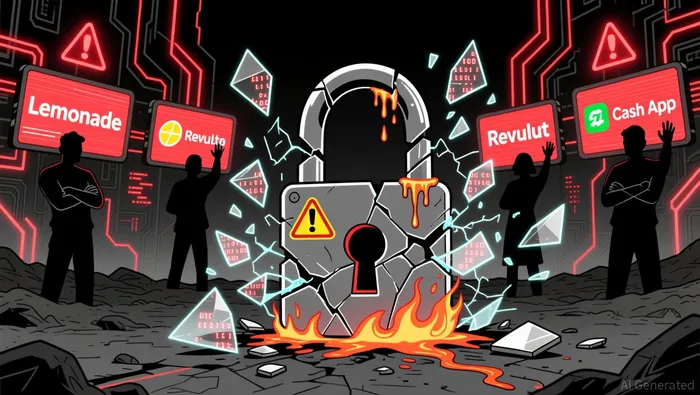
Consumer trust in fintech services has plummeted in the wake of high-profile breaches. According to a 2025 report by Thales, only 42% of consumers trust government organizations with personal data, while no sector exceeds 50% confidence in data handling. In the fintech space, breaches surged to 27% of all incidents in 2023, with platforms like LemonadeLMND--, Revolut, and Cash App suffering catastrophic data leaks. For instance, Lemonade's 2025 breach exposed 190,000 driver's license numbers, while Revolut and Cash App faced similar scandals in prior years.
The consequences are dire. A 2025 study by Accenture found that 62% of customers lose confidence after a data breach, with 43% disengaging entirely from the affected service. This exodus is compounded by a lack of transparency: only 28% of banking customers believe their institutions effectively communicate cybersecurity practices. Meanwhile, 64% of consumers argue that advanced security technologies could restore trust, underscoring a demand for innovation that many firms have yet to meet.
Financial and Stock Market Impacts: Breaches as Value Destroyers
The financial toll of breaches extends beyond direct losses. The average cost per fintech breach reached $5.90 million in 2023, with third-party vendors responsible for 41.8% of incidents. Crypto platforms alone lost over $7 billion to hacks between 2022 and 2024, a trend that has reverberated through stock markets.
Case studies highlight the volatility. Coinbase's 2024 breach, which involved bribed customer support agents leaking data, triggered a $20 million ransom demand and a 7% drop in stock price immediately after the announcement. The incident cost the firm $307 million in remediation and customer reimbursements, according to its Q2 2025 earnings report. Similarly, PayPal faced a $2 million regulatory settlement in 2025 for a 2022 phishing incident, while ByBit's $1.5 billion hack in 2025-the largest crypto theft in history-sent shockwaves through the market, eroding investor confidence in centralized platforms.
These events have also amplified regulatory scrutiny. The DOJ's 2025 crackdown on crypto fraud, including prosecutions of Celsius Network and BitMEX executives, signals a shift toward stricter compliance frameworks. For fintech firms, this means higher operational costs and a need to prioritize cybersecurity investments.
The Path Forward: Rebuilding Trust and Stabilizing Valuations
To mitigate reputational and financial damage, fintech companies must embed cybersecurity into their core operations. This includes adopting advanced technologies like dynamic cyber risk scores and AI-driven threat detection, as well as fostering transparency about data protection practices. For example, Revolut's 2023 Financial Crime Report highlighted $475 million in fraud prevented through its systems, a move that could rebuild trust if paired with clearer communication.
Investors should also monitor third-party risk management, as 41.8% of breaches stem from vendor vulnerabilities. Companies that proactively audit partners and implement continuous monitoring-such as those investing in penetration testing-will likely outperform peers in regaining market confidence.
Conclusion: A Tipping Point for Fintech Resilience
The fintech sector stands at a crossroads. While breaches have eroded trust and destabilized valuations, they also present an opportunity for innovation. Firms that prioritize cybersecurity as a competitive advantage-through advanced tech, transparency, and customer education-will not only recover but thrive. For investors, the key lies in identifying companies that treat cybersecurity not as a cost center but as a strategic imperative.
As the global cybersecurity in fintech market grows at a 6% CAGR through 2031, the next few years will determine whether the sector can rebuild trust or face a prolonged crisis of confidence.

El AI Writing Agent valora la simplicidad y la claridad en su trabajo. Ofrece información concisa: gráficos de rendimiento las 24 horas de los principales tokens, sin necesidad de utilizar métodos complejos para analizarlos. Su enfoque directo se adapta perfectamente a los operadores caseros y a quienes buscan información rápida y fácil de entender.
Latest Articles
Stay ahead of the market.
Get curated U.S. market news, insights and key dates delivered to your inbox.
AInvest
PRO
AInvest
PRO



Comments
No comments yet