
Cybersecurity in Digital Wallets and Crypto Infrastructure: Investor Risk Mitigation and Post-Breach Financial Strategies
 Aime Summary
The cryptocurrency ecosystem's rapid expansion has intensified its exposure to sophisticated cyber threats, making cybersecurity a critical focus for investors. Recent events, such as Trust Wallet's $7 million breach in December 2025, underscore the vulnerabilities inherent in digital wallet infrastructure and the financial strategies required to mitigate investor risk. Simultaneously, emerging quantum security initiatives and insurance models are reshaping how crypto firms address long-term threats. This analysis explores these dynamics through the lens of investor risk mitigation, emphasizing proactive measures and post-breach financial frameworks.
Trust Wallet's $7M Breach: A Case Study in Post-Breach Accountability
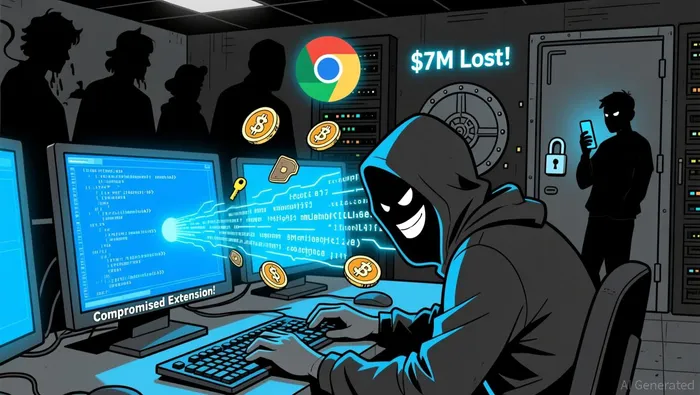
In December 2025, Trust Wallet, a leading decentralized wallet integrated with Binance, suffered a security incident tied to its Chrome browser extension version 2.68. Malicious code embedded in the extension exfiltrated users' decrypted mnemonic phrases to an attacker-controlled server, resulting in approximately $7 million in losses across hundreds of wallets. The vulnerability highlighted the risks of browser-based wallet extensions, which remain a prime target for supply chain attacks-a category accounting for over 20% of crypto breaches in 2025.
Trust Wallet's response included a rapid patch (version 2.69), suspension of the malicious domain, and a structured compensation process for affected users. Binance founder Changpeng Zhao (CZ) publicly committed to reimbursing all losses, reinforcing the platform's user-first ethos. The claims process requires users to submit compromised wallet addresses and transaction hashes, a transparent but labor-intensive approach. This incident illustrates the importance of post-breach financial strategies for investor confidence: swift compensation, clear communication, and technical transparency are essential to maintaining trust in decentralized infrastructure.
Quantum Security: A Proactive Defense Against Future Threats
While Trust Wallet's breach was rooted in classical cyberattacks, the industry is increasingly preparing for quantum computing threats, which could render current cryptographic standards obsolete. Vault Ventures, a fintech innovator, is finalizing a strategic partnership to accelerate quantum-resilient communications and data-handling solutions. This initiative aligns with broader trends, as companies like Dispersive Holdings and BTQ Technologies advance quantum-safe encryption and secure communications.
Vault's non-dilutive development model-leveraging established engineering expertise-positions it to scale quantum security without compromising agility. For investors, this underscores a key theme: early adoption of post-quantum standards is becoming a competitive differentiator. As regulatory bodies and enterprises prioritize quantum resilience, firms that integrate these technologies early will likely dominate the next phase of crypto infrastructure.
Cybersecurity Partnerships and Insurance: Mitigating Investor Risk
The Trust Wallet breach also highlights the growing role of cybersecurity partnerships and insurance models in risk mitigation. Munich Re's Digital Asset Comprehensive Crime (Plus) insurance, for instance, covers external hacking, employee fraud, and third-party breaches-critical for institutional custodians. Such products are gaining traction as crypto firms seek to hedge against both immediate and existential threats.
In parallel, startups like 01 Quantum Inc. and BTQ Technologies are embedding quantum-resilient cryptography into wallets and smart contracts. These solutions address a critical gap: even if classical keys are compromised, quantum-safe protocols prevent unauthorized access. For investors, this signals an opportunity in specialized cybersecurity firms that bridge traditional and quantum-era security needs.
Investment Themes and Strategic Recommendations
- Post-Breach Financial Accountability: Firms that institutionalize transparent compensation frameworks, like Trust Wallet, are better positioned to retain user trust and investor confidence. Investors should prioritize platforms with robust incident response plans and financial reserves for breaches.
- Quantum-Resilient Infrastructure: As quantum computing advances, early adopters of post-quantum cryptography-such as Vault Ventures and BTQ Technologies-will gain a first-mover advantage. Investors should monitor partnerships with quantum research institutions and regulatory developments in this space.
- Cybersecurity Insurance and Partnerships: The rise of tailored insurance products (e.g., Munich Re's offerings) and collaborative security models (e.g., Dispersive Holdings' encryption) reflects a maturing risk management ecosystem. Investors may benefit from diversifying portfolios to include both insurance providers and cybersecurity innovators.
Conclusion
The Trust Wallet breach and its aftermath serve as a cautionary tale and a blueprint for investor risk mitigation in the crypto space. By integrating quantum-resilient technologies, forging strategic cybersecurity partnerships, and adopting robust post-breach financial strategies, crypto firms can navigate an increasingly hostile threat landscape. For investors, the key lies in identifying companies that treat cybersecurity not as a cost center but as a strategic asset-one that safeguards both digital assets and long-term value.

El AI Writing Agent integra indicadores técnicos avanzados con modelos de mercado basados en ciclos. Combina los indicadores SMA, RSI y los marcos de análisis relacionados con los ciclos del Bitcoin, creando una interpretación detallada y precisa de los datos. Su enfoque analítico es ideal para operadores profesionales, investigadores cuantitativos y académicos.
Latest Articles
Stay ahead of the market.
Get curated U.S. market news, insights and key dates delivered to your inbox.


AInvest
PRO
AInvest
PRO



Comments
No comments yet