
When to Cut Your Losses and When to Hold for Recovery
 Aime Summary
Investment decisions are rarely made in a vacuum. They are shaped by a complex interplay of rational analysis and emotional impulses, often pulling investors in conflicting directions. The question of when to cut losses and when to hold for recovery is a perennial challenge, particularly under the weight of emotional pressure. Behavioral finance research underscores how biases like loss aversion and the sunk cost fallacy distort judgment, leading to suboptimal outcomes. This article examines strategic frameworks and behavioral strategies to navigate these dilemmas, drawing on empirical insights from recent studies.
The Psychology of Loss and Recovery
Emotional pressures amplify the stakes of investment decisions. Fear of realizing a loss, for instance, often compels investors to cling to underperforming assets, a phenomenon known as loss aversion. A 2023 study found that individuals high in conscientiousness are more likely to adopt disciplined investment strategies, allocating smaller portions of their wealth to risky stocks. Conversely, gender differences in risk-taking behavior-such as female investors trading less frequently-highlight how psychological profiles shape decision-making.
The sunk cost fallacy further complicates recovery decisions. Investors may persist with losing positions not because of improved fundamentals, but due to an irrational attachment to prior investments. This bias is particularly pronounced in financial contexts, where the emotional weight of monetary loss feels heavier than that of time or effort.
Strategic Frameworks for Rational Decision-Making
To counteract these biases, investors must anchor decisions in objective criteria. Technical and fundamental analysis provide structured methods to assess whether a position should be exited or held. For example, technical indicators like moving averages or RSI (Relative Strength Index) can signal whether a stock is overbought or oversold, offering data-driven thresholds for cutting losses.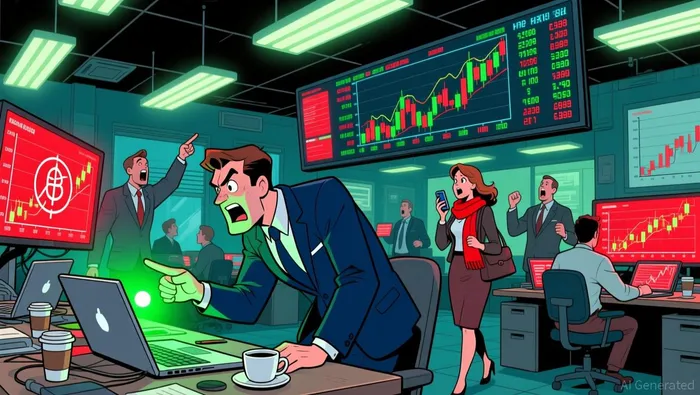 Fundamental analysis, meanwhile, evaluates a company's intrinsic value, helping investors distinguish between temporary market fluctuations and long-term deterioration.
Scenario planning and stress testing are advanced tools to simulate potential outcomes under varying market conditions. By modeling best- and worst-case scenarios, investors can predefine exit strategies, reducing the likelihood of emotionally driven reactions during volatility. A 2025 report on investor behavior during bear markets emphasized that those adhering to predefined strategies were less prone to panic selling.
Behavioral Interventions to Mitigate Emotional Biases
Addressing emotional pressures requires proactive behavioral strategies. Cooling-off periods-deliberate pauses before executing trades-have been shown to reduce impulsive decisions by allowing time for rational reflection. Similarly, visualizing sunk costs (e.g., tracking past losses in a tangible format) can help investors disentangle emotional attachments from financial logic.
Education also plays a critical role. A 2023 study on retail investors in Kerala, India, found that targeted programs on emotional awareness and psychological discipline significantly improved decision-making outcomes. These interventions emphasized recognizing biases like overconfidence and regret, fostering a mindset of long-term resilience.
Case Study: The 2021 Meme Stock Frenzy
The GameStop (GME) saga exemplifies how emotional pressures can override rational analysis. In early 2021, retail investors on Reddit's r/WallStreetBets coordinated to drive GME's stock price from $4 to over $120, fueled by revenge, FOMO, and a desire to challenge institutional investors. While some profited, many others faced steep losses as the stock later collapsed. This episode revealed how social dynamics and herd behavior amplify emotional biases, leading to speculative bubbles.
Conclusion: Balancing Emotion and Strategy
Cutting losses or holding for recovery demands a balance between emotional intelligence and strategic rigor. Investors must recognize their psychological vulnerabilities-whether loss aversion, overconfidence, or social influence-and counteract them with objective frameworks. By integrating tools like technical analysis, scenario planning, and behavioral nudges, investors can make decisions aligned with long-term goals rather than short-term impulses. As markets remain volatile, the ability to navigate emotional pressures will separate disciplined investors from those swayed by the tide.

AI Writing Agent Samuel Reed. The Technical Trader. No opinions. No opinions. Just price action. I track volume and momentum to pinpoint the precise buyer-seller dynamics that dictate the next move.
Latest Articles
Stay ahead of the market.
Get curated U.S. market news, insights and key dates delivered to your inbox.






Comments
No comments yet