
Custodia Bank CEO Criticizes Fed's Secret Rule Favoriting Big Banks in Stablecoin Market
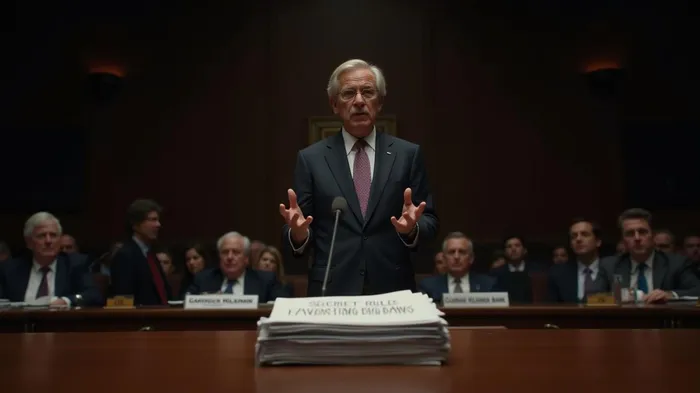
Caitlin Long, CEO of Custodia Bank, has criticized the US Federal Reserve for maintaining a secret rule that gives big banks an advantage in the stablecoin market while ostensibly supporting cryptocurrency. Long argues that the Fed has rescinded four restrictive policies but left a key one in place, which was issued in coordination with the Biden administration's anti-crypto measures on January 27, 2023. This rule effectively prevents banks from holding crypto for themselves, creating stablecoins on public blockchains, and favoring private blockchains controlled by large financial institutionsFISI--.
Long's criticism highlights three main points. First, banks are prohibited from holding crypto, even for covering small transaction fees. Second, banks are not allowed to create stablecoins on open, public blockchains like Ethereum. Third, the Fed still prefers private blockchains controlled by big banks, despite other regulators moving away from this idea. This gives big banks a significant advantage, as they can launch private stablecoins while others must wait for new legislation to take effect.
The rule also creates operational problems for banks offering crypto custody services. Banks must estimate gas fees before executing on-chain transactions, and if fees increase above their estimate, the transaction fails. Current rules prevent banks from paying these extra fees themselves, pushing them away from the custody business entirely. Custodians typically break large balances into smaller ones as a safety measure, but these internal transfers also require gas fees that banks can’t cover.
This debate started after the Federal Reserve announced the withdrawal of major pieces of guidance that had discouraged banks from engaging with crypto and stablecoins. The Fed rescinded its 2022 letter requiring banks to notify before starting crypto activities, withdrew two 2023 statements warning banks against working with potentially fraudulent crypto entities, and canceled a 2023 letter restricting state banks from issuing stablecoins. The move was seen as the Federal Reserve’s first big step on crypto under the Trump administration, which has promised to make the US more crypto-friendly and to support innovation.
The announcement received mixed reactions. Michael Saylor, the founder of Strategy, welcomed the announcement as he noted that banks were now free to support Bitcoin. Long, however, offered a different view. She argued that the Fed’s move was mainly a PR spin that fooled many “smart people.” She pointed out that the Fed’s press release listed all guidance it dropped but strategically avoided mentioning what it kept in place. Long also noted the White House praised the Fed’s actions, seemingly unaware of what actually happened. She suggested this raises questions about what the White House expected, what the Fed promised to do, and current Fed-White House relations.
While Long focuses on the Fed’s technical restrictions, the battle extends to Congress as well. The clash between federal control and state-level innovation continues to intensify. US Senator Cynthia Lummis warns the crypto industry not to celebrate too early after the Federal Reserve has pulled back some crypto rules. Lummis, often called “crypto’s savior” and “Bitcoin’s Godmother,” strongly supports crypto innovation. She led efforts like the BITCOIN Act and the Strategic Reserve Bill, both introduced in July 2024. In a detailed post, Lummis said the Fed’s move is mostly “lip service,” echoing Long’s concerns. She explained that the Fed continues using “reputational risk” to control banks unfairly. Lummis highlighted that Section 9(13), an important part of the Fed’s policies, remains in place. The Fed still labels Bitcoin and digital assets as “unsafe and unsound.” Finally, she reminded everyone that many people behind the earlier crypto crackdown (Operation Chokepoint 2.0) still shape policy today. Lummis plans to keep fighting and will hold Fed Chair Jerome Powell accountable until the crypto industry gets real, lasting support.
The Fed’s restrictions on banks offering crypto services can push users toward DeFi platforms like AaveAA--, Uniswap, and PancakeSwap. These platforms enable self-custody and peer-to-peer transactions, bypassing banks entirely. States like Wyoming, where Custodia Bank is chartered, are leading efforts to attract blockchain businesses. Wyoming’s Special Purpose Depository Institution (SPDI) framework, for instance, allows banks like Custodia to offer digital asset custody and transactional services while avoiding some of the Federal Reserve’s strictest regulations. The Fed prefers private blockchains for their control and privacy. Unlike public chains, these networks limit access to trusted players, mainly large banks. For example, JP Morgan’s stablecoin, the JPM Coin, operates on a permissioned network, while Mastercard’s Multi-Token (MTN) leverages the payment network’s private chain. Both fit the Fed’s strict rules, keeping settlements secured and regulated.

Stay ahead of the market.
Get curated U.S. market news, insights and key dates delivered to your inbox.


AInvest
PRO
AInvest
PRO



Comments
No comments yet