
The Cushing Effect: How Crude Inventory Shifts Reshape Energy and Automotive Sectors
 Aime Summary
The U.S. 's (EIA) latest Cushing Crude Oil Inventory report for the week ending August 15, 2025, has sent shockwaves through energy markets. , Oklahoma, the pricing hub for (WTI), saw a 419,000-barrel increase. This divergence highlights a critical inflection point in U.S. energy logistics, where tightening inventories and seasonal refinery maintenance are creating bottlenecks. For investors, the data underscores a broader narrative: sectoral reallocation is accelerating as energy infrastructure firms gain traction while automotive sectors face headwinds.
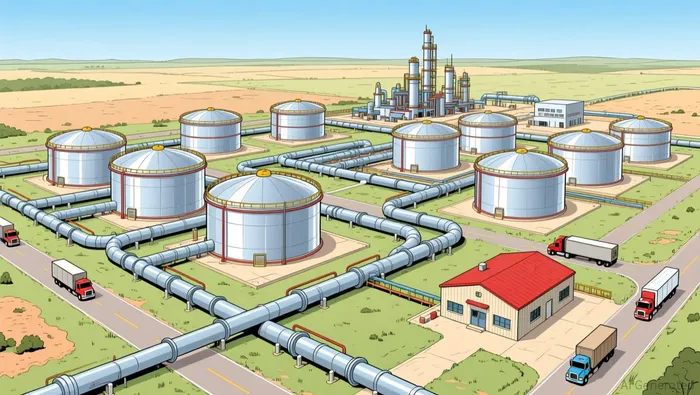
The Cushing Bottleneck and Energy Infrastructure Outperformance
Cushing's inventory levels have historically acted as a barometer for U.S. crude market dynamics. . This tightening has amplified demand for Energy Equipment & Services (EES) firms, such as Schlumberger (SLB) and HalliburtonHAL-- (HAL), which benefit from fixed-price contracts and rising rig counts. Midstream operators like Enterprise Products PartnersEPD-- (EPD) and EnbridgeENB-- (BPL) are also seeing increased throughput as production ramps to meet global demand.
Energy infrastructure ETFs, including the (XOP), , outperforming the S&P 500. . This asymmetric upside is driven by infrastructure bottlenecks and the need for enhanced production and transportation capacity.
Automotive Sector Struggles Amid Fuel-Cost Inflation
Conversely, the automotive sector is grappling with the fallout from higher crude prices. Fuel-cost inflation has eroded consumer purchasing power, dampening demand for both internal combustion engine (ICE) and electric vehicles (EVs). Traditional automakers like Ford (F) and General Motors (GM) are seeing declining ICE sales, while Tesla (TSLA) faces valuation skepticism amid energy volatility. The iShares Global Clean Energy ETF (XCAR), which includes EV and automotive manufacturers, .
The sector's vulnerability is compounded by the high costs of transitioning to EV production and margin pressures from fuel-cost inflation. While hybrid automakers like Toyota (TM) are better positioned to adapt, the automotive industry as a whole remains exposed to energy price swings. This dynamic is reshaping investor sentiment, with speculative EV producers increasingly viewed as high-risk assets in a volatile energy landscape.
Strategic Sector Rotation: Energy Infrastructure vs. Automotive Exposure
The current environment favors a strategic reallocation of capital toward energy infrastructure and EES firms. Investors are advised to overweight energy infrastructure ETFs such as XOPXOP-- and the (IXE), while underweighting speculative EV producers and automotive ETFs like XCAR. Key individual holdings in EES include Schlumberger (SLB), Halliburton (HAL), and Enterprise Products Partners (EPD), which are well-positioned to capitalize on tightening crude supply and infrastructure bottlenecks.
Conversely, exposure to regional auto funds and speculative EV producers should be reduced. For example, Tesla's stock volatility—exacerbated by energy price swings—makes it a high-risk bet until markets stabilize. The , which widens to signal Cushing bottlenecks, and OPEC+ output decisions are critical indicators to monitor for further sector rotation cues.
The Road Ahead: Balancing Energy Transition and Market Realities
The EIA's 2025 and 2026 outlook projects a decline in oil prices, , down from $66 in 2025. U.S. , while natural gas prices are projected to rise. These trends suggest that energy infrastructure and EES firms will continue to outperform as the sector navigates the transition to a lower-carbon economy.
For investors, the key lies in aligning portfolios with energy sector outperformance while hedging against automotive underperformance. As global crude inventories tighten and OPEC+ policies evolve, strategic sector rotation remains a critical tool for managing risk and capturing growth. The Cushing effect—where inventory shifts drive sectoral reallocation—is not just a short-term phenomenon but a structural shift in the energy transition.
In conclusion, the interplay between Cushing inventory dynamics and sectoral performance offers a clear roadmap for investors. By prioritizing energy infrastructure and EES exposure while reducing automotive risk, portfolios can navigate the evolving energy landscape with resilience and foresight.

Stay ahead of the market.
Get curated U.S. market news, insights and key dates delivered to your inbox.
AInvest
PRO
AInvest
PRO



Comments
No comments yet