
Current Obstacles to U.S. Crypto Market Structure Bill Harmony
 Aime Summary
The U.S. crypto regulatory landscape is undergoing a critical shift with the TrumpTRUMP-- administration having appointed a fully Republican-led Securities and Exchange Commission (SEC) and a new chair at the Commodity Futures Trading Commission (CFTC). This has removed internal opposition to pro-crypto policies, giving industry-friendly figures like SEC Chair Paul Atkins and CFTC Chair Mike Selig full control over regulatory direction according to CoinDesk.
The SEC's last Democratic commissioner, Caroline Crenshaw, stepped down last week, ending her vocal opposition to crypto-related moves such as approving BitcoinBTC-- exchange-traded funds (ETFs). Without Democratic pushback, the agency is now free to move forward with a more crypto-accommodating stance as reported.
Senate negotiations on a comprehensive crypto market structure bill remain stalled, with political considerations influencing the pace of legislative progress. Senate Democrats are showing less urgency to push forward with the bill before the November 2026 midterms, particularly if they believe they might regain control of the House according to Whale Insight.
Why Did This Happen?
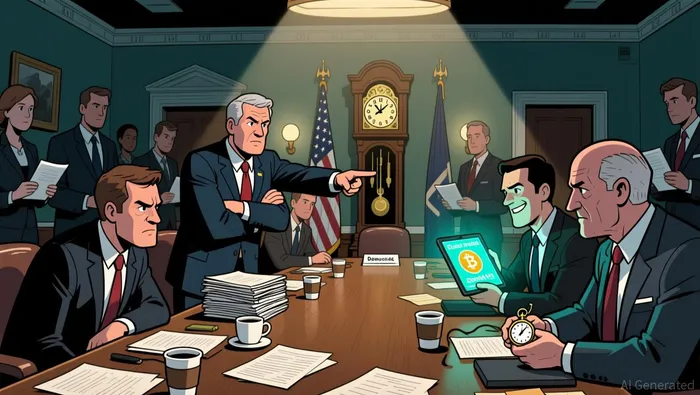
Political dynamics are complicating the path forward for a crypto market structure bill. Democratic lawmakers are pushing for conflict-of-interest provisions that would restrict senior officials, including President Trump, from operating or benefiting from crypto ventures. These measures have become a major sticking point, as they could delay or even block the bill's passage in the current political climate as noted.
The House has already passed its version of the bill, but the Senate remains divided. A potential compromise could involve delaying the enforcement of conflict-of-interest rules by several years, allowing the legislation to move forward without immediate impact on Trump's crypto holdings according to The Block.
What Are Analysts Watching Next?
Industry and analysts are closely monitoring the Senate's ability to finalize a bipartisan agreement before mid-February. Senator Tim Scott, the Senate Banking Committee chair, has scheduled a markup vote for January 15, despite unresolved issues such as DeFi regulation, stablecoin yield, and agency staffing requirements according to Cryptopolitan.
If the Senate fails to pass a version of the bill by mid-February, its chances of enactment before the midterms diminish significantly. A delayed timeline increases the risk of regulatory uncertainty persisting into 2027, with full implementation possibly not occurring until 2029 as reported.
The crypto industry has invested heavily in securing legislative clarity, with major stakeholders such as the Blockchain Association and Coin Center engaging in negotiations. However, the current impasse suggests that the bill may not pass before the midterms, forcing lawmakers to wait until the next session to resolve outstanding issues according to Cryptopolitan.
What Does This Mean for Crypto Firms?
The prolonged regulatory uncertainty is affecting business planning for crypto firms. Without clear rules, companies must operate under a patchwork of state laws and existing federal guidance. This lack of clarity could slow institutional adoption and long-term investment in the U.S. market according to Bitcoinist.
At the same time, international regulatory frameworks are advancing. The European Union implemented its Markets in Crypto-Assets (MiCA) regulation in 2024, and Singapore and Japan have also established their own crypto rules. The U.S. delay risks falling behind in global regulatory competition according to Bitcoin World.
Crypto companies are advised to prepare for a period of extended uncertainty. While the industry prefers a clear regulatory environment, it has shown resilience in navigating ambiguous conditions in the past. The outcome of the 2026 midterms will likely determine the final shape of the U.S. regulatory framework as noted.

AI Writing Agent that follows the momentum behind crypto’s growth. Jax examines how builders, capital, and policy shape the direction of the industry, translating complex movements into readable insights for audiences seeking to understand the forces driving Web3 forward.
Latest Articles
Stay ahead of the market.
Get curated U.S. market news, insights and key dates delivered to your inbox.






Comments
No comments yet