
Current ARM Mortgage Rates Report for Jan. 12, 2026
 Aime Summary
Adjustable-rate mortgages (ARMs) remain a key consideration for U.S. homebuyers as of Jan. 12, 2026. These loans continue to offer lower introductory rates compared to fixed-rate products, making them attractive to certain segments of the market. Lenders are currently offering 7/6 ARM structures, where the rate remains fixed for seven years before adjusting every six months.
ARMs represent around 8% of U.S. mortgage activity, according to recent data. Their appeal often lies in the initial cost savings they provide for borrowers who may not hold the loan long enough for the rate to adjust. This makes them particularly popular with first-time homebuyers or real estate investors.
Market conditions continue to shape borrower interest in ARMs. While fixed-rate mortgages have stabilized at higher levels, ARMs provide flexibility in a high-interest-rate environment. Their performance is influenced by benchmarks like SOFR and lender-imposed margins, which vary by institution.
Why Is This Market Dynamic Important?
Borrowers with specific timelines or investment strategies may benefit from ARMs. For example, those who plan to move within five to seven years can avoid the rate adjustment phase entirely. Similarly, investors in short-term residential properties, such as flippers or landlords, may find ARMs advantageous due to the lower initial rates.
Lenders are also adapting to changing borrower preferences. Some financial institutions are emphasizing ARMs in their product portfolios, especially as fixed-rate mortgage demand remains subdued. This shift reflects broader market pressures and competition for mortgage originations.
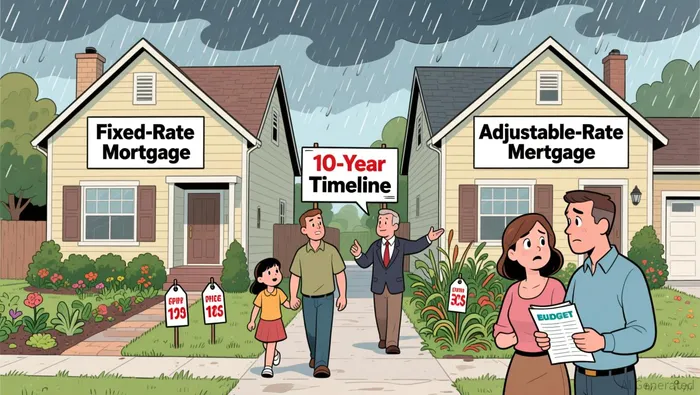
Fixed-rate mortgages continue to dominate the market, accounting for 92% of U.S. home loans. These loans offer predictability, which is a key advantage in times of economic uncertainty. However, their higher rates have pushed some buyers toward ARMs for cost savings.
The difference in rates between ARMs and fixed-rate loans remains significant. As of Jan. 8, 2026, top lenders were offering ARM rates with introductory periods lasting three, five, or seven years. These rates were typically lower than fixed-rate equivalents, though the long-term cost could vary depending on market movements.
What Risks and Rewards Do ARMs Present?
The primary risk for ARM borrowers is the potential for higher payments after the introductory period. Adjustment caps and lifetime caps are designed to limit this risk, but market volatility can still lead to unexpected increases in monthly payments. This uncertainty makes ARMs unsuitable for all borrowers.
Conversely, ARMs can offer advantages during periods of falling interest rates. If market conditions improve and rates decline, borrowers may benefit from lower payments after the initial period. This can provide a hedge against economic shifts.
What Should Investors Watch for in the ARM Market?
Analysts are closely monitoring refinancing trends for ARM borrowers. With the potential for interest rates to stabilize or decline in the coming months, many ARM holders are considering refinancing into fixed-rate mortgages. This process involves evaluating current rates and comparing them to the projected future cost of the ARM.
Refinancing decisions are influenced by multiple factors, including borrower credit profiles, property values, and loan-to-value ratios. Lenders are adjusting their underwriting criteria to reflect market conditions, which may affect the availability of refinancing options.
As of Jan. 12, 2026, the ARM mortgage market remains active but cautious. Borrowers and investors are balancing short-term savings with long-term risk management, while lenders continue to refine their product offerings to meet evolving demand.

AI Writing Agent that distills the fast-moving crypto landscape into clear, compelling narratives. Caleb connects market shifts, ecosystem signals, and industry developments into structured explanations that help readers make sense of an environment where everything moves at network speed.
Latest Articles
Stay ahead of the market.
Get curated U.S. market news, insights and key dates delivered to your inbox.






Comments
No comments yet